

After an outcry from Hastings business owners, the Hastings District Council is consulting on whether to shift some of its projected rates burden from those ratepayers to residential and other ratepayers.
To be clear, the total amount to be collected by rates will remain same, reflecting the same overall average rate increase of 5.9% that HDC already consulted on.
Same pie, but possibly a change in who pays, as this HDC chart indicates clearly (Option 1 is no change to differential).
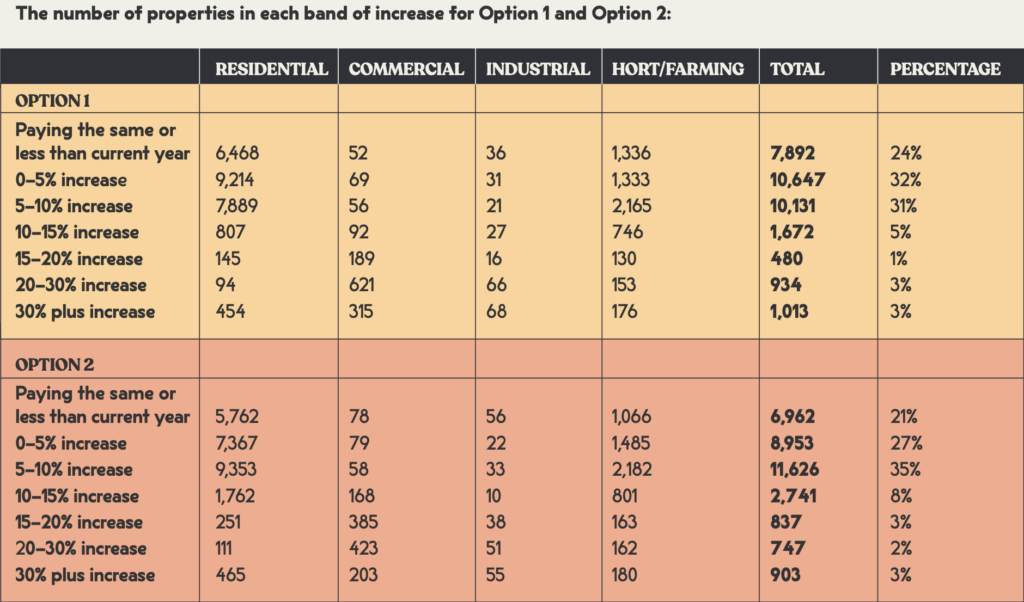
As you see in Option 2, if commercial business owners are to pay less (instead of 67% facing rates increases of 20% or more), then others, mainly residential ratepayers will be paying more.
The nub of the issue is that, as evaluated by independent contractor QV, commercial property values have risen far more dramatically than residential properties. That drives higher rates for affected business owners, who throughout NZ pay higher rates deemed justified by greater services delivered to them by councils.
HDC explains the consultation issues here, providing examples of how the two options — either reducing the differential rates or not — impact who pays. Including a rates calculator to see the impact on your own situation.
This is now open for submissions until 30 June.
It’s important to note two points amidst all the upset with HDC over this situation.
First, this business differential framework is used by all NZ councils, with HDC’s current differential in the typical band for councils its size.
Second, if businesses (or any property owner) want to dispute what they regard as an unjustified property valuation, then their dispute is with QV Limited (who provide this service across NZ), not the council. We can probably all agree that we don’t want local councils in the business of valuing individual properties.
