

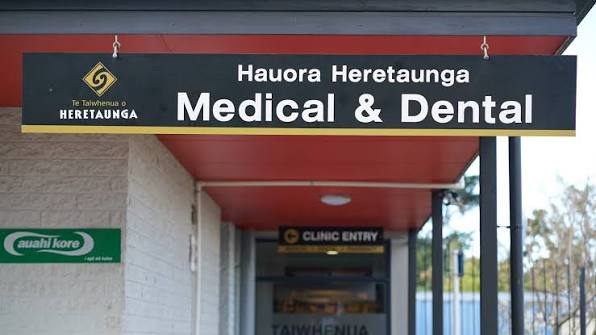
Te Taiwhenua o Heretaunga Chair Mike Paku is calling for urgent government support to sustain kaupapa Māori GP clinics, as workforce pressures continue to affect access to primary healthcare for whānau.
The call follows the difficult decision by the Hastings-based kaupapa Māori health and social services provider to begin transitioning 3,000 enrolled whānau from its GP practice, Hauora Heretaunga, due to an ongoing shortage of GPs.

“Te Taiwhenua o Heretaunga has had to make the very difficult decision to transition half of our enrolled whānau to other GP providers,” Mr Paku said. “This decision has been made to protect the health and safety of our whānau, first and foremost, while also ensuring we can support the workload and wellbeing of our GPs, nurses, and support staff within Hauora Heretaunga.”
The need to reduce enrolled whānau numbers reflects the severe shortage of GPs being experienced across Aotearoa. Despite a concerted recruitment drive, TTOH has been unable to secure the staffing levels needed to sustain a safe clinical practice.
“Central Government and its agencies need to provide more funding, resources and support for Māori GP clinics, because we operate in a unique ecosystem. We are not-for-profit providers caring for a high proportion of whānau with acute and complex health needs.”
The Royal New Zealand College of General Practitioners recommends approximately 1 full-time GP per 1,300–1,500 enrolled patients in a typical practice. However, lower ratios (fewer patients per GP) are recommended where the practice serves populations with greater health needs, such as older patients, high deprivation communities, or patients with complex chronic conditions. TTOH told BayBuzz that 87% of its patients fell in the high deprivation category.
The organisation has begun identifying the 3,000 whānau who will be affected, with Mr Paku emphasising that the transition will be clinically led and tikanga-informed. TTOH says it will be making contact with all 6,000 whānau enrolled with Hauora Heretaunga over the next two weeks.
“Each whānau member’s health needs will be informed by best clinical practice. A tikanga Māori lens will guide the process, anchored in our organisational values of whanaungatanga (connected relationships), kaitiakitanga (care and compassion), whakamana (empowerment) and kotahitanga (a unified approach). Where possible, we will work to ensure whānau members transitioning to another GP practice are able to stay together.”
Mr Paku also acknowledged the care, support and understanding shown by the district’s medical community, including Te Whatu Ora, Hawke’s Bay Hospital Emergency Department, Health Hawke’s Bay PHO, Hato Hone St John, Hastings Health Centre and local GP clinics across the district.
“We are grateful to the our medical community, who have stepped up — not only by offering clinical advice, but also practical support to help ensure continuity of care for whānau. Their willingness to work alongside us reflects the shared commitment we all have to the health and wellbeing of whānau across our community.”
With that wider support in place, Te Taiwhenua o Heretaunga says its immediate priority remains supporting affected Hauora Heretaunga whānau and ensuring continuity of care throughout the transition.
“We know this will be unsettling for our whānau, and we do not take that lightly,” Mr Paku said. “Our commitment is to walk alongside every a=ected whānau member with clear communication, practical support and care throughout the transition. Above all, we will do everything we can to ensure whānau continue to receive the treatment they need, when they need it.”
“We acknowledge this situation will be disruptive and distressing for many of our whānau, and for that we are deeply sorry. This decision has been made with their health, safety and wellbeing at the centre. We want to assure whānau that Te Taiwhenua will be there with them every step of the way.”
