

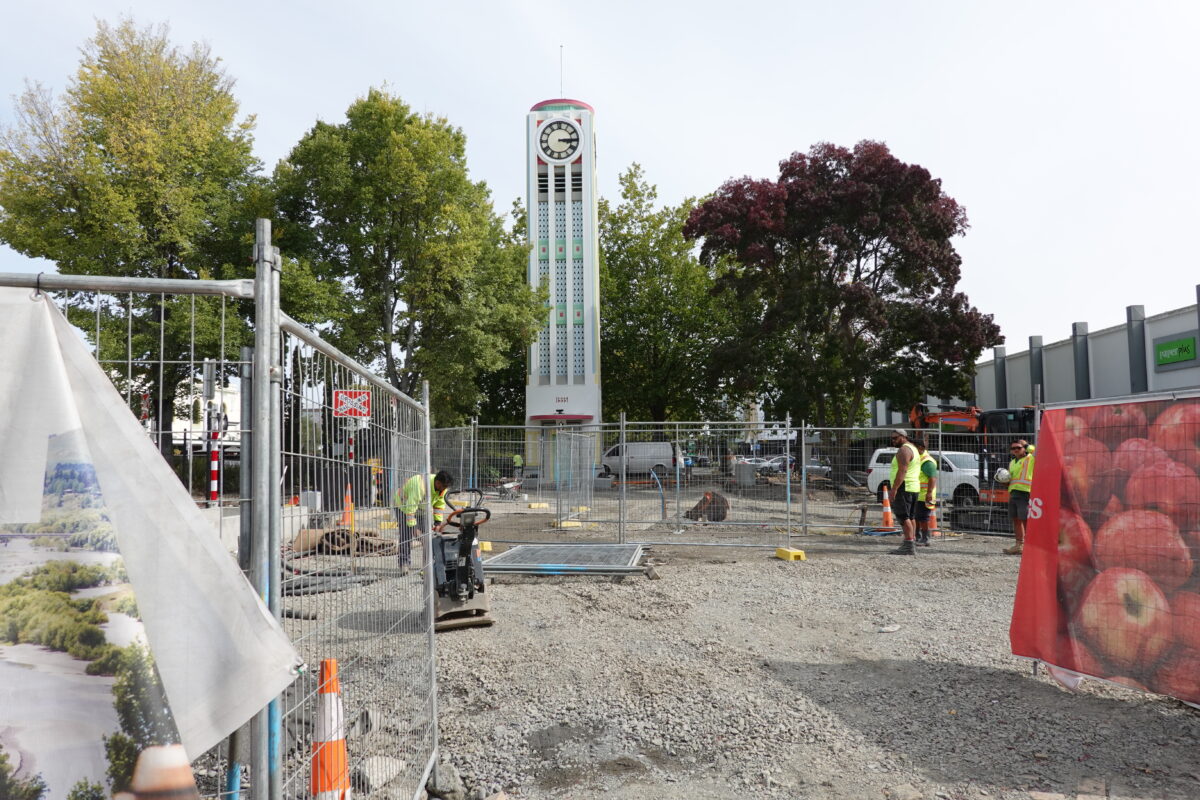
Anyone who looks at council’s balance sheet knows that local government is basically just infrastructure delivery with a few social services tacked on. You would think that people elected to govern an organisation that spends 85% of its money on infrastructure would focus their attention mostly on this topic.
They don’t.
For example, Hastings District Council manages over $3 billion in assets. It will spend over $2 billion on infrastructure over the next 10 years. In comparison, over the same time it will likely spend about $50 million on operating its library system. That’s just 2.5% of council infrastructure spending. Yet if you tracked where governance spends its time and attention, you would see the exact opposite.
Over my three years on council I found that most meetings end up focused on more minor spending. There would be hours of heated debate over issues like the price of entry to Splash Planet. One meeting had hours devoted to the nuances of Youth Council representation. Or there was the recurring classic of the fate of Frimley Pools. These were emotive, visible topics, but combined they were barely a rounding error on the council’s debt profile. Meanwhile, multi-million dollar infrastructure projects got passed with barely a whisper.
It seems to be a systemic problem. There are very few elected people with infrastructure experience. Most people who run for local government are there for the right reasons; they want to help and improve their communities. Naturally, this pushes them toward visible, proximate issues like road names, events, or facilities.
But infrastructure is where the money is, and it is also where the capability gap is greatest. Building a bridge or repairing a road is a dry, complex topic for most people. Especially when they don’t have the experience or knowledge to fully understand what they are scrutinising. So most time is spent on contentious issues that everyone understands and has an opinion on.
But then annual and long term plan time rolls around, and rates increases become a huge issue. Suddenly, the focus is on finding savings and cuts. Department budgets are looked at, and staff are summoned to defend their budgets and ideas. Savings are squeezed out of the organisation, often by not replacing staff members when they leave or cutting services. These are tough conversations and big debates.
But all of these efforts are rendered almost useless by the massive infrastructure projects underlying the majority of council spending. Nearly no governance time is spent understanding this part of the business or enabling efficiencies in procurement or engineering. The sad reality is that a minor cost blow out on an infrastructure project could swallow the Community Development budget in a heartbeat. A few percentage change in final cost on a roading job could see the equivalent of the events and community grants vanish into thin air.
New Zealand already ranks near the top of the OECD for infrastructure spending per capita, but near the bottom for value delivered.
So where are the politicians standing up and explaining the spending? Why does a roundabout at Te Mata Rd costs $2.8 million? If this is good value for money, then say so and say why. If it isn’t, then say what you will change.
Governance needs to spend their time where the money is by focusing on infrastructure. Work out the structures needed to give quality oversight of projects. Perhaps a standing item in each meeting on driving efficiency in procurement or delivery. A councillor embedded into the governance of each big project, to give community oversight. Taking one project in each meeting and analysing it in detail to understand how better efficiency could be achieved.
If all our councils did for the rest of the term was focus on infrastructure efficiency, I would say it was a term well spent. A 10% reduction in infrastructure costs over the next decade would be the equivalent of eliminating more than a year-and-a-half of rates.
The juice is most certainly worth the squeeze.

Would love to hear what our mayors have to say about this…..do they stick their heads in the sand (too hard basket) or will this be one of the key issues that will be address in the ‘reorganisation’ of the HB wide governance/council structure they are working on – I would surely hope so…..
There’s a saying, the joke about Councillors is they get elected!! If they don’t have infrastructure knowledge or experience, which clearly past Councillors didn’t have, they should contract it in. Council time & effort should revolve around the greatest investment (spend), unfortunately sounds like Councillors drift into the areas they think they know.
Mr Buddo seems to have more sense than many others on, or wanting to be on, councils. I prefer his outlook to that of Mr Gibson who seems to think cutting community services is the way to go. But then again has any council actually succeeded in ever reducing rates when the ratepayers insist on voting for the popular rather than the expertise of candidates