

[As published in March/April BayBuzz magazine.]
In the heart of Hawke’s Bay, a healthcare initiative that has transformed thousands of lives faces an uncertain future.
The Green Prescription (GRx) programme, a beacon of hope for those grappling with health challenges from diabetes to mental health, is at risk of being dismantled – despite its proven track record of success since 1998.
Delivered by Regional Sports Trusts (RSTs) such as Sport Hawke’s Bay, GRx is now fighting for survival as its primary funder, Health New Zealand, reviews its priorities.
“The socialisation of Green Prescription is the number one factor that keeps people coming along,” says Sue Smith, General Manager of Sport Hawke’s Bay.
This simple observation cuts to the core of what makes GRx unique: it’s not just about exercise; it’s about building a community. Every year, over 1,000 patients in Hawke’s Bay alone find their way to better health through the programme.
The numbers tell a consistent story of community impact – 1,158 participants in 2021/22, 1,194 in 2022/23, and 1,081 in 2023/24. But it’s the transformative results that truly showcase the programme’s value.
Recent data from 2024 paints a compelling picture: every single participant who completed the programme reported increased confidence in physical activity.
An impressive 84% improved their nutrition habits, while 70% made lasting positive lifestyle changes encompassing both physical activity and dietary choices. Perhaps most remarkably, 87% of participants noticed a positive change in their mental health since joining Green Prescription.
These aren’t just numbers on a page – they’re people who might otherwise fall through the cracks of traditional healthcare. From those battling diabetes to individuals managing cardiovascular issues, respiratory conditions, and mental health challenges, GRx offers a lifeline that extends far beyond traditional medical interventions.
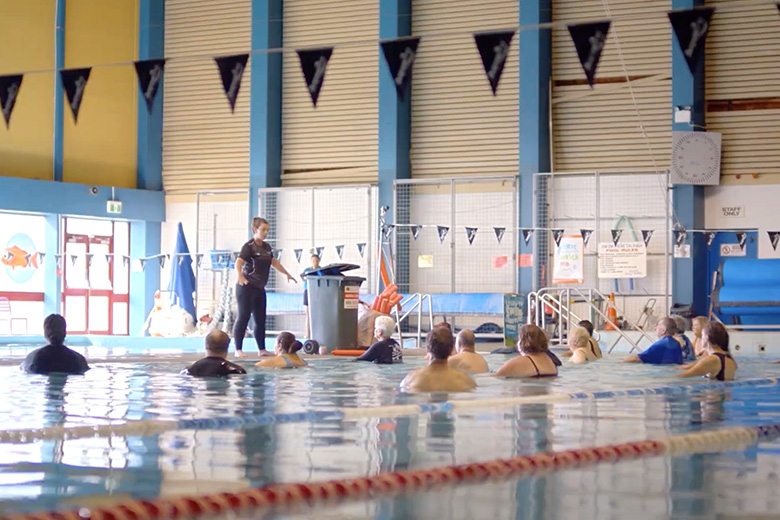
The programme’s secret weapon? Accessibility. In an era where personal trainers and gym memberships can be prohibitively expensive, GRx breaks down financial barriers. It transforms public spaces – local pools, gyms, parks, and recreational areas – into hubs of healing and hope.
Activities range from ocean swimming to gym sessions, from cycling to community gardening, ensuring there’s something for everyone, regardless of their starting point.
Perhaps most telling is the programme’s evolution over time.
“We’ve seen a substantial increase in mental health referrals,” Sue notes.
“The social opportunities that Green Prescription provides, along with a sense of belonging and purpose, offer non-medical options to improve mental health.”
With over $1.3 million invested in the past three years in Hawke’s Bay alone, the programme’s value extends far beyond its monetary cost.
Healthcare professionals rely on GRx as their go-to option for patients needing support through primary and secondary care. Without it, Sue warns, many would have nowhere to turn.
“We are reluctant to consider user-pay models,” she explains, “as the whole point of Green Prescription is to reduce inequity.”
This commitment to accessibility has made GRx a crucial tool in addressing health disparities across New Zealand.
As Health New Zealand weighs its funding decisions, the potential loss of GRx threatens to unravel decades of community health progress.
Supporters argue that its holistic approach – combining physical activity, nutrition education, and social support – offers something that no other health initiative can match.
For the thousands who have found their path to better health through Green Prescription, the programme represents more than just exercise classes or nutrition workshops.
It’s a testament to the power of community-based healthcare – where healing happens not just through prescribed activities, but through the connections formed and the support shared among participants.
The RST Network, a collective of 17 Regional Sports Trusts, is working with independent economic consultancy New Zealand Institute of Economic Research to present a national evaluation of GRx, to prove its effectiveness.
As the future of GRx hangs in the balance, its defenders continue to advocate for its survival, arguing that some prescriptions can’t be measured in pills and procedures alone. Sometimes, the best medicine is a community that believes in you.
Sisters in health: Green Prescription transforms three lives
Names have been changed to protect privacy
Five years ago, Maria drove past a Green Prescription welcome session sign with a familiar pang of guilt.
She’d been encouraged to join the programme multiple times before – during her pregnancy with gestational diabetes, and again as she battled with pre-diabetes and high blood pressure. But this time was different. Having just left her doctor’s office after recording her highest-ever weight, Maria finally decided it was time for change.
Little did she know, this decision would spark a transformation not just for herself, but for her sisters Ana and Sophie too.
“I like that we are encouraged to go at our own pace and there is no judgement,” says Maria, reflecting on what made this time different. Ana, who had also reached her highest weight, joined her sister in taking those first tentative steps into the programme.
What started as a cautious exploration – attending sessions to “see what they were like” – soon became a family revolution. The sisters found strength in numbers, building their confidence together through regular aqua sessions at Swim Heretaunga and gym workouts in Taradale and Flaxmere.
“The ladies who run the sessions are very encouraging and know their stuff, and the other people who join us there are very motivational,” they share. This supportive environment proved crucial in their journey.
The results have been nothing short of remarkable. Together, the sisters have shed over 70 kilograms, but the transformation runs deeper than numbers on a scale.
Maria’s doctor has discontinued her pre-diabetic medication, and her blood pressure has stabilized. She’s lost 40 kilograms alone, but more importantly, she’s gained a new lease on life.
“I am feeling fit, I sleep better and I wake up on time,” Maria beams. “I enjoy my mornings better, I’m more confident and not afraid of giving anything a go anymore. I plan on making my new changes a part of my life now.”
The sisters’ commitment to health has rippled through their entire whānau. They’ve become role models, demonstrating that change is possible at any stage of life.
Sophie proudly declares, “I can plank for 40 seconds now! Every week I surprise myself with how strong I have become.”
Their lifestyle overhaul has been comprehensive. Gone are the takeaways, sugary drinks, and processed foods, replaced by vegetables, lean proteins, and thoughtful portion control. But perhaps more significant are the emotional and mental changes.
“My friends and family have commented that I am more confident and happier,” Ana shares.
For Maria, the joy now comes in simple pleasures – playing outdoors longer with her children, going on family hikes, and taking long walks together. Activities that once seemed daunting have become sources of family bonding and pride.
The sisters’ message to others considering Green Prescription is clear: “Huge thank you for the support and guidance and for making me feel like I could do it.”
Their journey from hesitation to transformation stands as a powerful testament to the programme’s effectiveness – and the strength that comes from facing health challenges together.
As they near the end of their Green Prescription journey, the three sisters are already planning for the future, determined to maintain their healthy new lifestyle.
They’ve proven that with the right support, determination, and family by your side, what once seemed impossible becomes not just possible, but sustainable.


Par for the course – if something’s successful let Central Government fiddle with it until they decide it’s too much trouble and cancel it – this is successful so they will run it down, or reprioritize, and let it die – a bit like the school lunch system –
GRx has added many healthy years to my life – can’t believe such a valuable programme is being axed just as the population is aging and the need becoming even greater! I became eligible 5 yrs ago with health issues and post breast cancer. At age 68 they taught me to ride a bike, and got me into the gym and pool. I now regularly ride 20-30km, (not electric), attend gym, and swim, several times a week. Never been healthier- no medications – very low cost to NZ’s health system. This programme works – why cancel!
Any closure of this valuable service cannot be allowed to happen! Does Katie Nimon, Catherine Wedd know of this?
I listened to an interview with Bill English where he spoke of data showing that a person taken from homelessness to being housed reduced the hospital stay from 130 nights per annum to 10!
While that is a different issue from Green Prescription, I am saddened to see preventative health measures ignored or minimised.
Our local political representatives need to step up here, and be our voice!