

The Regional Council this week considered how to progress two major initiatives under the rubric of “regional water security”, while studiously avoiding a third.
The Council first received a report describing a laundry list of ‘interventions’ that hold potential to either reduce demand for water in the region or offer supply augmentation options other than damming rivers.
As Councillor Sophie Siers commented in frustration, that list has been sitting dormant for a couple of years now and includes:
- Water use conservation
- Efficiency measures
- Farm systems & land use change
- Allocation policies
- Recycling & re-using water
These sit alongside water storage (aquifer re-charge & large-scale dams). More on the ‘supply’ option in a moment.
Councillors are antsy (at least some are) that there has been no serious investigation of these interventions and their potential for closing any gap between the region’s water needs and supply.
The modest outcome of the discussion was agreement to conduct a workshop soon on this subject with a view to formulating an action plan and starting to use the $1 million set aside in the current LTP for this purpose. Councillor Neil Kirton proposed that this undertaking required a dedicated ‘champion’ if it was to be seriously progressed. Hopefully the workshop will pursue that idea.
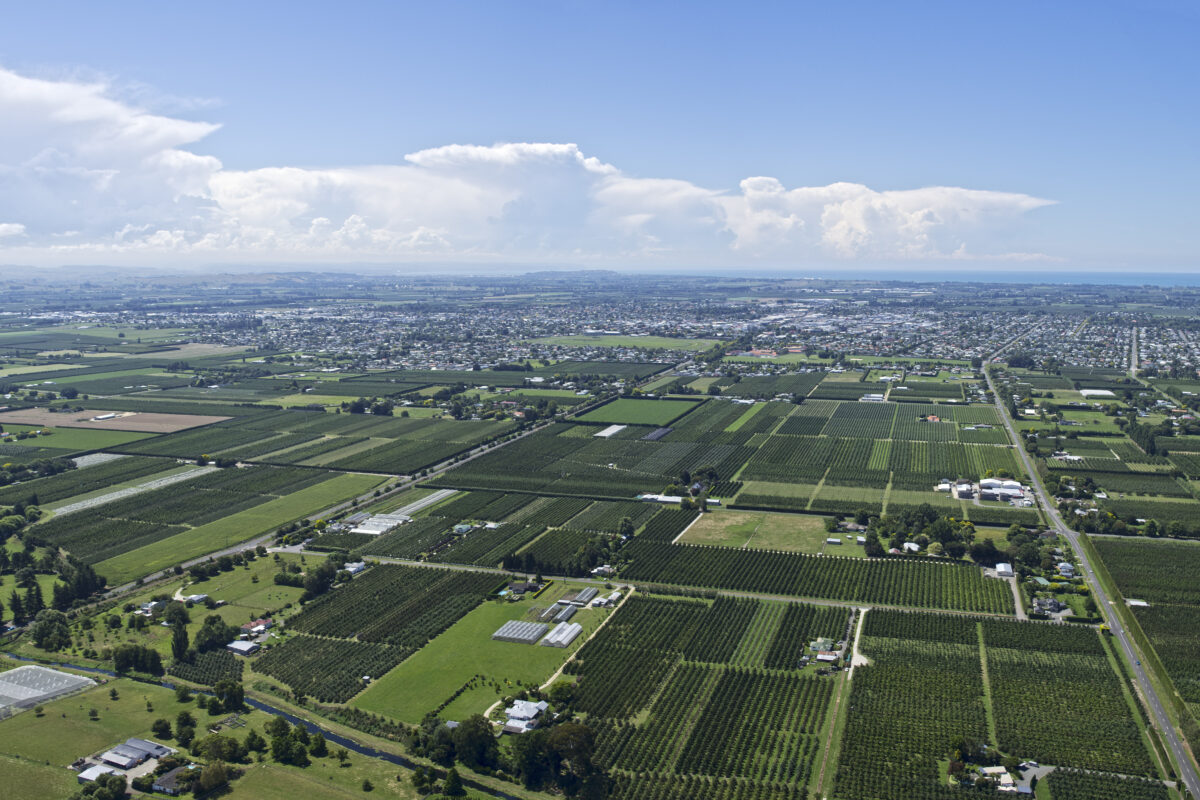
Council then turned to the far more exciting (to Councillors) Heretaunga Water Storage project, deciding to approve spending an additional $2.3 million (on top of $600,000 already spent) to investigate fully its feasibility.
Here the plan is for HBRC to transfer the entire project (a 27 million cube reservoir on a tributary of the Ngararuro River) to an external purpose-created company (presently: ProjectCo) that would complete the feasibility assessment and, assuming a greenlight, actually build, operate and own the dam scheme.
HBRC has three basic objectives: 1) totally remove itself (i.e. its ratepayers) from any further financial involvement in the scheme, if it is to proceed at all; 2) totally wash its hands of the headache of negotiating a ‘deal’ between and amongst water users (irrigators and Hastings and Napier municipal users) and mana whenua. Notice that there is no environmental voice at the ProjectCo table.
The consulting team currently leading the project reported a rosy picture of ProjectCo’s prospects at the HBRC meeting, but there are clearly vexing issues ahead for this project. For example …
Over and over it was emphasised by the consultants that any dam scheme would be 100% user-financed … no public money. Either strictly commercially viable or it doesn’t proceed. They flatly insisted, for example, that there would be no expectation for HBRC (ratepayers) to pay for so-called ‘environmental flows’. They were a bit fuzzier as to whether Napier and Hastings Councils (ratepayers) would need to pay for their water use, and whether this prospect was indeed on those Councils’ radars. Also not clear was whether the project might decide to incorporate Government (taxpayer) funding into its financial model.
However, after all, with the transfer of the project to ProjectCo, it is that group’s governing members (HDC, NCC, commercial water users, and mana whenua) who will fashion the financial deal, not the consultants.
A key step in that process will be the commercial users deciding just how much they are really prepared to pay for stored water. Not all are agreed a dam is even needed. And how much of the cost will they insist be shouldered by other ‘users’ – e.g., homeowners filling their swimming pools? The public that ‘owns’ the Karamu Stream, which might benefit from the scheme?
And what about iwi? Are they in the ‘deal’ for economic benefit or environmental scruples? And anyway, who are ‘mana whenua’ for this purpose … and are they agreed on objectives? This has been a stumbling block on every water discussion in Hawke’s Bay.
So, a very complex negotiation is unfolding. Who has the role and mana to drive the process and pull it off is unclear. Compared to this, geotech studies are a piece of cake!
One close observer of HB’s water travails has commented, in effect, if it all implodes it won’t be on HBRC’s hands.
Really? HBRC is to be regularly briefed on ProjectCo’s progress as a condition of funding the feasibility investigation. The ProjectCo funding agreement provides for HBRC to: “suspend or cease funding in a variety of scenarios linked to the performance of ProjectCo, or the viability of the project overall”.
What happens if HBRC becomes ‘displeased’ with the direction of travel, the nature of the ‘deal’, its environmental or economic merits? How would they arrive at that conclusion? Would they actually pull the plug? Or, as regulator, not consent it?
For now, HBRC is totally enthralled with the Heretaunga Water Storage project. Indeed in the HBRC’s 17-paragraph media release describing the day’s results, 14 paragraphs extolled the virtues of the water storage project and the hand-off process. Says HBRC:
“The project has the potential to materially contribute to the Heretaunga Plains’ water security needs and is based within the natural catchment that supplies the plains and its aquifer. The time is now right for community representatives with clear interests in water security to take over this project and see it through to completion.”
Note that three paragraphs were devoted to the water savings project. That pretty accurately reflects the current priorities at HBRC. No one at HBRC goes to bed at night worrying, ‘How can we save 27 million cubes of water, my job depends on it’.
And yet, this savings plan must become the region’s insurance policy if the Heretaunga storage scheme falls over.
Finally, totally and remarkably absent in the HBRC’s consideration of ‘Regional Water Security’ in this week’s discussion was any mention of Ruataniwha Dam 2. Didn’t even rate a footnote in the paperwork.
The Regional Council appears to have decided the ‘water security’ box is ticked if 27 million cubes of water are stored off the Ngaruroro River. It would appear the Council believes – at least tacitly – that another 100 million cubes down in CHB would be superfluous.
Speaking of the Heretaunga scheme hand-off, Chair Hinewai Ormsby commented in HBRC’s media release: “HBRC is not in the reservoir business.” She confirmed to BayBuzz, that applies to Ruataniwha Dam 2 as well.
Stay tuned!

There seems to be a fair amount of “handwashing” regarding water schemes at the HBRC. While I assume there is, there doesn’t seem to be a lot of commentary about environmental concerns and protections – which should be one of HBRC’s main provisos for any decision – before, during, and after any project development.