

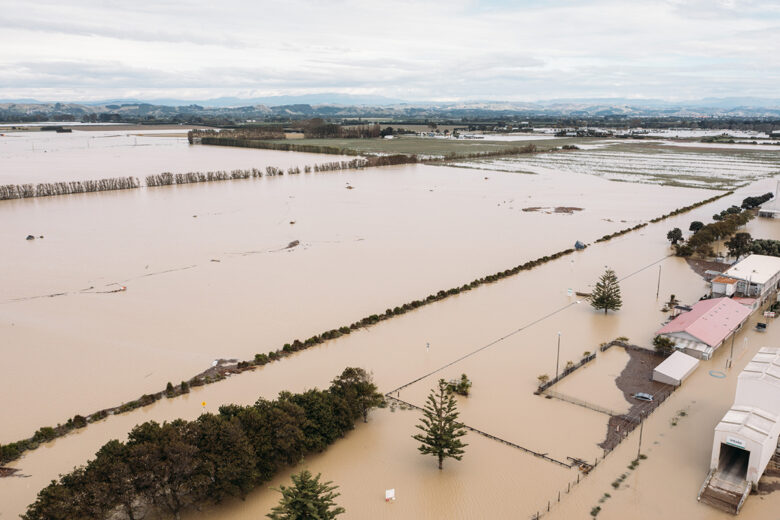
Three important updates have been presented to HB councils this week on recovery from Cyclone Gabrielle. BayBuzz is reporting on each of these over the course of the week.
First up is a progress report on implementation of recommendations made by the HB Independent Flood Review (HBIFR) commissioned immediately after the cyclone.
[Note: Our second report, on civil defence reforms , is now posted here.]
HBIFR was commissioned by the Hawke’s Bay Regional Council to investigate the circumstances and contributing factors that led to the flooding in the Hawke’s Bay region during Cyclone Gabrielle. The report was received by the Regional Council on 31 July 2024. It is a comprehensive 249-page document, split into 7 focus areas with 47 recommendations.
HBRC put together a workplan to implement the recommendations that sat directly with the Regional Council (as opposed, for example, to reforms needed at the national emergency management level).
This BayBuzz update is based on the latest quarterly progress report, given to HBRC Councillors this week.
The Report indicates that 75% of the HBIFR recommendations are underway or completed, with another 21% ”partially underway”. To give Council (and presumably the public) reassurance, this reporting is independently verified by PwC. Their first draft report indicates HBRC’s actions to date are 92% aligned to the HBIFR recommendations.
Six priority projects were designated by Council in December 2024. Those are summarised in this table.
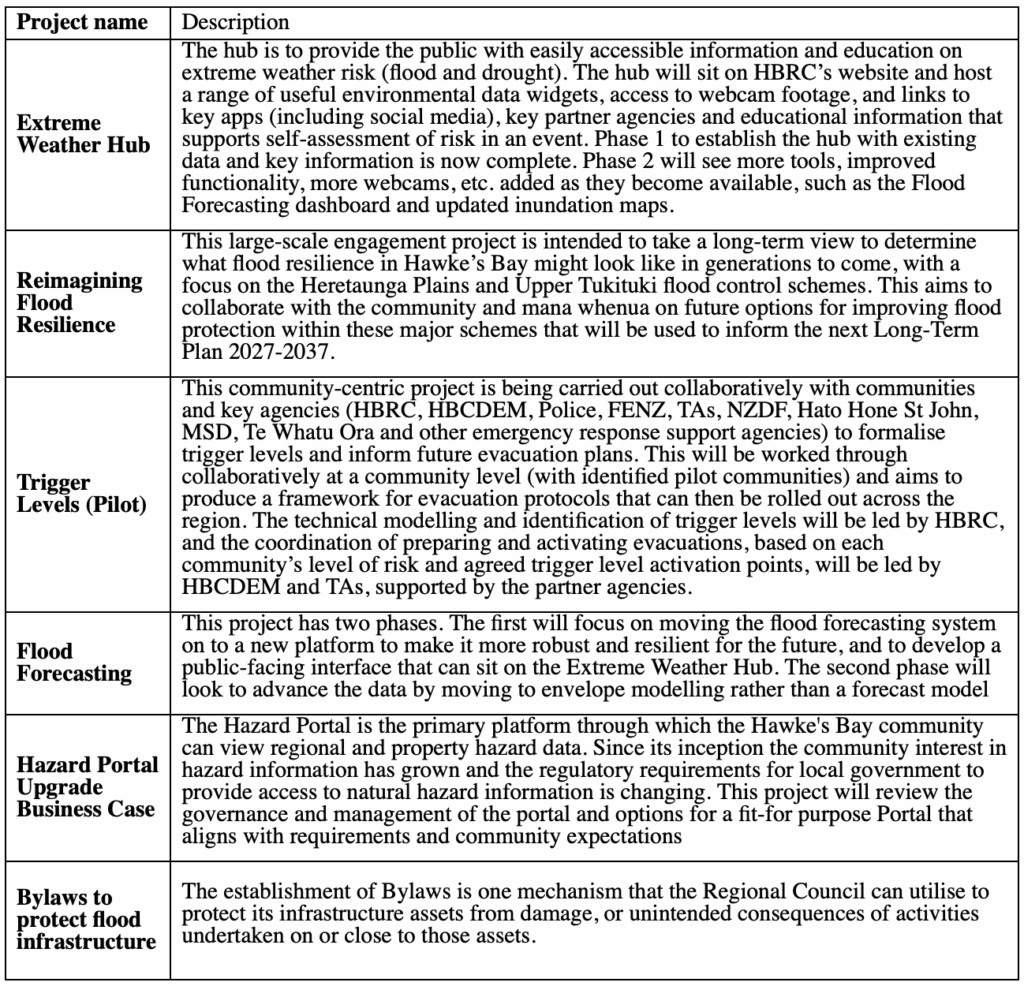
The activity most consequential in terms of planning the region’s future flood protection and management is the Reimagining Flood Resilience project. This future protection is what you hear HBRC estimating as costing in the $600 million range if all currently identified interventions were actioned. The goal of the Reimagining project, with Tonkin & Taylor as lead consultant, is to determine what level of actual investment – and how deployed – would be most efficacious at achieving the community’s desired level of protection … at an affordable price.
A Technical Advisory Group has been meeting regularly, as the staff report describes:
“This group have met five times in this quarter to scope, plan and have technical experts present a broad range of related topics and findings to feed the thinking of this group, including the findings of the scheme reviews for both Heretaunga Plains and Upper Tukituki, a Leading Practice Review of how other regions and countries are tackling strategic flood management planning, HBRC rating model for the schemes, and sharing the outcomes of related projects relating to Nature-Based Solutions and Mātauranga Māori.
The project’s Steering Groups were established in September 2025 that included representation from Councillors from CHBDC, HDC and NCC and representatives from PSGE partners (who fall within the major flood control schemes). Steering Group meetings will recommence post-election in early December with some minor changes to its membership.”
A public stakeholder engagement process has also been initiated, which involves over 70 participants. More on that another time.
The funding requirements of planned resilience interventions must feed into HBRC’s next Long-Term Plan (2027-37), with the heavy lifting for that commencing mid-2026.
Here is the full Quarterly Report reviewing progress against all 47 recommendations for serious students.
