
How Waimarama Became a Place Where Everyone Gets to Feel the Stoke.
There is a moment in surfing that surfers call “the stoke.” It is hard to describe to someone who has never felt it, but you know it when you see it. It is written all over a face.
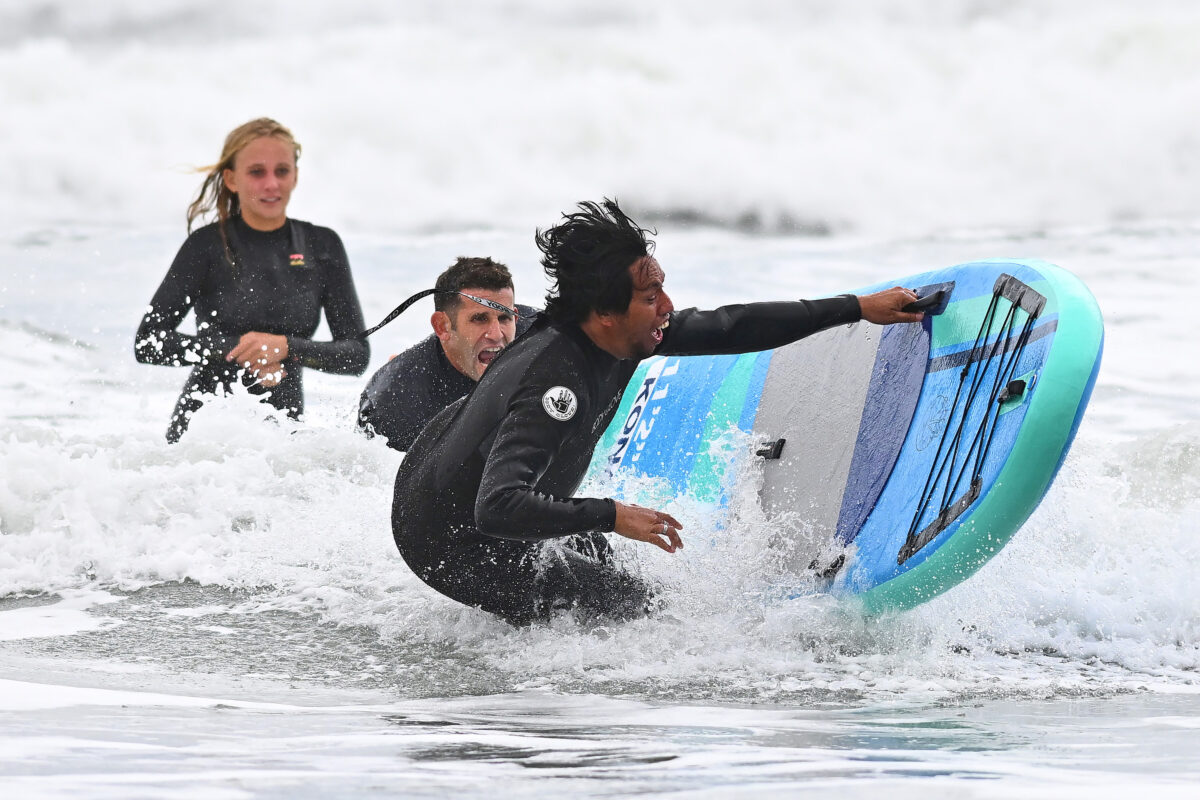
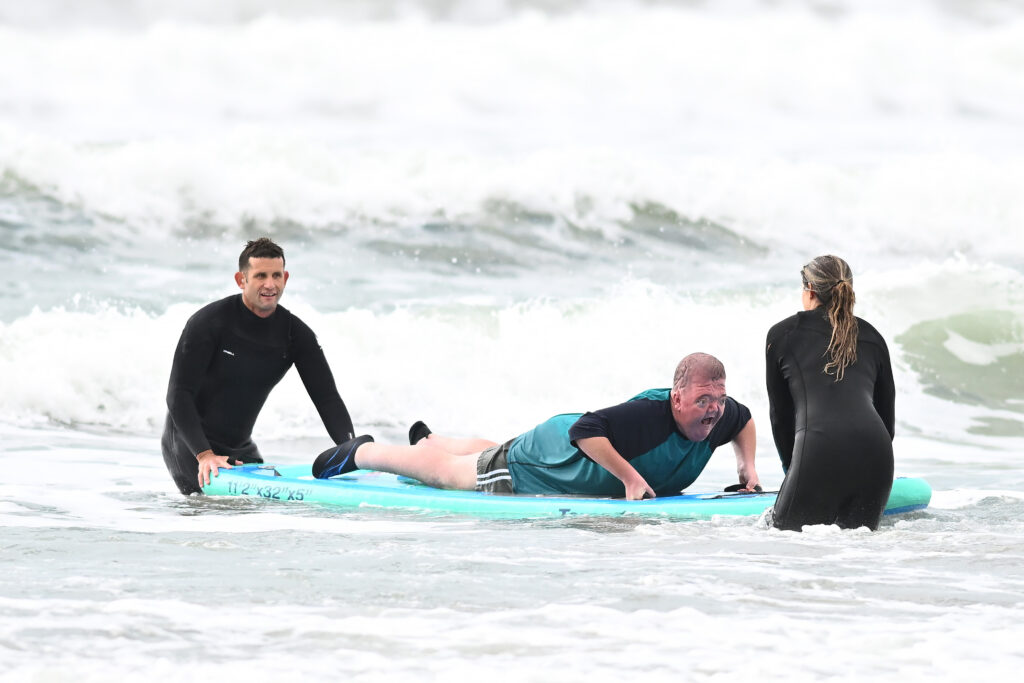
At Waimarama Beach in March, 25 people with disabilities got to feel exactly that. And for Josh Shanley, a surf-mad dad from Hawke’s Bay Boardriders and one of the key people behind the event, it was the kind of day that reminds you why sport matters.
Josh is a keen surfer who describes the ocean as his passion and his medicine. He is also father to a daughter with Down syndrome, and his motivation for getting involved is simple: he wants everyone to have access to that feeling.
“I already know the benefits of surfing,” he says. “I guess it’s just letting them get a taste of that.”
The Adaptive Surf Day is a collaboration between Halberg Foundation, Disability Sport and Recreation Hawke’s Bay, and Hawke’s Bay Boardriders, and it has been quietly building for a few years. This year it jumped. Last year, ten people signed up. This year, twenty-five.
The event had to be postponed from February after a rough weather front swept through. If the organisers feared they might lose registrations, the opposite happened.
Conditions on the day were not exactly glassy. Strong offshore winds, a solid swell, and a bit of current made it challenging. But with enough well-briefed volunteers and the right gear, including large inflatable stand-up boards and mats that run the wave line, they pulled it off safely. Participants ranged in age from seven to their fifties, and many had never been near a surfboard in their lives.
It did not matter. Some lay down. Some went to their knees. A few stood up.
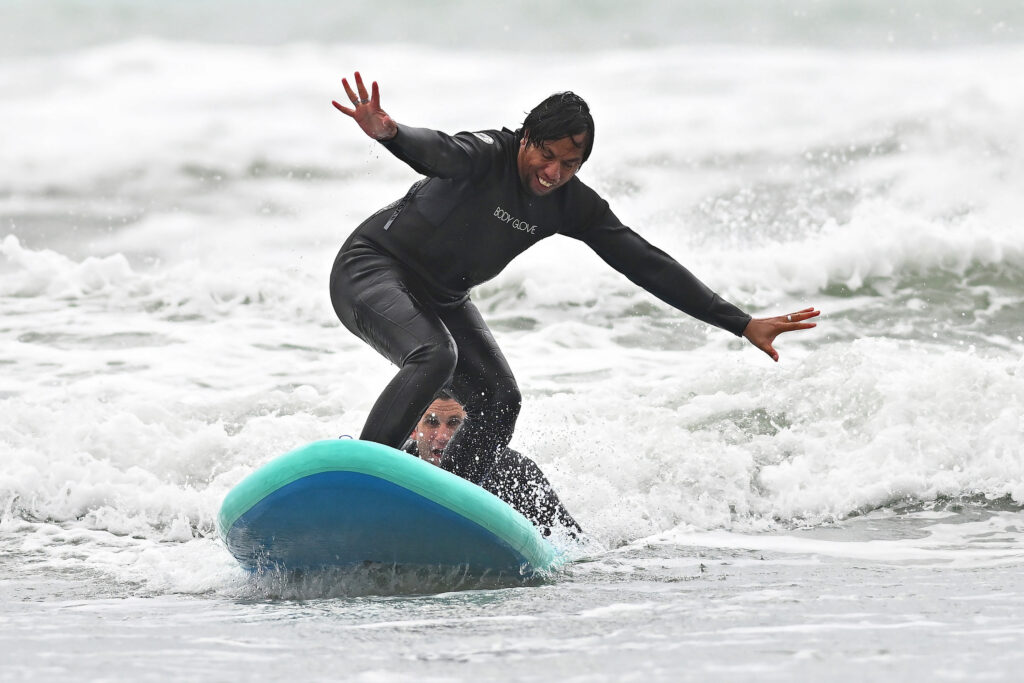
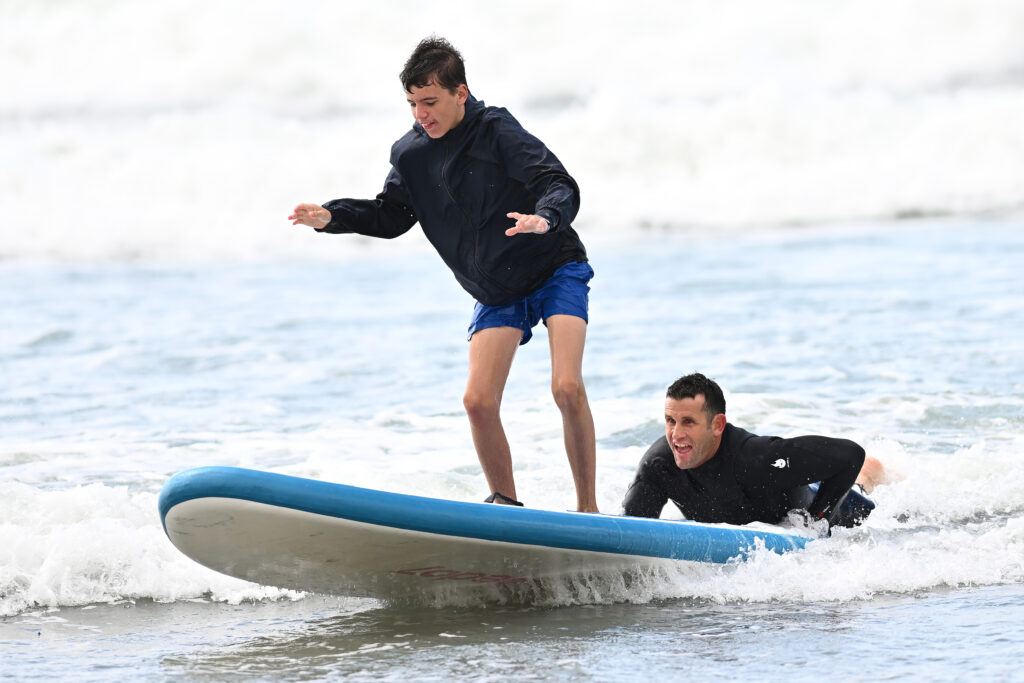
What struck Josh on the day was not just the smiles. It was the energy between participants. Kids encouraging each other. Adults hooting and laughing. A contagious, collective joy that is hard to replicate anywhere else.
“In a surf contest, people are there to compete. It’s a bit of a selfish endeavour,” he says. “These kids couldn’t care less about how they look or how good they are. They just want to keep doing it because they’re having fun.”
Lawrence Wilkinson, Halberg Foundation’s regional adviser for Waikato and Hawke’s Bay, says the numbers alone tell a story. “When the event was postponed, we had 15 registered. By the time the day arrived, that had grown to 25. That’s a clear sign that the Hawke’s Bay community is hungry for more adaptive events.”
Lawrence points to the volunteer response as equally telling. The young rangatahi from Hawke’s Bay Boardriders and Waimarama Surf Club, many with no prior connection to disability sport, were briefed, got in the water, and gave everything. Every single one said they would come back.
It echoes what happened at Waikato’s equivalent event at Waihi Beach this year, where a man who uses a wheelchair went into the surf for the first time in 35 years. “Moments like that are exactly why we continue to deliver these events,” Lawrence says.
The challenges are real. Funding is tight across disability sport in Aotearoa. The gear list for Hawke’s Bay currently runs to four boards and a handful of adult wetsuits. A second event is being planned for spring, when the ocean warms up.
But the direction of travel is clear. More participants. More volunteers returning. A community that, given half a chance, shows up.
That is the stoke. And it turns out, it belongs to everyone.
Article brought to you by O-Studio Hawke’s Bay – the region’s full circle wellness and recovery centre – www.ostudio.co.nz/hawkesbay
