

The Government has just issued its NZ Tourism Policy Statement.
Interestingly, after bashing local councils mercilessly for the last year-plus for wanton spending outside areas of core services, it now appears that tourism promotion is indeed a legitimate Government-approved activity.
Here’s how the new Policy Statement puts it:
“Local government’s role in placemaking is essential. Events, museums and galleries, public spaces and visitor infrastructure are foundational to tourism.
“Local government:
- provides core services such as network infrastructure, public transport, museums, venues and other facilities that are intended to deliver broader community outcomes
- leads place-based planning, destination management, events development and acquisition, and engagement with local communities
- leads domestic destination marketing, and
- owns or invests in tourism facilities like airports, stadiums, galleries, and convention centres.”
The Statement further comments:
“Different places face different challenges and opportunities, and effective responses must be tailored to local needs and expectations about councils keeping rates increases under control and prioritising core services for their communities. Place-based solutions, informed and led locally, are therefore essential, supported by national policy settings that provide consistency, fairness and scale.”
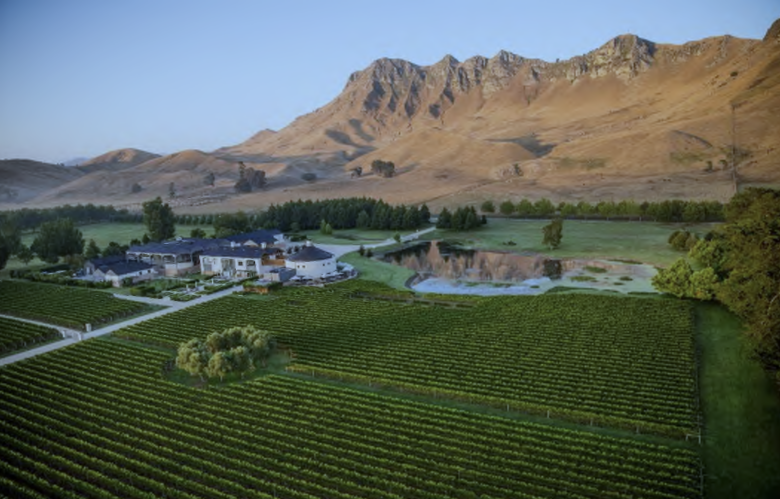
[That comment happens to appear above the stunning photo of Craggy Range that tops this article.]
Hawke’s Bay Tourism has participated in some campaign-specific government funding (attracting visitors from Australia) and specific HB events received grant support in recent years (e.g., Art Deco, Marathon, Iron Māori, Horse of the Year, Harvest HB, Outfield Music Festival and a few others).
But the Holy Grail of tourism funding support advocated by local government has been a nation-wide accommodation levy. Here’s what the Statement says about potential regional funding support:
“Consider future funding arrangements to enable management of visitor pressures at place and delivery of sustainable tourism growth. Government will consider future funding arrangements to support the strategic objectives of this Statement and which could support regions to target investment toward local priorities. This includes exploring an accommodation levy policy in 2027, which was agreed to by central government and Auckland Council through the Auckland City Deal.”
Another tantalising regional funding carrot is this:
“Under the City and Regional Deals initiative, the Government is establishing long-term agreements between central and local government. The deals will unlock funding and resource opportunities to support councils to make improvements in their respective regions. The types of opportunities included in City and Regional Deals will enable local government partners to continue supporting tourism growth, including through events.”
Hawke’s Bay hopes to get in line for a ‘Regional Deal’, but good luck with that if our mayors don’t accede to the inevitable and propose a HB unitary authority as ‘suggested’ by the Government’s ‘Simplifying Local Government’ initiative!
Finally, the Statement noted a couple of other focus areas that should appeal to HB council, hospo industry and iwi planners:
- Develop a national culinary tourism strategy. Government will work with industry and regions to develop and implement a culinary tourism strategy that lifts the visibility and value of New Zealand’s food and beverage experiences. It will identify opportunities to strengthen destination differentiation and hospitality performance, support regional dispersal and extend the lifetime value of the visitor.
- Support Māori tourism as a core element of destination differentiation and authenticity. Government will partner with New Zealand Māori Tourism and Māori tourism leaders to strengthen the capability, commercial sustainability and international profile of Māori tourism experiences. Industry will continue supporting businesses to embrace Māori culture, including te reo Māori and tikanga.
Serious students can download the Tourism Policy Statement here.
