

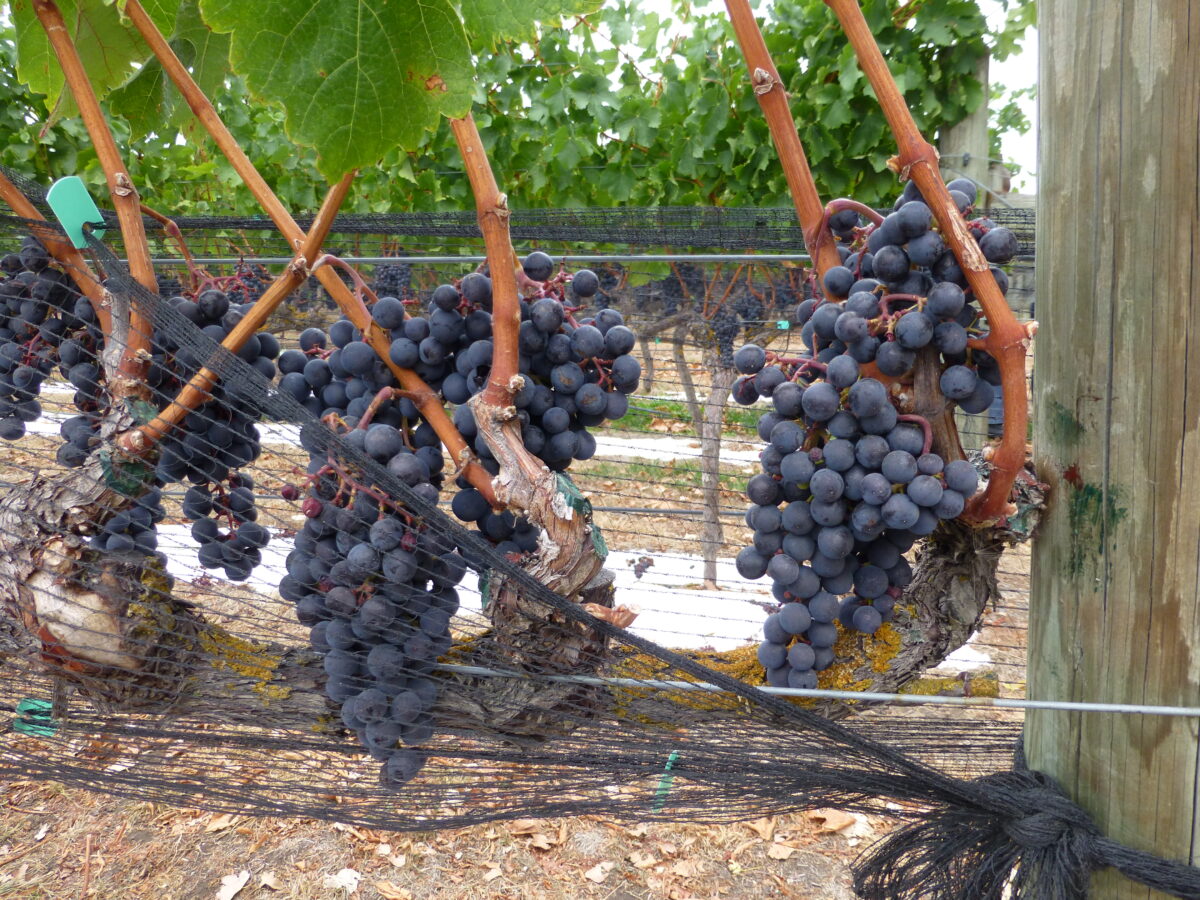
A few days ago, BayBuzz received a media release from Hawke’s Bay Winegrowers that gushed:
“Vintage 2025 is shaping up to be one of the most promising in recent history. As winemakers complete their work in the vineyard and turn their focus to the winery, the question remains: Could this be the one?” One winemaker called the vintage “unique and potentially legendary”.
The release estimated this year’s Hawke’s Bay production at over 32 million bottles (24 million litres).
Great news from our region’s sexiest industry?
Wow, I thought, clearly these folks aren’t on the same page as esteemed wine expert Michael Cooper, who had just written in The Listener a grim profile of the NZ wine industry titled, Last orders. In contrast to the 1990s, he wrote: “Today it’s survival of the fittest. For many who plunged into the industry 20 or 30 years ago, their dream is in tatters … younger people don’t want their wine. Not just their wine – any wine.”
Cooper reported: “Over the past decade, our annual consumption per capita of all wine (local and imported) shrank from 21.2 litres in 2015 to 14.9 litres last year … consumption of domestically produced wine has almost halved – from 13.7 litres to 7.5 litres.” Such decline is worldwide, even in wine bastions like Italy and Spain.
So, who’s going to drink those 32 million bottles of possibly best ever Hawke’s Bay wine?
Given HB has the given chops to produce superlative wine, it still boils down to marketing … not an industry strong suit.
A HB Winegrowers spokesperson broke down the region’s wine profile as follows: Sauvignon Blanc – 20%, Chardonnay – 20%, other Whites – 20%, Reds – 40%.
Historically, a chunk of HB’s Sauv actually goes to Marlborough, where it’s blended with their grapes. But not this time, I’m told, Marlborough has a surplus of grapes and isn’t taking HB’s. If there’s a villain in this story, it’s Marlborough’s biggest corporate winemakers.
HB Winegrowers estimates that about 20% of HB production is exported, in sharp contrast to NZ’s overall production, 90% of which is exported … and of that 95% is white wine, virtually all Sauv. And for the first time, in 2024, wine packaged in bottles represented under half (49.8%) of NZ’s total export volumes. The other slightly more than half is shipped in bulk in polythene bags and sold, as Cooper puts it, “under supermarket brands you and I have never heard of.”
Not particularly helpful to elevating and protecting New Zealand’s premium quality wine story. As one HB winemaker said to me of the Marlborough corporates, they pick it early, irrespective of quality, blend it with anything and ship as much as they can … it helps their cash flow.
This has been a longstanding issue. The NY Times wrote about it back in 2009 in an article headlined New Zealand Struggles to Keep Wine Prices Up. And at that point, bulk exports represented only 20% of NZ’s wine exports. Cooper was quoted in that article: “You could probably take half of Marlborough sauvignon blancs, and if they disappeared, they wouldn’t leave a trace because they were identical to the wine next to them.”
But back to Hawke’s Bay. What will happen to the 26 million bottles of HB wine that will remain in NZ as we drink less?
Despite HB Winegrowers’ understandable enthusiasm as a trade voice, the local players I’ve heard from have a more pessimistic outlook … there’s more of a consensus that grapes are being left on the vine and vines will actually be pulled out.
Wine drinking is declining, especially among the young, the global economy is flagging (even before tariffs), there’s over supply, it takes major scale and years of feet on the pavement to market effectively overseas, and by nature winemakers are craftspeople, not marketers by vocation.
Is anyone in the wine biz really doing well (apart from enjoying their lifestyle)? The names I hear most often are Te Mata Estate, Clearview Estate and Tony Bish Wines.
If any HB winemakers wish to step forward and confirm, hand on heart, that they make a profit on wine sales, BayBuzz would be thrilled to hear from you.
The folks I’ve talked to would suggest these measures to keep the wine glasses clinking:
- Focus on the region’s strength – ‘own’ chardonnay and syrah
- Don’t chase the bottom of the market
- Remember the wine consumer is making a right brain choice
- Strive for more collaborative marketing (including better online platforms)
- Sharpen and leverage Hawke’s Bay’s brand story more effectively (using the Gimblett Gravels sub-appellation as a model)
Otherwise, Hawke’s Bay might have reached the point of ‘peak wine’.

It’s interesting that we laud an industry, and call it “sexy”, when it produces a drug that causes huge harm to individuals and society at large with effects ranging from cancer to domestic violence. Maybe that is what is turning young (and some older) people off of it?
Gee nobody in my orbit drinks recklessly, we enjoy a glass or 2 and drink responsibly.
As long as there’s plenty of good reds I’m happy – Marlborough Sav Blanc is mass produced rubbish to my mind described by another Marlborough grower we met as “pressed grass clippings with a bucket of cats’ p…s added” so I stick t good HB reds. But I can see that there is a marketing problem which will be exacerbated by Trump’s Tariffs and local growers or the main grower group will need to be smart and quick on their feet – maybe a joint marketing group should be set up? Meantime I will do my best to keep the good growers happy with my consumption
I can hand on my heart tell you I don’t make a penny from my small vineyard. I talked to a French guy in the industry and he thought NZ would become the land of the Oligarchs, a few people owning everything, like what is happening in Martinborough. NZ is over taxed and over regulated, costs are too high for high labour industries.
Isn’t there a famous quote: “How do you make a small fortune in the wine business? Start with a large fortune”
I loved wine from
My twenties up until
My seventies. I was a very good supporter and had the hangovers to prove it. It really
Knocked me around. I now imbibe about one glass per week as do many of my friends. Most drink gin or vodka sadly . We won’t be able to help anymore.
Ever heard of “Kiwi Trail”? That’s a Sauv sold here in Germany by Aldi Süd (Sued). Very drinkable. Price currently €4.79 for 0,75L. Such NZ-sourced wines are usually bottled, according to their labels, at wine plants here in the Rhine-Moselle region. The challenge is to use the new NZ-EU free trade agreement to now develop joint wine ventures over 18,000 kilometres (Port Napier to Hamburg/Rostock) , even blends, cuvees. Here “Piwi” wines (ecological, climate change-adapter) wines are selling (well). And in marketing terms NZ here has an enduring, positive image. Approach: Smart cooperation instead of diehard competition.
Ian has since educated BayBuzz that “Piwi” in his comment is not a typo. PIWI stands for pilzwiderstandsfaehiger. That’s German for fungal disease-resistent-capable breeds/varieties of grape(vine) (Weinreben).