

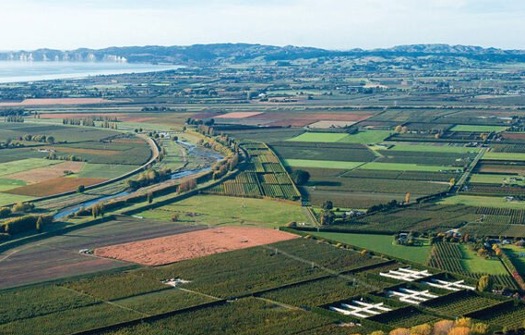
After very extensive background work that began in early 2023, on 19 May the Napier-Hastings Future Development Strategy Joint Committee adopted its Strategy for how residential, commercial and industrial land development (i.e., growth) should occur on the Heretaunga region over the next ten years. At which point the plan must be reviewed.
Note the italics on ‘should ’ … I’ll come back to that.
The strategy development process has involved volumes of staff and consultant research, demographic analysis, business growth modeling, stakeholder engagement, community workshops … the works.
All this was boiled down into specific spatial recommendations as to where growth should occur and where it should not. Recommendations were put to public consultation in a draft plan, which generated 139 submissions reviewed in a 3-day hearing by an Independent Hearing Panel that made final recommendations to the Joint Committee (with representation from HDC, NCC, HBRC and pertinent Māori settlement groups).
The final votes in the Committee were not unanimous, nor was final adoption. HBRC and NCC remain at odds over further development of residential housing on Riverbend Road. By contested vote, HBRC successfully removed approval of this development (which was blessed by the Independent Panel) citing flood risk, causing NCC’s Mayor Wise to vote against adoption of the overall Strategy.
The Joint Committee made these final decisions on 19 May, and the Strategy now goes before the three councils involved for their full council acceptance. Most councillors have been on the sidelines throughout the process, albeit regularly briefed. HBRC will consider the matter on 25 June; HDC and NCC the following day.
Whew!
So, how significant is this entire effort, which has probably consumed thousands of person-hours and god only knows how much money?
Well, for one thing, no one knows what happens if all three councils do not endorse the same strategy!
Here’s an exchange BayBuzz had with Mayor Sandra Hazlehurst, who has chaired the Joint Committee:
BayBuzz: I’m under the impression that the strategy must be approved in total by each of the three councils to be adopted. Is that correct? With Riverbend now voted out, what happens if NCC balks at endorsing the strategy?
Mayor Hazlehurst: “The FDS Joint Committee only provides recommendations to the partner councils. The partner councils as the final decision makers can choose to accept the Joint Committee’s recommendations or not. We are seeking advice as to the appropriate process if the partner councils adopt divergent FDS positions.”
Call me crazy, but shouldn’t these ground rules have been clearly established on Day 1? What’s the point of doing all this collaborative work to possibly wind up with two or three differing strategies? Granted, at the moment there seems to be only one matter in dispute, but who knows what might occur as each full council considers the plan?
In any event, assuming all three councils do wind up on the same page, what is the legal significance of the final Strategy?
With 139 submissions to the draft strategy, there are certainly both happy and unhappy players, some quite significant. For example, a proposal by Mr Apple to convert 34 hectares of its highly productive land to ‘wet industrial’ use was denied. And the commercial, Māori and NCC developers behind the Riverbend Road project can’t be happy with their rejection.
So what happens in such cases?
The short answer is that the new Strategy will have no teeth. It can command or prevent nothing. It’s simply a set of guideposts for councils to pay attention to as they consent individual projects or private plan changes in the normal way. Even the Independent Panel kicked certain projects to touch, saying they would be examined more “granularly” in the customary consenting process.
Again, here’s how Mayor Hazlehurst describes the situation.
BayBuzz: What exactly is the legal status of recommendations in the Strategy once adopted? If someone wishes to seek consent for a development not recommended, or oppose a project that is recommended, a) can they do so, and b) how is the ‘burden of proof’ affected?
Major Hazlehurst: “The FDS does not grant permission for developments to occur in any of the areas identified, rather it informs long-term planning and decision making, including any necessary further assessments and investigations.
“It gives a high-level direction that is then subject to more detailed testing. RMA processes such as plan changes, resource consents or fast track approvals must be obtained for any and all further development. These can be applied for no matter whether a site is identified in the FDS or not.
“The FDS does not prevent applications under the RMA for further development outside of the areas identified, however it is taken into account as part of any further assessment undertaken.
“Any future Plan Change or Resource consent would be required to be assessed in terms of its necessity regarding demand, as well far more detailed assessments around productive soils, hazards and numerous other environmental effects to ensure the site is appropriate for development.”
I’ll leave it to the lawyers and would-be developers (or their opponents) to figure out what that actually means when push comes to shove. If all this development comes down to case-by-case consenting and plan changes, is this Strategy much ado about nothing?
Does it amount to more than bad PR if someone proposes to advance an ‘unapproved’ project? Must opponents of an ‘approved’ project make a heavier case to block?
For all the work that has gone into the Napier-Hastings Future Development Strategy, shouldn’t the outcome have been something more firm and predictable than ‘pretty please’ guidance?
Here’s the final presentation made to the Joint Committee on 19 May. It’s a good summation of the process and key recommendations.

Thanks for putting this out there, Tom. There was a lot of push back on this. There is more through the Napier Proposed District Plan (PDP) Hearing Streams at the moment, which are pertinent to this topic. As a ratepayer, I disagree with a lot of the FDS and the Officers reports. Again, it feels like people put in their submissions, if it doesn’t suit the Council they lump it all together with a very generalised reason for rejecting it. I’ve got it in good authority that they are going to push through what they want no matter what the people want, like a lot of their other decisions. Riverbend Road should not be developed, it is a recipe for disaster and even if land could be mitigated, surrounding properties will be negatively affected. This is the same with the Wellesley/Munroe development, proposed medium density in Pirimai and Onekawa and high-density in low-lying Marewa and Taradale. The FDS and PDP need to be scrapped and started again once the majority of this Council has got the boot in October.
Waste of money yes, another thing they’ve got so completely wrong.
Vote them out in October!
Quite crazy that Iwi reps can vote against one housing development based on supposed flooding risk (but never seeing any of the technical information put forward )while benefiting from their own housing development (Ahuriri Station) been given the green light despite being largely below sea level! Prior to the ’31 earthquake it was all sea!
FDS submitter, agree. Ps for s##ts and giggles look at the preferential treatment they get in the Napier Proposed District Plan Hearing Streams, they can submit late, not provide data, ‘work with’ the planning department to make their submission work for them at our expense and have papers changed. They also want to build 6 storey buildings on the hill. It’s been rejected so far but no doubt they’ll throw down a war dance to sway the chiefs. I’d be very surprised if the people who they propose to build papa whatevers next to have any idea what they are really in for!