


[As published in January/February BayBuzz magazine.]
Hamish White
CEO, Now
Solar, service and SaaS
Local telco CEO Hamish White doesn’t have just one big idea, he has three. His vision for Hawke’s Bay 50 years into the future is a region with a markedly different and much bigger economy. We’re still earning export dollars from tourism and the primary sector but have developed significant new industries that are infinitely scalable.
White says: “What sort of region do we need to create for our grandchildren? We need to be quite deliberate about taking steps into that arena.”
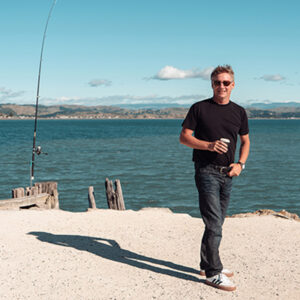
The first of his three ideas relates to the sun. With one of the country’s highest sunshine hours, White argues that renewable solar energy could become an emerging and significant earner for Hawke’s Bay. “Why couldn’t we become the solar capital of New Zealand, and actually look at developing land in a different way?
“Why couldn’t we look at the role that solar could play? It is a natural resource that’s only partially leveraged at the moment. We could be feeding into the national grid, and become a centre of excellence for solar innovation and solar electricity generation.”
Idea number two relates to service industries. White says there is a resurgence and value put on localised service and opportunity for Hawke’s Bay to build a strong industry based on service. Now, the telco White leads, leans heavily into service as a point of difference and has done pretty well by all accounts.
In the past 10-15 years, Hawke’s Bay has attracted a number of organisations that have established service centres. Think Kiwibank, Datacom, Xero, Police, and Smith & Smith Glass.
We have land in abundance, we are well placed geographically and we have a growing capability in service, says White.
“We have a proposition in terms of cost of living, in a comparative sense. But there’s a number of component parts that need to come together. We need to work with the tertiary sector – EIT and others – to address talent pool concerns and with local government.
“Service evolves into other things. There’s a massive support network that sits around it and every single discipline in terms of technology, finance and culture. Don’t think of it as only creating a whole lot of call centre jobs; it’s everything else.
“You can’t build these ecosystems overnight but the more that exist here, the easier it becomes to attract even more,” he says.
Completing the trio of ideas is SaaS, Software as a Service. Hawke’s Bay already has successful software businesses such as Fingermark, Magiq Software, and Re-Leased, says White.
“We’ve got a critical mass and there’s some serious talent drifting around.
“The Heretaunga Plains would be a great place to start a SaaS business. We need to think about the ecosystem that we’re building for SaaS, in the same way as we do for service.
“It’s about collegiality and collaboration and understanding what these people (SaaS workers) need to continue to grow and be successful.
“We need to be very clear on what our vision is in terms of these future areas of GDP. But wouldn’t it be lovely to think that in 50 years’ time, our economic pie is that much bigger and 70% of it is coming from sectors that aren’t really present now?
“I’m really excited for what the future holds for Hawke’s Bay. I think we are in a really good position.”
*****
Bayden Barber
Chair of Ngāti Kahungunu Iwi Inc
Tūtira Mai Ngā Iwi … Unite 100,000-strong iwi
Bayden Barber’s big idea is to unite all of Ngāti Kahungunu.
Back in the 1950s Canon Wiremu Te Tau Huata wrote the waiata Tūtira Mai Ngā Iwi on a road trip driving past Lake Tūtira. The song has special significance for Hawke’s Bay Māori, and its sentiment – “come together as one” – encapsulates what Ngāti Kahungunu Iwi Inc Chair Barber is hoping to achieve on his upcoming road trip across the rohe to establish the next 25 year vision for the iwi.
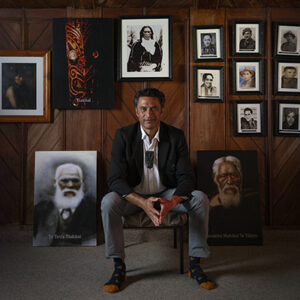
He wants to see all of the iwi – which at 100,000 population is New Zealand’s third largest and has the second largest coastline – thriving.
“We want our people to be thriving in education, excelling in their culture, to be in leadership roles across the country in business and politics, and to be thriving and excelling in all facets of their lives. It’s a big responsibility and a big vision.”
Barber says that Ngāti Kahungunu Iwi Inc (NKII) is on the up, with an $11 million turnaround in financial performance, after some bad investments.
“We’ve been through some struggles financially, but we’ve cleaned that up, and we’ve turned the corner.”
Key to the future success of NKII is equal focus on ōhanga (economic performance) and oranga (translation ‘life’, but relates to iwi development such as education, jobs and training, environmental science, health and wellbeing, housing, culture and language revitalisation). Barber says that economics power everything else, and only go so well as what you’re delivering back to your people.
“When we’re looking at economic investments we need to make sure those investments can create jobs and training. Half of our population is under 25, and they need skills and training; education is one of the key pou in our future.”
Like many iwi, Ngāti Kahungunu people are spread around the country. Barber says he wants to get iwi closer and more connected to their turangawaewae. “If we can get them home, and bring that intellectual capacity, I’d love to do that.”
Barber wants to do more than just bring people home, he wants to bring all of Ngāti Kahungunu together: the Iwi Inc, the six taiwhenua, and the seven post treaty settlement groups.
He talks about kotahitanga – collective strength, bringing everything together.
“If you look at our collective wealth, there’s about half a billion dollars of treaty settled wealth. You’ve got assets, you’ve got people. Our biggest asset is our people, so being collective around how we’re dealing with the same people, how we collectively use our influence to improve outcomes in health, housing, jobs etc. And we want our people to be able to speak their language.
“If we can have kotahitanga it will positively impact the whole of the region. It’s a powerful proposition. We have a bold vision and that vision is to be united. We need to be smarter and we need to pull together.
“We’re starting to have those conversations with the post treaty groups, and it’s a bit testy at times. They’re tough conversations but we’ll have those conversations and our people expect us as leaders to have those conversations.”
Barber says the biggest threat to a united Kahungunu is people pursuing their own agendas.
“We need to look far and wide, and forward another 100 years in terms of what this could be. I think it could be a game breaker.
“We need kotahitanga here in Kahungunu and we actually need it on a national scale. Because it comes down to scale, influence, efficiency and good leadership. And all of those are harder when you start filtering it out, when you start watering it down, all of those things become a lot more difficult.”
*****
Alex Walker
Mayor of CHB
CHB has bigger role to play in HB
Alex Walker, Mayor of Central Hawke’s Bay, has big ambitions for her district.
Her big idea sees CHB playing a much bigger role in the future of Hawke’s Bay. “There’s a conversation that needs to be had in 2025 … which is how we get Central Hawke’s Bay into a clear conversation about the future of Hawke’s Bay.”
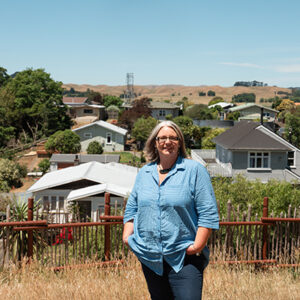
As she sees it, there are many handbrakes to future development on Heretaunga plains land. There’s pressure to preserve productive land, pitted against the need for housing and the challenge of getting developments consented in a post Cyclone Gabrielle world.
Walker says that CHB has 2,500 sections – both rural and urban – available for residential development.
“We’ve spent the last few years putting very clear building blocks in place for growth here to be smart. And smart for us means allowing for growth, but keeping our small town spirit, using our infrastructure smartly and minimising our impacts. We have protected our highly productive soils in our new district plan, we have created an urban growth zone in Waipukurau (50 hectares) in partnership with Tamatea Pōkai Whenua and a variety of private landowners where there’s scope to grow by 950 households in the centre of Waipukurau. We have a plan which clearly delineates growth nodes on the edges of Waipawa and Ōtāne.
Central Hawke’s Bay hasn’t got to the point of being overdeveloped, like some parts of the Heretaunga Plains, Walker says.
“We have got ahead of that. We have got ahead of the land fragmentation, of the urban crawl onto productive soils. We have got significant areas that are ready and ripe to be the centre of the future of Hawke’s Bay.
“This is where the relevance of Central Hawke’s Bay to the whole region is so important. It’s a space where we can grow not just local, but a regional workforce. And if we are smart about how we place residential development and we strengthen it with a regional spatial plan that connects our water resources, our infrastructure resources, our soil resources, and our workforce together, it will very clearly connect Central Hawke’s Bay to the engine room of the future of Hawke’s Bay.
“We’ve got the space to grow and the building blocks in place to do it right.”
It’s a 10 to 20 year vision, Walker says. “Thriving in Central Hawke’s Bay does not include us looking like Havelock North or Hastings. It is about keeping our unique identity, strengthening our hand, bringing great people in, bringing investment in, and creating those opportunities here locally for our people.
“What we’re looking for now will be the partnerships to investment that are going to open doors on some of that growth.”
Walker warns that a joined up view on what success looks like for the region is needed, for everyone to capitalise on the opportunity for Hawke’s Bay. Without it, she says, it becomes a competitive proposition between districts.
“We have to make sure that Central Hawke’s Bay’s value is really clearly articulated. That’s why we have to have a really meaningful place in the economy, so it’s really clear what the future that the region supports is going to look like.
“I think there is a perception that Napier and Hastings are the story of the region, but there is only one district in this region with the words Hawke’s Bay in their name.”
*****
Willie White
Willie farms in CHB and serves as Vice Chair of HB Future Farming Trust
Empower rural catchment groups
Organic dairy farmer and Vice Chair of Hawke’s Bay Future Farming Trust, Willie White, has a big idea to improve environmental outcomes for not only our region but New Zealand.
And that’s to put more financial resources into catchment groups. For the townies, that means diverting budget away from councils/regional councils and giving farming communities the power and the funding to get things done.
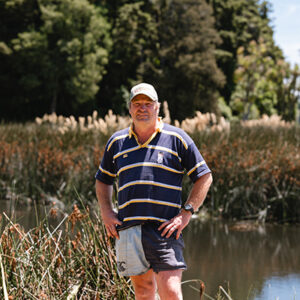
White, who farms 800 hectares in Ashley Clinton Central Hawke’s Bay, says that community led action has a lot of benefits.
“You get far better engagement from the people in the community. When you get community level accountability, the efficiency of the dollar is really important. Hawke’s Bay Regional Council is trying to do a lot of things over a big area, and I think there’s an opportunity to take some of the burden off the council and give more to community-led groups.
“These groups can actually get things done efficiently and get people to come along for the ride. And that’s half the battle. It’s got to be looked at as a way forward for the country. We used to operate really well when communities had a bit of accountability and empowerment and we need to go back to that.
“Local people understand the issues better in their communities and if you give a bunch of farmers a budget to work with, they’ll probably come in under budget.”
White says that funding for catchment groups is a challenge and there needs to be a fundamental shift in the way that we manage financial and environmental resources.
“Obviously the regulator or centralised councils are still going to have a place but if the goal is to enhance or protect the environment, I believe we can get there faster, more effectively and have more efficient gains through a community-led focus.”
White cites the example of the Tukipo Catchment Care Group, which through the support of MfE funding (50:50 with landowners), Fonterra and HBRC has enabled:
• establishment of a large constructed wetland (soon to have data collected to assess the benefits)
• planting of 75,000 native trees to date and resulting in a native tree nursery being created in the community
• 50km of new fencing (does not include waterways required to be fenced due to regulations)
• establishing ecological corridors targeted for pest control
• a further 22 on-farm wetlands and 200ha of afforestation of sensitive land.
All with widespread uptake and the ability to pack out the local hall for community days.
Currently the government is funding catchment groups around the country, but the signs are that things are about to change, says White.
“Government likes the catchment group model but they’ve indicated they want farmers to have some skin in the game, which currently is leaning towards membership fees.
“We can be the organisation that’s funded by its members to do really good things on behalf of the whole of the region but it can’t be an additional cost to farmers.
“Farmers have proven to be willing to spend money on-farm to enhance environmental outcomes. While I am happy to pay to be a member of a catchment group or collective, on principle that money needs to be a re-appropriation as opposed to an addition. Some of that money should be coming out of regional council budgets and into catchment groups, because they’re proven to be effective.
“If we’re able to spread some of the responsibility into communities … we already have real skin in the game as we rely on the land to make a living and the rivers run through our properties.
“I really do believe that would be the best thing for Hawke’s Bay and for New Zealand,” says White.
*****
Alison Prins
General Manager of the Graeme Dingle Foundation HB
Children should be seen and heard
Alison Prins, General Manager of the Graeme Dingle Foundation Hawke’s Bay (GDFHB) has a radical big idea. To listen to young people and act on their ideas.
Giving youth a voice is fundamental to best practice youth development, she says. “They have very little opportunity to have input to decisions that affect their lives, now and into the future. They’re super smart, they know what’s happening and they can make a huge difference.
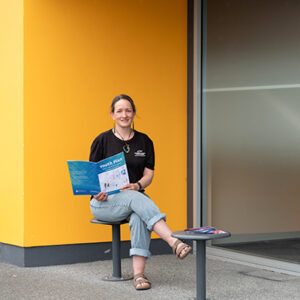
“We have this really unhelpful narrative (around young people) in the media, which is particularly damaging to rangatahi Māori. And I think if they (youth) had a stronger voice and we understood what they needed, and gave them a hand in designing the future, we’d get better outcomes for everyone.”
Prins explains that it’s an arduous process to get youth issues elevated, and to draw the attention of decisionmakers in Hawke’s Bay.
A lot of work that GDFHB does is with youth that are invisible, or less visible, says Prins. “They’re the ones that have a lot to offer, but they’re also the ones that have very little voice. There’s lots of opportunities to understand it better.
“Youth voice is fundamental, because we’re building stuff that works for them, and can get good outcomes. We’ve proven that with our Pathways 2 Potential programme and the positive impact on school attendance, engagement and personal development.”
Pathways 2 Potential was developed by GDFHB based on youth voice from many schools, including Wairoa College. Prins says staying at school until the end of Year 12 is directly related to reaching potential.
“If we can work with that transition to high school, for those year nines and tens, then that’s a huge step.”
Pathways 2 Potential’s purpose is to improve educational engagement, career readiness, and overall wellbeing (hauora), and help participants to envision a positive future, laying a strong foundation for long-term success. It includes mātauranga Māori (traditional Māori knowledge) elements and youth development best practice.
It has a focus on hands-on interactive learning experiences, which are particularly beneficial for neurodiverse students, and the programme includes practical skills, such as budgeting and teamwork, which are more engaging and directly relevant to students’ personal growth, says Prins.
“Wairoa College has been amazing to partner with. They love this mahi and see a meaningful difference in their students and how that has a flow on effect in the school.”
As well as Wairoa College, Pathways 2 Potential was delivered in five other schools last year; Tamatea High School, William Colenso College, Taradale High School, Hastings Girls’ High School, and St Johns’ College. GDFHB will be delivering P2P again in 2025, and has the capacity to run the programme in other schools, subject to funding.
By not giving youth a voice we (society) risk putting money and resources into things that are less effective, says Prins.
“And as a result, we don’t realise the potential of the rangatahi of our region. They are our future decision makers and our future workforce, which will determine the prosperity of our region.
“But the idea is that it’s not just youth organisations doing this. It’s every organisation and every decision making body, thinking differently about how they engage with rangatahi and what they can gain.
“The narrative around our youth has got to be around opportunity and potential, and involving them. We’ve got to stop trying to solve problems for them and they’ve got to help design solutions.”
Photos by Florence Charvin

All these are great ideas – solar has been something I felt that HB should have been highly involved with ever since I moved here some 40 odd years ago – NKII has always been a group that should be heavily involved in the growth of the people and economy of HB and they should have some say in Council decisions where they can offer much assistance – CHB seem to be having a very professional approach to growth (no comment about THE Dam thank the Lord) – farmers countrywide as a general group have done wonderful things for land protection, native planting and environmental recovery (always more to do and Council/Central Govt support should be appropriate) – as for the young of the region….it’s their world not ours ….our time is nearly over and they inherit all the good, the bad, and the ugly that we have created so it’s only right that they should have a strong say in their future —and we should be listening!