

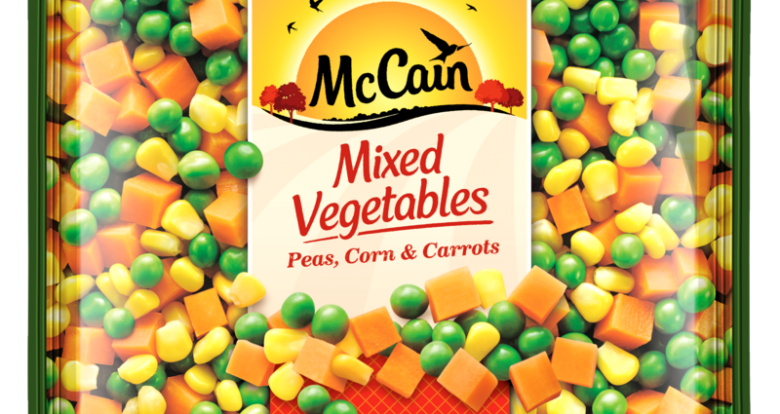
There ain’t gonna be any more.
McCain Foods has refused the request of Mayors Schollum and Foley to delay dismantling of its Hastings plant for eight weeks, informing them that dismantling is already underway, with the facility ‘for sale’.
Meantime, the Government has just stumped up with $50,000 of the $200,000 or so locals are seeking to do a feasibility study seeking viable options for keeping veggie growing and processing alive in Hawke’s Bay.
How about the Tukituki Water Security Project topping that up? They have $21 million on hand to explore the feasibility of a dam that would be dependent upon growing more stuff in CHB. For them, $100k or so would be a modest investment in confirming the CHB market for water.
Finding a viable path forward for the region’s veggie growers, if there is one, requires some new convergence amongst players with competing interests, while dealing with external factors that can’t be controlled by anyone within Hawke’s Bay.
Take McCain Foods themselves? Based in Canada, they are the world’s leading potato growers. Their investment in frozen veggies in Hastings is actually a corporate oddity to be shed. Moreover, they’ve carried enormous energy costs to bring their frozen foods to market. They need to first heat up your peas and corn to make them safe, then reverse course and cool them down to freeze, then use more fuel to keep them frozen until delivered to supermarkets or chilled containers for shipping beyond HB/NZ (75% of their production is exported). Can anyone in HB lower the energy cost of all that?
Meantime, as consumers, our budgets are strained, so despite the clamour for ‘buy local’, most of us at the till will opt for ‘buy cheap’. Raising the question: what’s wrong with Woolworth’s or New World offering a range of consumer choices for peas and corn at different price points? Isn’t that what most businesses do – from cars to laptops to coffee beans?
Are you prepared to pay more for a ‘high quality’ bag of Hawke’s Bay’s finest frozen peas?
Obviously NZ’s supermarket duopoly has a commanding hand in all this. For McCain (or Watties or any other supplier) the supermarkets are their customers. Those two customers totally control and set the price they charge (and the margins they protect). They can use that pricing to advantage house and imported brands where their margins might be even greater. It’s a pretty murky business … and again, a situation no one in HB can fix.
Which brings our attention to government regulators – those who are supposed to ensure fair trade protections (e.g., against import dumping) are enforced for NZ food producers and competitive pricing is ensured for NZ consumers. Many commentators contend these agencies, like the Commerce Commission, are failing with those responsibilities.
As for the veggie growers themselves, all the feedback I get is that our HB growers are damn good at what they do. Still more productive per hectare than overseas growers.
However, the most critical metric for growers must be profit per hectare. But their input costs rise and rise, including the carrying cost of the land they farm, while they have zero leverage over the price they are paid by McCain (or Watties). As noted, the processors in turn would assert they have zero leverage over the price they are paid by the supermarket duopoly, one of those players being Australian-owned.
Case by case, some HB veggie growers have a land and input profile that might still yield a profit, but many will not, given the low-value/hectare nature of their crops (compared, say, to apples). Add the cost of irrigation water in any future ‘user-pays’ water storage model, and it would get tougher still.
So, is the ‘McCain problem’ fixable? By itself, No. Notwithstanding any localised ‘feasibility study’ that might improve understanding, it’s a small piece of a much bigger and challenging picture for HB and NZ.
Other views, alternatives?

Just think – if we had a properly established, funded, governed, effective regional development agency, which knew the region well and was connected nationally and globally, we could have used it to explore the options … oh wait …
If we’re reliant on Government, Government bodies, big business and overseas businesses to sort out this for our growers, we’re on a losing streak – they could give s..t about NZ people whether they be consumers or growers. McCains is a lost cause – this Government will do whatever the big companies want, will kowtow to overseas concerns, and they already show they care little about the NZ people. Big Business couldn’t care less – profits are their only worry! As for local concerns such as the dam proponents – give me a break! They’re set in their little kingdom and won’t do anything to change. Good try Mayors but you’re pushing water uphill with a rake.
gosh, i wonder how long it will be before start saying, “if only we had a socialist democracy”. y’know, one which would say NO to “free” trade and insist on “fair” trade… so we’re not competing against growers making a pittance in order for their produce to wind up “competitive” on our shelves. and de-couple this crazy “we must pay what people pay for our stuff overseas” idiocy that sees (eg) folk buying butter or lamb in UK markets – after all those logistic/transport costs -for LESS than we pay here (and they get the prime stuff, we get the second-grade).
and maybe nationalise the supermarkets (and the banks!) at the same time. ;)
so you’re right, Tom, it’s not solvable from HB… or not only HB… but is IS solvable. we just need to re-develop some balls as a nation and start acting in our OWN best interests instead of pretending and acting in everyone else’s (ie, the big bananas who control capitalism). *@%^ them!
In all of this raking over the ashes of McCains, we have forgotten that the site was first built by Grower Foods, a local co-operative. It struggled for Many years before being sold to McCains for $1. Let that sink in. The business was broke in 1996. It has been through ups and downs for 30 years, and McCains have obviously had enough. It is worth the equivalent of $1 today, in 2026.