

Events bring people together. To enjoy music or the arts, create a sense of community, celebrate culture, commemorate a milestone, to watch or participate in sport. Free or ticketed, events foster social connections and create shared experiences, promoting well-being in an increasingly digital world.
And they are good for business!
Hamish Saxton, CEO of Hawke’s Bay Tourism, says events are really good at providing a reason to visit a place and give it that freshness.
Hawke’s Bay is no different. Events in the region contribute a net $12 million to the local economy, making them big business. Who are the organisations and people involved in our events sector?
Councils are key players
The historical ‘big four’ in our local events scene have been the Mission Concert, Horse of the Year, the Hawke’s Bay Marathon, and the Art Deco Festival. BayBuzz readers may recall that Horse of the Year was cancelled for 2026, but there are many other events, big and small.
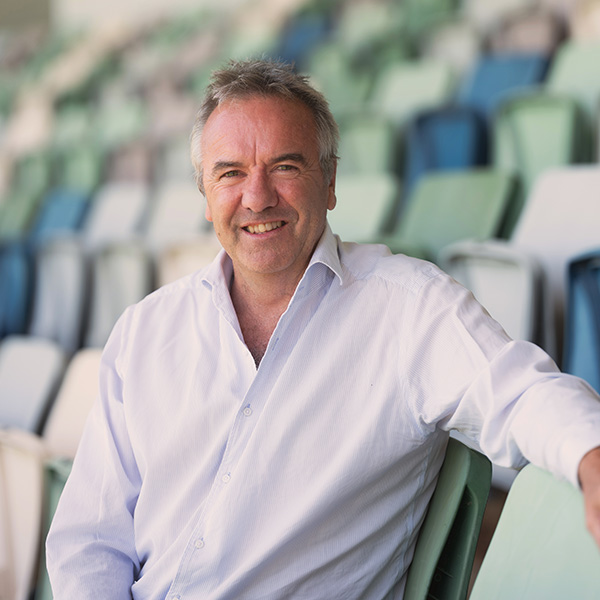
There are about 30 event owners in Hawke’s Bay, according to Kevin Murphy. And he should know. Murphy has decades of experience in the event industry and is currently Event Manager at Napier City Council, as well as the council’s representative on the New Zealand Events Association board.
Events in Hawke’s Bay are staged by councils, charitable trusts, private businesses, music promoters, sports bodies and iwi organisations.
Councils are one of the biggest event owners in their own right, as well as supporting many third party events with funding, sponsorship and in-kind support. Owning infrastructure such as McLean Park, the Napier War Memorial Conference Centre, ToiToi, and the Hastings Sports Centre, councils attract teams, performers and conferences to these venues, and stage events in other places.
Vicky Roebuck, Marketing Tourism and Experience Lead at Hastings District Council says that in addition to supporting third party events, her council stages between six to ten major community events each year, depending on its event calendar.
“While social impact is not always easily quantified, community feedback shows that cornerstone events such as Blossom Festival, International Cultures Day and Matariki provide significant opportunities for connection, celebration and shared experiences that might not otherwise be accessible,” she says.
Last year’s inaugural Meatball Festival delivered excellent outcomes for Hastings, says Roebuck, with 5,000 tickets prebooked, and 4,821 attendees on the day, including 34% from outside the Hastings District and 3.5% from outside Hawke’s Bay.
“More than 15,000 meatballs were sold in three hours, 93% of participating vendors reported that the festival delivered economic value for their business, and generated nationwide media coverage, positively positioning Hastings and the event, with an estimated advertising value of over $100,000.”
Napier City Council was involved in 57 events last year, ten of which were council owned, such as the Christmas Parade, New Year’s Eve celebrations, and the Night Fiestas.
Murphy is clear about the kind of acts and events that he tries to book for Napier.
“We’ve got to be realistic in that we’re never going to get a huge number of events or very high end events. We’re always going to have to work in our space, in our lane.”
It’s about targeting the right mix for the region, he says.
“From my point of view, I want to get a concert at McLean Park every year or two, and that’s doable as long as we’ve got content coming through the country. I want to get an NRL game every couple of years. We want to get a Super Rugby game two out of three (years). We want to chase an ALeague game. We want to see things like the marathon happening and any other opportunities like that.”
Murphy emphasises that the multiple benefits of key events are carefully measured and documented. “We do everything now under a cost benefit analysis … trying to identify the net benefit for the region. So what money stays in the region versus going out.”
Event Economics is the platform used by most councils around the country to assess economic benefit. But it goes further and considers important social, cultural, and environmental effects.
Murphy says that Event Economics is a really important model to understand, “because nationally, most councils are now using it, and it’s the model that’s used by the government.”
National trends
After the pandemic, there was a surge in events, says Elaine Linnell, General Manager of the New Zealand Events Association.
“We realised quite quickly that it was a false economy and things didn’t go as well as we thought. 2023 and 2024 were quite challenging, costs had gone up and some suppliers hadn’t made it through, meaning less competition. It was a really challenging time for the industry.
“Then in 2025 we saw the backing from the government, with support for events and really understanding that events are true economic drivers, regionally, nationally and internationally.
“We were able to have those conversations with local and central government on the importance of events as not only economic drivers, but also for social cohesion and community wellbeing.”
For 2026, the New Zealand Government has launched a $70 million package, including a $40 million Events Attraction Package and $10 million for the Events Boost Fund, specifically targeting the growth of international and local events.
Linnell says that with government funding, 2026 and 2027 look more optimistic but that the environment is still challenging.
She notes that countries like Singapore and Australia are spending money on driving international visitation from events. “They are putting hundreds of millions of dollars into event attraction because they know it will bring the tourists back.
“New Zealand will never be at a place where it can compete with those bigger countries.”
Wine, and ?
Black Barn founder Kim Thorp says that events have always been part of the Black Barn business model and today account for around a third of the company’s revenue, alongside accommodation and bistro/wine sales.
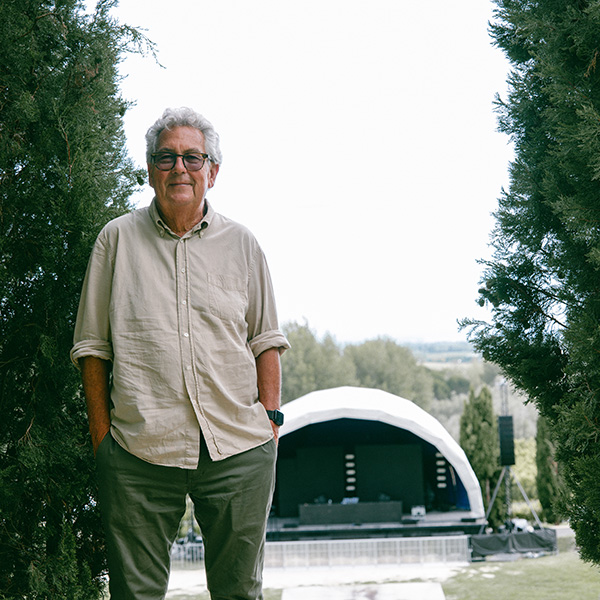
“From the beginning we decided to be about the visitor coming to us, rather than being a major wine exporter.
“The amphitheatre was almost carved out before the grapes went in; it was one of the first things we did. “It was purpose built. Live performances, music, the arts in general, all of that, we always felt was a critical piece of what the brand was about. “We got opera singers in to project voices, to check on acoustics. We tiered the terraces so that with somebody sitting with an umbrella below you, you could still see the stage.”
Thirty years later, Black Barn enjoys “brilliant respect from promoters and artists”, and Thorp says unlike in the early days, the events are profitable. “We didn’t know what we didn’t know, we are much more of a machine now.”
Thorp says the current environment is tough, Black Barn is working harder than ever to sell out each of its nine concerts. “People are currently more conscious of their discretionary spend; an event is a luxury.”
Across the bay in Taradale, Mission Estate – home to the largest outdoor winery concert in the world – hasn’t hosted a concert since November 2023, the largest gap in its event calendar since concerts began in 1993 (except for Covid).
There are a few factors in play, says Garry Craft, event manager with Mission Estate’s long term concert partner Sports & Entertainment Limited.
“Artists aren’t working as hard as they used to. They’re playing larger venues. The cost of touring has increased, and there are global organisations like Live Nation that own venues and ticketing companies and ‘buy’ the artist to put in their venues,” says Craft.
Phil Hocquard, Mission Estate Winery Chair, says it is Mission’s intention to keep the concerts going as long as it can.
“The whole economy is pretty fickle, and people are selective. Artists are selective about when they want to tour, who they want to tour with, where they want to go. It’s become a bit lumpy just in the last few years.
“Having said that, three years ago we had three concerts in one year and one was cancelled due to the cyclone. We’ve adapted to change and how the concert fits in going forward will depend on the markets, just like most businesses.”
Hocquard and Craft wouldn’t be drawn on when the next Mission Concert will be.
Interestingly, changing weather patterns were noted, creating the opportunity for a concert in November, which is when artists like to tour, and is what we saw in 2023 when Robbie Williams and Lady Hawke played at Mission Estate. Maybe there’s something in that, and maybe there isn’t. Only time will tell.
New kid on the block
Event maven Liz Pollock transplanted the Wairarapa Wines Harvest Festival model to Hawke’s Bay in 2023 with resounding success, building a loyal following for her “small intimate gathering”.
She has developed a winning formula – Harvest Hawke’s Bay – that is finding favour with punters, resulting in a sell out in 2025. More than half of the 2,200 attendees came from out of region, and stayed for 2-3 nights. That’s different from any other region Pollock has worked in.
Pollock credits the success of the festival to listening to the market, and keeping it simple.
“The festival is a combination of things that make people happy; really good wine, really good food, really nice music and just a really nice atmosphere. I’m two years ahead of where I thought I’d be.
“We’ve tapped into a niche market, a gap that needed to be filled, and to a certain extent Harvest Hawke’s Bay is filling this.”
Art Deco Festival
Napier’s Art Deco Festival attracts huge numbers. Of the nearly 19,000 attendees in 2025, locals aside, 40% were domestic visitors, and 20% came from offshore. It’s a big earner for the region, generating $2.5 million net benefit, and delivering a 44% return on investment.
After a rough few years due to the pandemic and the cyclone, the festival has enjoyed three disruption free years (2024-26), but it has changed significantly.
Jeremy Smith, Heritage Manager Art Deco Trust, says that the profile of the festival has changed from majority trust-owned content, to a mixed model event, with events organised by others under the umbrella of the festival.
The heart and soul of the festival is the free content, says Smith.
“The delivery strategy was: how do we ensure that we deliver as much free content as we can, at the same time that the board is comfortable with the risk profile in terms of the sheer volume of ticketed events that we have?”
As a result, the Trust has reduced the number of tickets it sells by 35% from 14,000 in 2020 to 9,000 in 2026.
As BayBuzz went to press, Smith reported that ticket sales for events run by the Trust are “relatively better than last year.”
Event manager’s perspective
Beth Elstone delivers events for clients locally and nationally. At her busiest, she’s had 40 events on her books annually, but these days is working on around 20 per year including the Outfield Festival, and several events for Napier City.
She says that Hawke’s Bay with its weather, landscapes, and unique venues is a good place for events. “I’ve always believed that people might come to Hawke’s Bay not only for a show, but to experience the weekend. It’s a bit of a holiday getaway.”
Hawke’s Bay has a good supporting industry for events, says Elstone. “There is a lot of local supply chain that gets involved to deliver on these events. It’s not just a random event manager doing everything. There are so many people involved from the toilets to the waste, to the bar staff, to the artist liaison crew.”
Falling by the wayside?
In the past 12 months Hawke’s Bay has seen several events cancelled or on hiatus, but none more significant than the Horse of the Year, one of the ‘big four’.
The annual equestrian event has been held in Hastings for the past 20 years, contributing millions to the local economy, but costing $2 million to put on. Event organisers announced the cancellation of the 2026 show in early December, citing funding issues.
At the time HoY expressed confidence in a return in 2027.
However, updating BayBuzz for this article, Tim Aitken, who has chaired HB’s Horse of the Year Board, indicated that a return is unlikely and, in any case, not in local hands. “I think it will be incredibly hard to hold another HoY in Hastings to the standard that we have had in the past. My fellow board members and I, as well as the staff we had, will not be involved at this stage, as Horse of Year (HB) Ltd is winding up.”
Aitken commented further: “We were looking at a positive budget for 2026 … we had every reason to believe the event was financially viable. Historically, Horse of the Year has contributed more than $8 million to the Hawke’s Bay region, delivering substantial economic benefit to local businesses and the wider community.
“Despite this, we did not receive the level of support required from our shareholders, Show Jumping Hawke’s Bay, Equestrian Sports NZ, and Hastings District Council, nor from parts of the wider equestrian community, for whom Horse of the Year exists. Persistent rumours and negative commentary on social media further undermined confidence at a critical time.”
The fate of HoY at any venue now rests with Equestrian Sports New Zealand. No doubt other regions are putting their hands up to host the prestige event.
Losing an event like this undermines the viability of the Hawke’s Bay events sector overall.
Kim Thorp worries about Hawke’s Bay losing its icon events. “We need to make sure we give them the support that means they remain consistent and viable.”
He says that Hawke’s Bay has huge potential to be much more on the radar for great events and functions, but warns that isn’t going to happen from individual events promoting themselves.
“When we’re selling out a concert, we don’t care whether they’re coming from Tomoana Road, or London. It’s a ticket sale. For Hawke’s Bay though, it’s brilliant that they’re coming from Auckland or Wellington or wherever. That’s better for everybody. It’s not the job of individual businesses to do that, it’s the job of the regional tourism operator,” says Thorp.
Reduced funding and staffing for Hawke’s Bay Tourism will constrain its ability to attract visitors and events to the region, says Hawke’s Bay Tourism CEO Hamish Saxton.
“With reduced income, we’re not resourced to be able to be as proactive as we were in the past … there will be missed opportunities.”
Events enrich our region economically and socially. They’re an important drawcard to encourage repeat visitors, and to get locals connected and feeling good about “our place”. Successful events rely on good content and logistics, good marketing, a favourable reputation for the hosting region, and early, strong support from the public. The pandemic, weather, and economics have taken their toll, but the outlook is brighter thanks to Government support.
You can help!
The pandemic’s social distancing rules wreaked havoc with the events sector, with the event-going public getting used to cancellations.
Fast forward several years, and consumer behaviour has not reverted to its pre-pandemic state. People aren’t willing to commit to purchasing their tickets too far in advance for risk of cancellation. Couple that with high profile event cancellations that didn’t make good on refunds and a cost of living crisis where every penny counts, and you’ve got a perfect storm of risk aversion and parsimony that undermine the viability of events and the risk appetite of those who stage them.
Events simply won’t happen unless people get behind them, starting with us locals. Late ticket buying increases the cancellation risk for events. Conversely, buying early keeps events alive. That’s a plea all Hawke’s Bay events empresarios would echo!
THE HAWKE’S BAY EVENTS SCENE
• $12 million net revenue
• Big three – Mission Concert, Hawke’s Bay Marathon, Art Deco Festival
• 30 event owners
• Napier City Council
Supports 47 events with funding, sponsorship and inkind support.
Holds 10 events in own right
New interchangeable pitch at McLean Park pitch enables winter sports in cricket season
• Hastings District Council
Supports 30 third party events with funding, sponsorship and inkind support
Holds 6 – 10 events in its own right
• NCC and HDC collaborate with Hawke’s Bay Tourism on regionally significant events to ensure strong alignment and maximise the return on investment for Hawke’s Bay as a whole
• Mission concert: 25,000 capacity, 60% of crowd are out of towners
• Art Deco Festival: Almost 19,000 attendees, 40% out of region, 20% international
• Hawke’s Bay Marathon: Almost 8000 participants, 75% out of region

I have to say we prefer the smaller events rather than the big ticket ones – the Meatball festival was great, the wine events in Heretaunga Street, and others. We go to Art Deco maybe once in 3 years and mainly to look at the cars and the people before heading to a bar for quiet chat and a wine or two.