

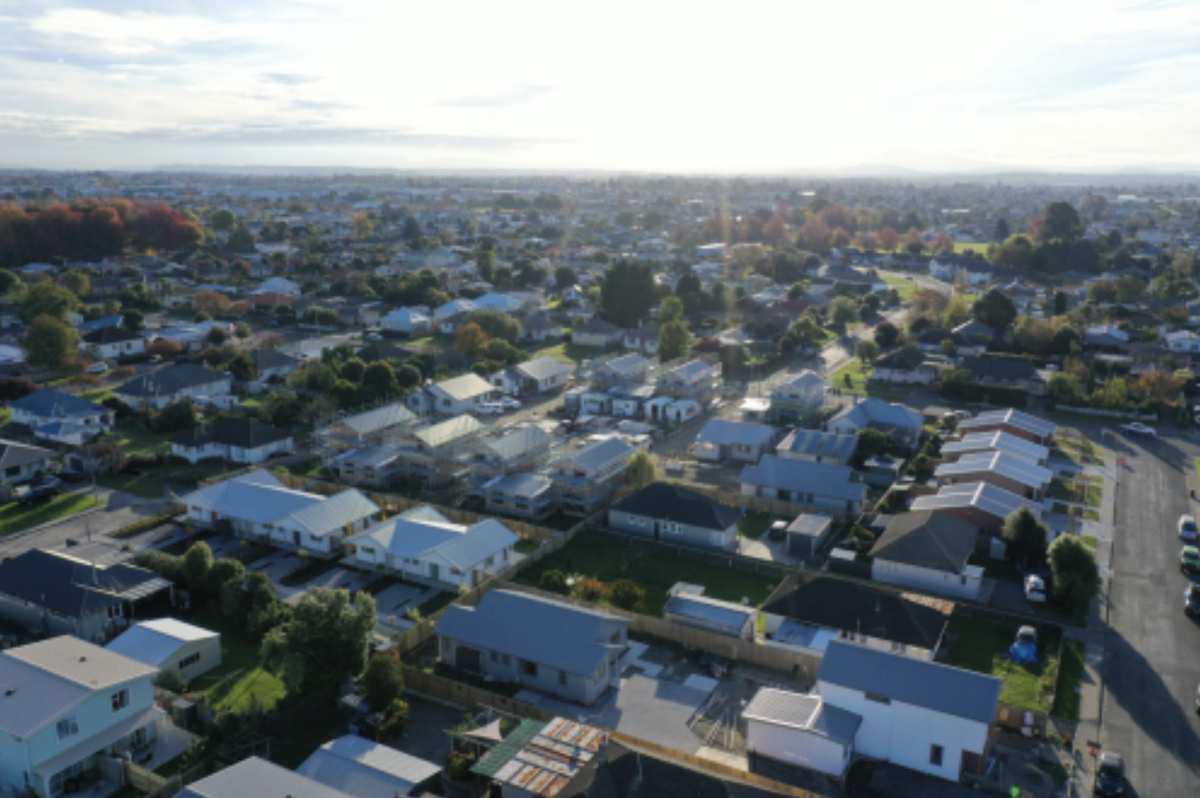
The Hastings, Napier and Regional Councils are in the final stage of deciding which areas on the Heretaunga Plains would be appropriate for housing and industrial/commercial development over the next thirty years.
Their joint decision process, set to culminate next week, would put forward for public consultation a draft Future Development Strategy (FDS). Submissions will be heard by an independent Hearings Panel. This process is targeted for closure by year’s end.
Two elements of the draft FDS have flagged the controversial competing interests to be served.
HBRC recently succeeded, over objections from HDC and Napier representatives, in removing two parcels outside Havelock North (Middle Road) from development on the grounds that the land involved held fertile soils with significant productive value.
The imperative to protect HB’s productive land from further encroachment, championed in particular by the Save the Plains lobby group, has been a major theme throughout the FDS formulation process, and will no doubt be a key focus of future submissions.
On the other hand, HBRC reps failed to remove a 600-home development project on Napier’s Riverbend Road despite its well-documented vulnerability to flooding. Avoiding housing construction (and future risk to life) in such areas has been one of the most obvious conclusions of post-Gabrielle reviews and investigations. Proponents of the development argue they can mitigate the risks.
In the coming week, the Hastings and Napier Councils will need to address the contrary views of HBRC, which has adopted the draft plan (which reflects removal of the Middle Road areas) with the proviso that the Riverbend development is also excluded.
One possible outcome is that the public will receive for consultation a draft FDS that reveals, after two years of extensive technical analysis, sharp disagreement around how to apply the basic underlying principles involved.
The disagreement over a handful of parcels might seem small potatoes in the context of a broad plan that does reflect substantial consensus around future development in the centre of Hawke’s Bay.
But still, as this plays out and a final plan is adopted and implemented as the years go by through the normal consenting processes, these two ‘hot spots’ of contention preview what is likely to become a running battle between the two territorial authorities, driven to facilitate growth, and a Regional Council charged with avoiding adverse environmental and hazard risks and impacts.
As BayBuzz previously reported, a key set of recommendations in the independent Mitchell review of Cyclone Gabrielle flood management, which provided the future mitigation blueprint each of our councils ostensibly embraced, focused on what reviewers termed the “advocacy’ role of HBRC. To put it more bluntly than the reviewers did, HBRC must be enabled by its Regional Policy Statement and prepared to instruct territorial authorities where not to build. The review cited examples where developments have occurred either because HBRC wasn’t afforded the opportunity to object … or was ignored when it did.
Said review Chair Dr Phil Mitchell: “The fact that there were relatively new housing developments in areas of known flood risk suggests that lessons from the past have not been learnt, and development has been allowed in high hazard areas.
“Residential developments have been allowed to occur in locations such as the Esk Valley and Tangoio despite a well-documented history of significant flooding. Such areas are considered unsafe for residential use and are now within the Category 3 classification. Similar declarations were made by local authorities following the 1938 Esk Valley Flood and the 1963 Tangoio Flood.
“Weak and insufficient planning direction has enabled poor planning decisions, and shows just how short society’s memory is when it comes to matters of flood hazard management.”
In simplest terms, on a case-by-case basis, it boils down to where to build versus public safety … and where to build versus food production.
Let the submission process begin!

All councils must have seen the results of the Cyclone and the damage and loss of life that occurred. Allowing residential building on those, or similar, areas is completely stupid and so very shortsighted. Any subdivision must have a flood danger appraisal – and the outcome should err on the side of caution. We don’t need any more children, elderly, and people in general being put at risk just because a developer wants to build a hundred houses to make a profit in a certain area. Some of the proposed ideas (such as at Ahuriri by Iwi) seem, at the very best, to be strange ideas. Council should be very cautious with approvals as they will be subject to severe scrutiny in the event of the next disaster
All this is good but what about the development at the Hastings golf club
It’s submitted and taking so long through the council process..
It’s great for tourism, New houses, employment, the region. Why did it take so long..
Just to clarify, Councillor Alwyn Corban from HDC also voted to remove Middle road from the FDS. The vote was 4/3
Several countries have built reliable flood protection that have served communities as planned and allowed extensive housing and industrial development (one third of the Netherlands is below sea level). Unfortunately though, NZ generally does have the ‘we will cross that bridge when we get there’ attitude….the problem is that in many cases that bridge has been washed away by some flood by the time they want to cross it.
one obvious way of helping sort this out is to ask insurers if they will insure houses built on eg identified flood-prone land. if they say no, a council should refuse consent / remove the land from development. if they say maybe (ie yes with caveats) then at the least a developer should be obliged to state that up front for purchasers – which could well deter the development proceeding – and/or council should refuse consent (not least because of potential liability issues). so, ask the question. ps: anyone on a flood-prone area who thinks they can “mitigate” serious flooding is dreaming.