

Elected councils are accountable for the structures they create — and when they are strong governors it means they are deliberately bringing the right mix of voices to the table.
The push-back against independent appointments to council committees is being dressed up as a defence of democracy. This is a weak, centralised argument.
Democracy gives local elected members the authority to design their decision-making structures, and the public the power to hold them accountable for it. But local democracy is being deliberately distorted by central government politics that are comfortable turning tangata whenua representation into a political target.
One of the best things about local government in New Zealand is that it has the flexibility to respond to different communities in different ways. Not every council is the same. Not every community is the same.
The Local Government Act recognises that. Mayors and councillors are empowered to decide what kind of decision-making structure their community needs, and what skills and perspectives will matter over the coming triennium. That structure should reflect local reality. It is designed that way deliberately, so we are not all forced into one model from Wellington.
In fact, the Local Government Act gives the Mayor the first responsibility for shaping that structure. Just as the Mayor leads the process for appointing a deputy, the Mayor also has a leading role in forming committee structures. That power is not unchecked — elected councillors can overturn a mayoral decision. But that is exactly the point. The structure is created through democratic authority and held in place by democratic accountability.
So elections matter. It is why questions about a potential Mayor or councillors’ values and perspectives on governance, diversity of thinking, and willingness to include other perspectives in their decision-making is so important.
Elections do not magically produce every skill, every perspective and every piece of lived knowledge a council needs. But they do put people at the table whose values reflect their community and who are willing to be accountable for their work. And just like any good governor of a private or not-for-profit board, elected members should be able to look at themselves and ask whether they have the right people around the table. Better decisions come from broad inputs and diversity of thought. That is not radical. It is governance 101.
When a council lacks financial depth, people are comfortable with independent expertise on an audit committee. When it lacks engineering depth, environmental expertise or strong community knowledge, the same principle applies. Mana whenua knowledge should be treated no differently. It is relevant, legitimate and, in many cases, essential to sound decision-making.
And if you know anything about Te Āo Māori in our communities, you know that localism is powered by the hapū. That may mean many rangatira coming to the table and a process grounded in kōrero rather than vote-counting. The point is not who wins a tally. The point is whether the right whakaaro are heard and drawn into a sound collective view. Good councils understand that and embrace it because it is real and effective.
And that is why this debate needs more maturity. Democracy is not weakened because a council brings wider knowledge, deeper relationships and better local understanding into the room. Democracy is doing its job when elected members build the right structure, stand behind it, and remain accountable for the results. The buck still stops with them.
That is why calls for Wellington to clamp down on independent appointments to committees are so misguided. Local government and local communities have fought for generations against one-size-fits-all control from the centre. Yet now, because some people do not like certain appointments or structures, we are meant to accept a national rulebook for every council in the country. That is not a win for democracy. That is centralism dressed up as principle — and it is especially ironic from a coalition government that campaigns on localism, freedom to act, and powering up the regions.
The real test is simple. A council should build a structure that helps it govern well, bring the right skills, perspectives and knowledge into the room, and make it clear who is accountable for that structure. That is where democracy does its real work. It gives legitimacy to the people setting the system, and it gives voters the power to judge how well they have done.
I am glad local government has moved on from the days when power sat with a narrow, predictable slice of society. Our council tables are better now because more voices are present: women, younger people, Māori, Pasifika, migrant communities, and people with different skills and lived experience.
That has not weakened governance. It has improved it.
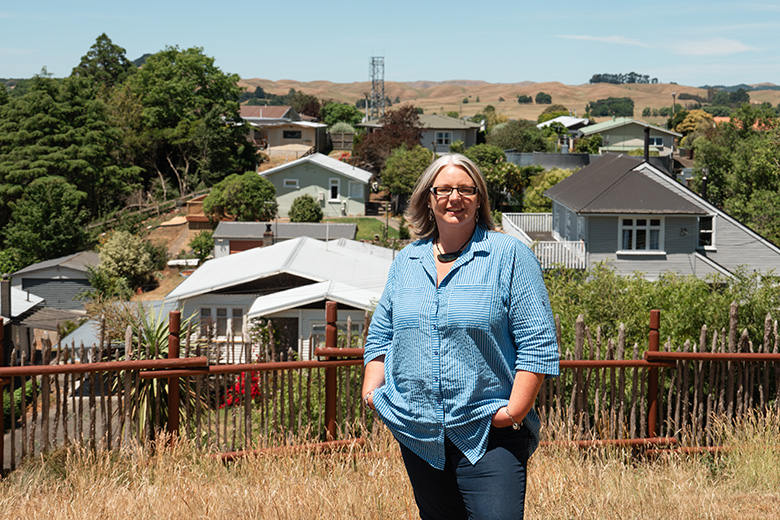
Alex Walker is former mayor, Central Hawke’s Bay

Very well said Alex!…… democracy doesn’t just happen once every 3 years. Voices from throughout the community need to be heard every step of the way. It’s interesting that appointments needed for financial or commercial decision making are fully endorsed But ensuring cultural perspectives are frowned on. The need for many voices to be heard is more urgent than ever when the shape of our communities are changing so fast – Asian, Pacifica, African, young, old as well as a Maori population soon to reach 30% of HB households. Accepting diversity and enabling all peoples to participate is the biggest challenge of the coming decade. Alex, spot on for putting it out there.
They seem wise (owl) words from Alex Walker… and reading yours I have a sense of central coalition Government in NZ, who have difficulty in reaching any consensus of agreement over too many issues critical to the wider public; perhaps bullying local bodies into taming diversity of cultures, into abject compliance minus participation in any decision-making? Is it not also a way of detracting from the greater worldwide geopolitical conundrum in this critical election year of central Government, in which there are no longer straightforward answers, especially given the diversity of our cultures?
I agree with you Alex – but when did this Government have any care for anything but its business cronies and the wealthy. Allowing the peasantry an opinion leads to anarchy in their little minds. That’s not going to change until this mob is elected out – and the chances of that are pretty slim judging by poll numbers – another term of this mob should effectively kill off NZ as a democratic country.
Good to hear a more nuanced voice, based on real experience of what wit. There’s so much “slogan” politics in what we hear national politicians say about local government right now.
And true to form…….. the government action as a gross misinterpretation of what local democracy is and how the Local Govt Act works https://www.rnz.co.nz/news/political/597029/law-change-will-stop-councils-appointing-iwi-representatives-as-full-voting-members?fbclid=IwdGRjcASLOz5jbGNrBIs7EWV4dG4DYWVtAjExAHNydGMGYXBwX2lkDDM1MDY4NTUzMTcyOAABHl94TI3Tqs29fdkqck2JPK44SVUJDc2F5fY06-TA_gKPL1CriwAyhugpoBZn_aem_e9r7OOZ6O9g1sSsbmPWqmQ