

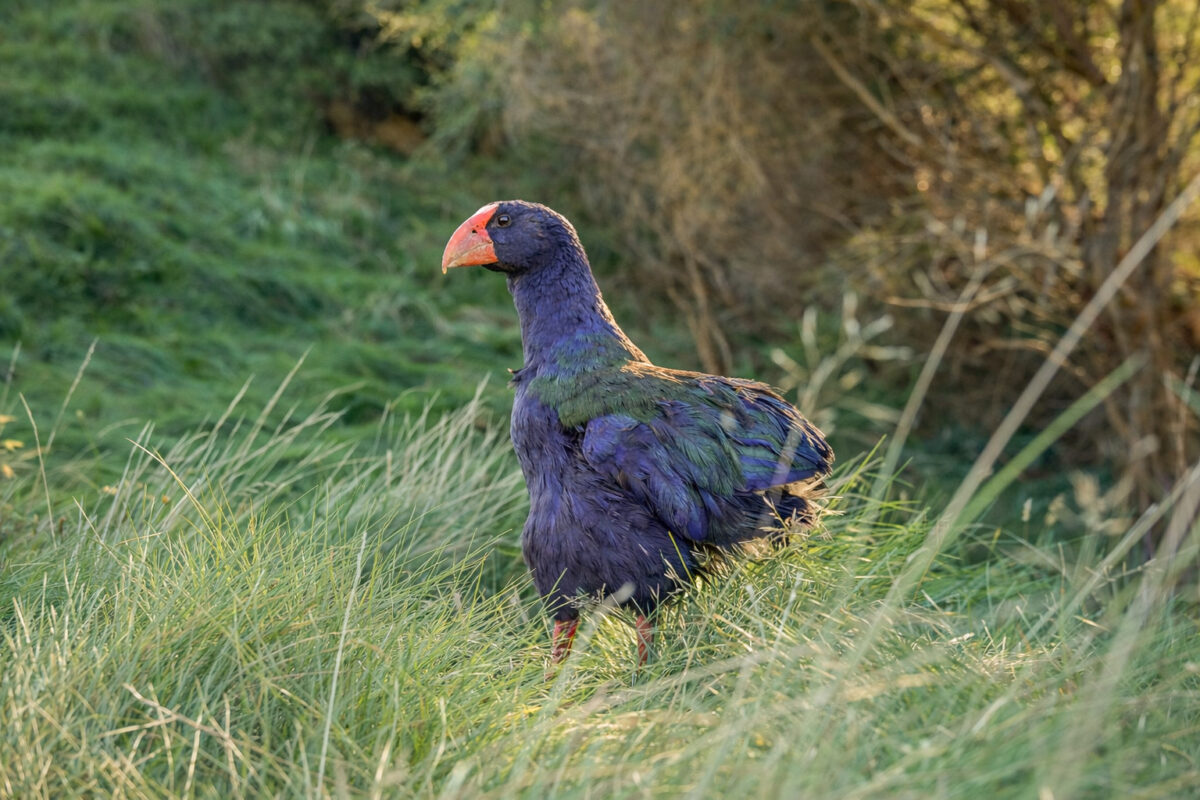
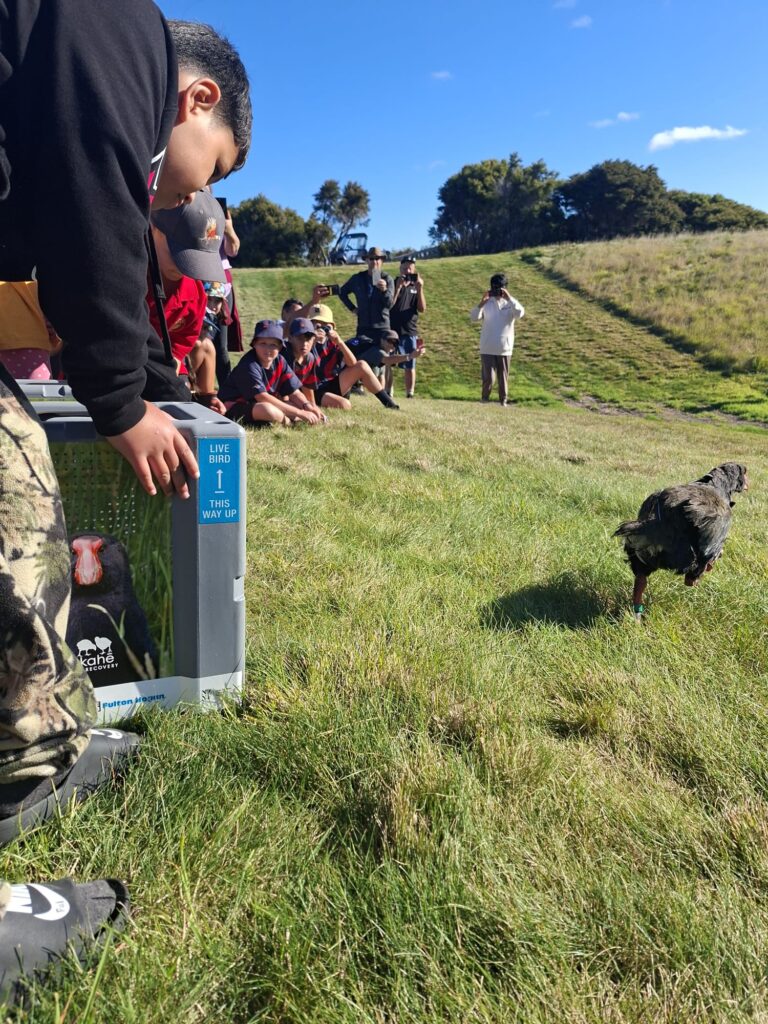
Six endangered Takahē were released last week at Cape Kidnappers Golf Course, located within the 2530ha Cape Sanctuary wildlife restoration project.
Takahē, a large iridescent blue-green endemic rail species, were thought to be extinct until 1947 when a tiny population were rediscovered in the Murchison Mountains. Ever since, intensive conservation work through innovative breeding programmes and population management has taken the population to 507 individuals. Being large, calm and flightless, they are at risk from introduced mammal predators – so they need safe predator-free or low predator sites to breed and thrive.
Phil Marsh, Department of Conservation Project Lead for Takahē Sanctuary Sites, comments: “Sanctuary Sites, such as Cape Sanctuary, have become an increasingly critical part of the success of the Takahē Recovery Programme,” he says. “Of the 45-50 birds released into the wild each year, nearly 2/3rds now come from various sanctuary locations around the country.”
Cape Sanctuary first received takahē in 2012, with one pair being released into a single 2ha enclosure and breeding successfully. Further expansion of the population followed in 2014 when a new much larger 130ha enclosure enabled a three more breeding pairs to be established. With these new pairs, free to roam the full sanctuary if they choose, the population is now 18 birds. Cape Sanctuary has a permit for up to 100 takahē.
Phil Marsh says since inception, Cape Sanctuary has raised 17 young takahē for release into wild sites – an impressive number for such a small population. “This success has given DOCs Takahē Recovery Programme the confidence to approve a further expansion of the takahē population, beginning with these three new breeding pairs. Eventually it is hoped that this extra space will enable the local population to at least triple in size”.
The new arrivals are expected to thrive at the golf course with lush grass, ponds and native bush making it a first class retirement spot. “Takahē like the open grass areas provided by golf courses, we’ve had examples from different parts of the country showing they settle well around them,” says Marsh.
Cape Sanctuary has been funded by the Lowe and Robertson families. Founder Andy Lowe commented: “For 20 years we have proven this model works across the multiple landowners and businesses within the site and the species have flourished, despite people telling us it wouldn’t work in the beginning. We all work together and around each other, alongside local iwi, our volunteer community and the Department of Conservation. It is great to see us all come together to celebrate another special milestone like this.”

Cape Sanctuary is a great asset to conservation – we were involved for some years feeding and transporting birds especially kiwi, and look back at some terrific experiences. Hopefully the sanctuary will expand outward over the years ahead to eventually encompass HB entirely with predators at an absolute minimum
Cape Sanctuary is world class, thanks to the generosity and vision of the Lowe and Robertson families and the team of committed volunteers. Hawke’s Bay can be mighty proud of it.