

[As published in Summer 2025/26 BayBuzz magazine.]
New councils must offer more than masking tape and #8 wire.
With new mayors in CHB, Hastings and Napier, a new regional chair, and a returning – most senior, sometimes cranky – Mayor Craig Little in Wairoa, our new political leaders will spend the holidays organising their council teams, setting priorities and devising workstreams.
Some priorities or obligations will have been set for them – either by Government (e.g. water services consolidation), some by events (e.g. implementing Civil Defense Emergency Management reforms, restoring roads and bridges), and some by their predecessor councils (e.g. budgets and rates embedded in current three-year plans).
All of those must be addressed by necessity … and then the independent ‘personalities’ and ambitions of new councils will begin to emerge more clearly.
And we’ll see if our province’s 56 elected leaders spread across five councils are enough to get the job done.
Rates
We heard heaps about rates during the elections. Amongst the candidates, there was almost no support for the imposition of legislated ‘rates caps’ as touted by the Government.

Expressing the consensus view, Mayor Wendy Schollum wrote (as then candidate):
“Rate capping is a blunt instrument that takes away local choice without fixing the real problem.
“Rate capping would hand bureaucrats in Wellington the power to override what Hastings people ask for in their own community. If locals want to prioritise fixing pipes, building housing infrastructure, or protecting services, those choices could be blocked if they fall outside a government-set cap …
“I won’t back a cap that forces Hastings to ask Wellington for permission before we can invest in our own future.”
As you can read in Janet Wilson’s article herein, former mayor Alex Walker, who had considerable exchange with the Government on funding matters, expects any mandated rates cap will be applied to ‘non-core’ expenditure, with most HB councils’ budgets already predominantly focused on ‘core’ activities. In other words, a relatively inconsequential gesture from a Government that delights in beating up on local government.
As I write, the Government has not yet revealed its final rates cap proposition. [Check our website for our latest reporting on this intervention.]
But rates caps aside, there’s no question our councils have heard the voters’ warnings. As Mayor Schollum also wrote: “What I support is genuine accountability, not caps. Hastings’ ratepayers deserve to see where every dollar goes, to hold us to account, and to expect discipline with their money. As Mayor, I’ll keep squeezing waste out of the budget and make every dollar work harder.”
That’s the sort of promise every newly elected mayor and councillor has made. However the current budget year (2025/26) is half-over and those rates are on the books and hitting ratepayer wallets now. Those budgets were set in the three-year plans (2024-2027) crafted in the heat of cyclone recovery – a period of very imperfect recovery cost estimates and high interest rates.
Therefore it is possible that a combination of more precise or actual recovery expenses, promised ‘fine-tooth’ identification of other savings, divesting of water services responsibility (by three councils) and lower interest payments might yield better-looking year-end results for 2025/26 … perhaps enabling carry-forwards that can reduce the rate increases that were projected for 2026/27.
Those increases were: CHB – 10.9%, HDC – 10.0%, NCC – 8.8% , WDC – 9.97%, and HBRC – 9%.
Local Water Done Well
A major chunk of work for the Hastings, Napier and CHB Councils in the coming year will be divesting themselves of funding and operating responsibilities for water services – drinking water, wastewater and stormwater – while at the same time keeping watch over the new regional water entity they will own.
Each of the three participating councils has named its mayor and one other councillor as its representatives on the HB Water Services Joint Committee – the councils’ oversight group for the Hawke’s Bay Water Services Council- Controlled Organisation (WSCCO).
Set to become operational from 1 July 2027, the new WSCCO will bring together the delivery of drinking water, wastewater, and stormwater services for a combined population of 144,000, managing approximately 52,000 water connections.
The good news is that no money will be extracted for water services from your right pocket by councils; the bad news is that WSCCO will take it from your left pocket instead … although a lesser amount, we’re promised.
Given that water services staff, operating costs and infrastructure improvement borrowing are such a significant portion of councils’ current budgets, it will be interesting to see what, if any, overhead savings (fewer desks, computers, vehicles?) fall to the bottom line of the individual councils’ annual budgets.
Regionalism coming our way?
Consolidation of water services by three of HB’s four territorial councils – effectively commanded by the Government – represents the most significant structural and funding change to Hawke’s Bay’s local governance arrangements.
But it’s not the only issue or imperative pressing Hawke’s Bay governors to think about the efficacy of current regional decision-making arrangements.
The Government’s ‘Regional Deals’ proposition is also gathering steam. These deals will aim to streamline local/regional delivery of programmes that are central government mandated and funded, and provide more local control over their implementation, so long as the plans actually deliver regional scale and reflect regional collaboration.
At present, the Government says it will not sweeten these deals – in areas like housing and economic development – with additional funding, suggesting instead that planning and delivery efficiencies will yield local council savings.
Our region – acting through the HB Regional Recovery Agency – has tabled (maybe ‘outlined’ would be more accurate) a Regional Deal to Government, but it appears to await in a long queue.
More concretely, our councils have engaged in regional appraisal in five other very significant areas.
Most obvious perhaps is civil defense and emergency management, where gaps and failures of structure, communications, infrastructure and capacity were tragically exposed by Cyclone Gabrielle. These have been thoroughly documented and recommendations made by internal and external reviews (with the most significant recommendations (47) coming from the Report of the Hawke’s Bay Independent Flood Review, July 2024), and most recently by the Coroner’s Inquest.
The reviews have left no doubt about the inefficiencies involved in having five sets of council decision-makers at the table during a major disaster.
With respect to coordinated land use planning (for housing and industrial growth in urban HB), the collaboration between Hastings, Napier and Regional Councils on the Hastings and Napier Future Development Strategy yielded more agreement than the few notable disagreements. The process accords with the Government’s expected (reformed) RMA emphasis on regional spatial planning. However the strategy, while providing important and weighty guidance, is not legally binding on any growth advocates and their proposals. So the toughest choices are yet to be made.
In this respect, the Coastal Hazards Strategy (formulated by HBRC, HDC and NCC) might eventually be a more impactful regional tool. A long ten years plus (so far) in the making, the plan details the work required to protect the coast from Tangoio to Clifton from sea rise and severe storm inundation.
Costs have been estimated and a funding mechanism and cost-sharing formula has been tentatively agreed upon, but all of this stands in the queue awaiting final HBRC public consultation slated for 2026.
With a still broader scope, we have the Climate Action Joint Committee, originally with all councils represented. That is, until the Napier and Wairoa Councils bailed out, citing insufficient results from the collective. The Joint Committee did sponsor a quite granular analysis of the GHG emissions profile of the region and its constituent territories. The fate of this initiative awaits re-consideration by the new team of mayors and HBRC chair.
And finally we have regional economic development and the Matariki Governance Group, the ‘official’ regional decision-making body for Hawke’s Bay. MGG consists of the mayors, HBRC chair and iwi representatives. Not legally mandated, it is the ad hoc vehicle through which our previous leaders have chosen to oversee various regional priority-setting efforts.
Despite its administrative and operational dysfunctionality and lack of transparency (BayBuzz has been a steady critic, and documented in an internal report), the MGG has been the oversight vehicle empowering the HB Regional Recovery Agency (HBRRA) to address cyclone recovery in a coordinated, intelligent, immediate way.
It was also supposed to give guidance – that came too little, too late – to the HB Regional Economic Development Agency (HBREDA). That agency was intended to craft a regional strategy looking to HB’s longer term economic future – HB’s umpteenth attempt to create such an entity. But it got bogged down by a surplus of unresponsive stakeholders (MGG) and by the unexpected (and not mission critical) assignment of outfitting a new Hastings location for the HB Business Hub, ousted from Ahuriri. The result, a handful of reports now on shelves.
Both of these agencies have governing boards and staff and both await their fate at the hands of a new, supposed rejuvenated MGG yet to emerge. HBRRA was Crown funded, but that ends in June; HBREDA funded by councils.
The MGG was strongly championed by mayors Walker, Hazlehurst, Wise and HBRC chair Ormsby, none of whom will now be at that table.
None of their replacements have any experience with MGG and one of them, now-Mayor Will Foley, was directly critical of it during his campaign. Nor do the newbies have other substantial cross-council collaboration experience.
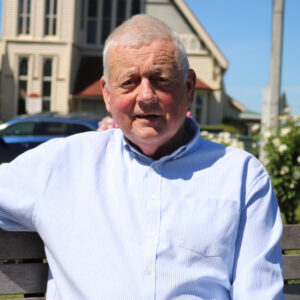
I asked Mayor Craig Little, now the senior statesman of HB’s leadership group, what he expected of MGG’s future. Mayor Little is not Mr Regionalism – he bagged the Climate Joint Committee, encouraged suing the Regional Council, rejected joining the regional water entity, and seems to enjoy a funding pipeline directly to the Government (he wants Wairoa declared a Special Economic Zone).
Regarding amalgamation, he commented during his re-election campaign: “Wairoa has seen the impacts of the erosion of services and centralisation, and it has not been kind to us. Our isolation means one local authority for the whole of Hawke’s Bay would not serve us well.”
But here’s what he said about the MGG: “We need an organisation that genuinely represents the whole of Hawke’s Bay. The Matariki Governance Group should be doing this, but we need to know if it is doing this in an efficient manner.
“I believe we need to review all the regional governance entities across Hawke’s Bay. I am in the process of bringing the Mayors and Chair together so we can conduct a stocktake and review of these entities, identifying what has worked, what hasn’t, and why. We recognise that not all of what we currently have is effective, and there seem to be too many entities.
“From a Wairoa perspective, we are unique, we want to be part of these regional entities, but we also need to ensure we are getting a return on our investment, and we haven’t seen a lot of that.”
As it stands, it will be up to Mayor Little and his MGG colleagues to recreate, rejuvenate, make more transparent and accountable whatever regional decision-making structure and process will carry us forward. A huge priority demanding careful attention and long-term thinking beyond their pressing day-jobs of running their individual councils.
Will this ‘spare time’ attention be good enough?
Finding the way to regionalism
Perhaps the task of figuring out Hawke’s Bay’s best approach to future regional governance deserves entirely new public examination, including participation by some regionally-conscious observers without vested interests in council turf protection.
Apart from leaving the matter entirely in the hands of MGG, with no public involvement or accountability, there are two alternative paths to improving regional decision-making … and perhaps saving money in the end.
One would be for councils to collectively commission an independent group of community leaders, representing all sectors, to investigate the issues and options – across the entire range from more ‘formalised’ collaboration to partial or full amalgamation. Perhaps supported by facts and analysis provided by whatever entity replaces HBRRA and HBREDA. Included in the charter for such a group would be public education and consultation, but something more deeply engaging than the conventional submission process.
One of the charges against the amalgamation effort ten years ago was that it was conceived too top down.
So a complementary vehicle for educating and hearing from the public might be a Citizen’s Assembly – a panel (or panels) representative of all parts and layers of the HB-wide community. This process would be designed to absorb the issues and trade-offs involved, question and debate the facts and arguments, perhaps conduct its own random surveys, and reason its way to a set of recommendations. Taking its time to do so, but with an eye toward teeing up a recommended path forward to be put to HB voters in the 2028 local elections.
Is this kind of major investment in sorting our future local governance timely or needed?
As for need, consider basic affordability of rates, scale of water and other infrastructure investment, need for climate adaptation, economic sustainability that includes but reaches beyond our vulnerable primary sector, and of course flood protection, disaster planning and response.
These are issues beyond the scope of any one of our councils. Frankly, they are more important issues than where a Napier aquatic centre gets located, or how the Tomoana Showgrounds gets used, or which tree gets chopped or mountain bike trail gets built on which reserve.
I know I’ll get s**t for saying that. Even though I said the regional issues were more important, and not that the local issue are unimportant. But the fact is, it’s the local issues that will consume the attention of councils and their elected leaders.
You can make your own judgment about the relative priorities at stake.
As for timeliness, the summary of regional initiatives described here indicates one thing – like it or not we are being driven toward more regional thinking. And our new crop of councillors seem to understand that.
BayBuzz asked every candidate in our recent elections: Does Hawke’s Bay need five councils, or do you support amalgamation, in any form?
Only a handful of outliers supported the status quo. Responders were well-aware of the ‘public will’ as recorded ten years ago. However, the preponderance of the winners would support a re-think, with some calling for inter-council merging of select activities (from animal control to consenting), some for more shared services and joint initiatives, some for gradual or outright amalgamation.
They are not blind to the irony of 52 councillors across 5 councils claiming they will cut rates by cutting staff and contractors beneath them. How many cooks in the kitchen does HB really need?
This certainly doesn’t suggest an imminent stampede toward amalgamation, but it does indicate that our politicians realise that knee-jerk opposition to a serious re-think is untenable.
I say they should front-up and encourage and facilitate that re-examination. Masking tape and #8 wire are no longer up to the stresses Hawke’s Bay faces.
