

Having declared itself a champion of the fossil fuel economy, promoting further development of oil and gas, hardly a climate change mitigation strategy, the Government has now turned its attention to the adaptation side of the coin.
That is, what to do about coping with the intensified severe weather and flooding and coastal inundation that will inevitably flow from a quickly warming planet, given tragically inadequate mitigation measures.
So, the Government has this week issued its National Adaptation Framework (all of two pages).
It contains 16 ‘Actions’, most of these falling in the category of ensuring better information is available about climate-induced risks and better planning utilizing that information.
The first five Actions, which could easily have been expressed as one, involves pulling all the needed data together, enabling a National Flood Map to made available through a Natural Hazards Portal.
Hawke’s Bay is a leader in this area. HBRC already provides detailed, state-of-the art, hazard/flooding risk maps on its website, as does NCC here.
A number of the other Actions simply amount to prodding local councils to use this risk information in their planning processes.
Again, HB is a leader in this area, with climate risk integrated into the land use strategy for the Heretaunga Plains, a granular analysis of HB’s climate risk profile prepared by the Climate Joint Action Committee, and a coastal protection plan developed by HBRC in partnership with NCC, HDC and the community. The latter awaits funding agreement that requires future public consultation.
What does the Government’s Framework say about this? Action 11: “Regulate to ensure councils weigh up the costs and benefits of adaptation options for their communities.”
Although more ‘weighing up’ can always refine options, HB councils have ‘been there, done that’.
The real elephant in the room is how to pay for adaptation – how does the cost get divvied up between central government, local government and private property and business owners?
But on that central point the Framework remains vague. Actions 12 and 14 talk vaguely about protecting Crown assets. Action 13 mentions investing in the regions though the Regional Infrastructure Fund, but those funds are already being allocated to a host of infrastructure needs unrelated to climate adaptation. A recent announcement of $96.8 million from the Fund across 32 ‘flood resilience’ projects (none HB), barely scratches the surface of what will be needed.
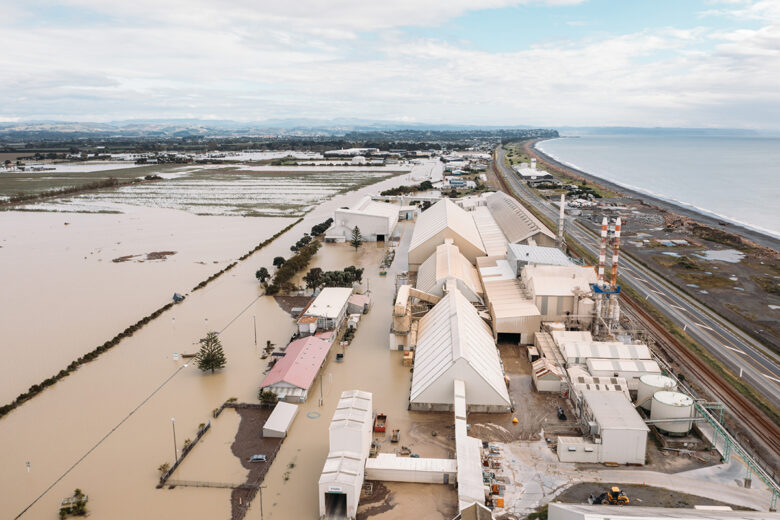
For example, climate ‘adaptation’ in HB should involve relocation of the Awatoto railroad bridge over the Tūtaekurī, which is otherwise certain to remain a major event blockage risk guaranteeing flooding in that area. Is funding for that likely to come from the Crown? What about shifting HDC’s and NCC’s coastal at-risk waste treatment plants … should that be strictly a local stakeholders/ratepayers cost?
Sure, more risk information is great.
But HBRC already has enough information to place the potential cost of partially mitigating river flooding (because partial is all you can do) and adapting to it in the $600 million range, and the extensive physical protection options identified for the Coastal Strategy could add $130-$285 million more to address that risk.
In short, Hawke’s Bay councils are way ahead of the Government when it comes to climate adaptation planning … what must be solved is the funding.
As the head of the Insurance Council, Kris Faafoi said to National Business Review in his reaction to the Framework: “Adaptation needs to be accelerated. Some vulnerable communities are already facing repeated losses, and they can’t afford to wait five years for plans and longer still for adaptation projects to get underway. We need to see the rules, funding arrangements, and cost-sharing mechanisms finalised as soon as possible.”
Amen!
Here is the National Adaptation Framework

If this Government says black is black I’d seriously consider debating the issue – they have blinkers on regarding climate – and any action from them seems to be aimed at worsening the whole situation – when temperatures rise/fall drastically of course it makes sense to burn more fossil fuels – so they are keen to do more exploration to add to the problem. The sooner this mob of clowns disappear the better – a PM who is over-ridden by his subordinates who are rapidly setting up their own little kingdoms of climate nay-sayers. I’m not religious – but God help us all!
More noise tax payer engine room. The water plants have alot of work done to them in the not to distant past but now moving and up grading is the govt fault. I don’t agree.
Lets talk about the slash in the water ways and stock bank maintenance and whose responsibility was that.
To busy being WOKE to attend to the basics…..it appears nobody is ever accountable only rate payers pockets…..on and on the nonsense goes…come on Tom give us all a break!