
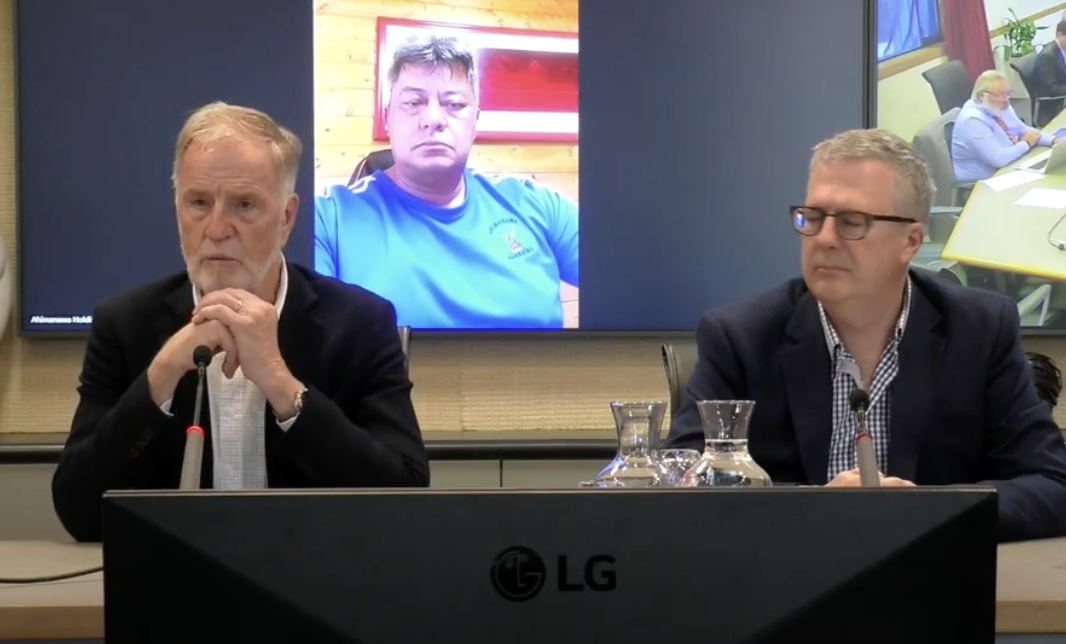
HB Tourism Chair George Hickton and CEO Hamish Saxton presented the organisation’s 2024 Annual Report this week to its reluctant chief stakeholder, the HB Regional Council.
Among the key metrics reported:
- Domestic visitor spend in HB was $384m and International visitor spend was $69m (as measured by MBIE’s Electronic Card Transactions system, so excluding cash or online).
- HB got 3.36% share of the NZ domestic visitor spend, with most of that going to Napier City ($179m) and Hastings District ($165m).
- Australia and U.S. provide most of the international spend, each at $19m.
- Occupancy rates in HB’s various commercial accommodation categories slightly exceeded national rates.
- Local visitor/hospo industry support was posted at $365,487 cash and $59,606 contra, with 164 full members.
- Total HB Tourism income was $2.8m, including $1,520,000 from HBRC, $769,272 from MBIE and $154,006 from Industry Partner Membership.
- HB hosted a number of major national business events – e.g., realtors, actuaries, landscape architects – worth $2.1m.
- F.A.W.C. earned $141k in ticket sales, with 25% purchased directly by visitors.
The Report itself received scant attention, with most discussion centered on the future funding of the organisation, whose HBRC stipend ends next June.
Chairman Hickton spoke of a tourism industry consensus around a nationwide ‘visitor levy’ that would be distributed to regional visitor bodies. He said the Government was positive about this, but that it would not happen until a second term.
Meantime, HB Tourism is preparing a minimum “keep the lights on” budget that will be presented to HB councils shortly to consider in their 2025/26 budgets.
Missing from the presentation was any discussion of whether or how HB Tourism might secure additional funding from the HB tourism/visitor industry, including from ‘ports of entry’ like Napier Port and HB Airport, key stakeholders in the visitor economy.
So, as has been the case all along, significant industry self-funding seems off the table.
You can view the discussion here.

Admittedly tourism is a major earner for the region – but why are the actual industry owners/participants not funding themselves – why is there a reliance on council funding – surely the actual businesses benefiting from tourism should be the major funders of HB Tourism – after all they get the profits while their businesses grow with every tourist dollar.
A good question…. however, the tourism dollar is spent so broadly across the region covering more than just the front-line tourist businesses, with the whole community leveraging off visitor spend. Anyone in hospitality will also know that most businesses are struggling to keep viable, and that profit margins are razor slim and hard to achieve with every dollar needed to go back into their businesses to survive. Events are one of the best ways to keep the industry alive and thriving and for this council funding should assist, otherwise, HB is in danger of becoming left behind other progressive regions with full council support.
Tourism is a major earner for the region and therein is the answer. It is always easy to pick the low-hanging fruit by adding visitor levies at entry points or expecting regional councils to fund this sector when that is not their role. Travel to NZ is already expensive for example the cruise sector is impacted by the long-distance cost of time and money. Adding further fees to additional increases for accommodation, meals, excursions, and transport may soon have a negative impact that affects the choice of coming to NZ or not. The solution must surely be to enhance and build on the destination’s uniqueness and create further draw cards to the annual event calendar. Create destination demand and desire for visitors, and ensure the infrastructure is there to support the demand. Aim to make Hawkes Bay the number one destination, employ innovation, engage the community, create bundled packages and make it easy for stakeholders to participate.