

[As published in March/April BayBuzz magazine.]
“I think the business community have lost their confidence,” a local entrepreneur recently said to me. Well, I’m not surprised.
Covid was brutal and if you don’t know one person whose business failed because of it … you know two or more.
For my apple industry this was followed up by the Ukraine war in early 2022. Poland is the biggest apple producer in the EU and their biggest customer was Russia. Overnight they ceased to be on speaking terms and the Polish apples flooded west, collapsing the market we were enroute to. If growers received half the cost of production they were doing better than average.
Then we had cyclone Gabrielle that decimated apple, grapes and vast areas of farmland. To follow was inflation and the subsequent high interest rates. Shipping has been a disaster throughout. A decade ago we could ship a container to Europe in just 36 days; now it takes 75. Donald Trump, and it pains me to say this, is right on quite a few fronts. The Panama Canal is a critical shipping route and so is the Suez. If these waterways are compromised by drought, mismanagement or terrorism, we have some serious global problems. The largest component of international freight is food.
The truth is we don’t produce coffee, cocoa, sugar, rice or bananas in any significant volumes. We also produce less wheat and fewer oranges than we’d like to consume. Even if we could produce these items they’d be much more expensive and supply would be much more volatile if grown in an island climate in the Pacific Ocean.
So how can we get business going?
Businesses are much maligned by leftist thinking. Lefties see them as the use of power to exploit labour to make excess profits. This isn’t the case unless the business is significantly owned by governments, regulated by them, or heavily scrutinised by the perpetual hand-wringing inaction of the commerce commission. Think Air New Zealand, the energy companies (Genesis, Meridian, Mercury and Transpower), banks, fuel companies and supermarkets.
In a properly competitive environment, businesses struggle to make a buck, the consumer gets a great deal and workers make a decent living. Unless they can work out how to do it cheaper or better, likely a business won’t survive. Each of them represents a money-go round, with a tiny fraction left at the end for the owners. The most important social function of business is to create meaningful jobs for people. It represents a roof over their heads and their children with full bellies.
All this leads me to the belief that those that start businesses are heroes. It takes a lot of courage, irrational optimism and the ability to endure great tribulations if that is your ambition.
Innovation
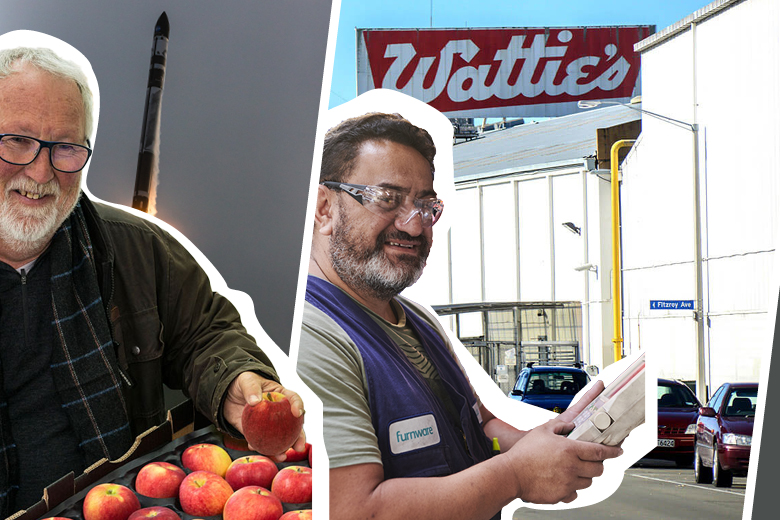
To increase your chances of success you need to be innovative. Watties, Furnware and Rocket Lab spring to mind, each driven by a rare creative spirit.
How might creativity and innovation be encouraged in our society, to create high paying jobs and a prosperous economy? I know I’m horribly biased, but I’m convinced that exporting high quality food to Asia, is a sure bet for Hawke’s Bay. To that end we need innovative new products or processes that engender strong demand and excellent margins.
Recently the Government announced the merger of a multiplicity of Crown Research Institutes and other governmental agencies into three Public Research Organisations (PHOs). They seem to believe that larger bureaucracies are the best pathway to prosperity. I’m not so sure.
A few years ago a Chilean colleague said to me, “The only good new apple varieties come out of New Zealand”. I’m not sure that is still true. Similarly, our Kiwifruit monopoly marketer, Zespri, is facing threat from new varieties from Italy or Chile. I’ve tasted them and they are good – maybe better. Some of our leading industries have disappeared back into the pack. Or worse, we’re being beaten at our own game.
So what makes for great R&D innovation. From my reading, here’s what it takes.
The temperament of the lead researcher is critical. They need to be conscientious, but that can be largely discounted. There are a few academics in the Humanities and Social Sciences who clearly got their qualifications out of a Weetbix packet, but you need to be highly motivated to endure the endless lonely hours in securing a PhD in an area of science, that almost no one cares about.
More importantly, the successful researcher needs to be high in ‘openness’. This trait is associated with creativity and abstract thinking. It is also useful if a researcher is low in neuroticism. That is, they are not easily offended by criticism, questioning and frank engagement.
This relates to the other key component of success: the interface between R&D and the commercial world. Most researchers have a ‘just give us the funding/we know best’ view and don’t enjoy engagement with the outside world. I think the connected approach is best done in the US tech sector. The worst examples I’ve seen are in the top-down world of the EU. I have spoken to researchers there who have absolutely no idea of what the market wants. They take their instruction directly from a poorly thought out edict from Brussels.
If you don’t fulfill the criteria I’ve identified above, your likelihood of innovation success is greatly lessened. This probably doesn’t come as a surprise to you.
Many make the mistake of conflating individual success with institutional success. However, Nobel Prizes are most commonly given to individuals, not to organisations, which reinforces the need for a sparkling creative who leads the team.
In the NZ apple industry the standout figure was Allan White, who selected progeny for the recessive ‘pigmy trait’ on which Rockit apples are based. He also crossed Asian and European pears to create ‘interspecific pears’ like the beautiful Piqaboo. Such strategies were outrageous and probably widely criticised at the time.
A key element of truly compelling innovation requires the advancement of people who have a little dash of Elon Musk about them. They will be oddballs, eccentrics, heretics and heterodox thinkers.
Disruptors come from the fringes, precisely because they are not tolerated, much less advanced, in large companies or institutions. If Elon Musk had worked for NASA, he would have been ostracised and ultimately restructured out.
Backing creative people does result in more extreme results – perhaps a 1 in 10 chance of success, with the rest being abject failures. What larger companies and institutions prefer is a safer approach and the avoidance of failure at the expense of audacious breakthroughs.
That is exactly what bureaucracies like the new PHO’s will deliver. To that end they represent a sound understanding of politics, but a poor understanding of the engine for innovation and prosperity.
Paul Paynter is our resident iconoclast and cider maker. Weather permitting, he grows stuff at Yummyfruit.

Any business or organisation run by Government is doomed to be a failure, ineffective, or just plain ridiculous – our history is littered with the messes Government departments have caused (especially high prices and monopolies). Bring on the entrepreneurs and throw support behind them!
An excellent report Paul and I feel accurate.There is very little reward without effort and those that succeed have generally put in a major effort often at tremendous personal and family cost.Having started several businesses in the fruit industry I concur with what you say it is a very tough Industry.Academics
do not create jobs