

[As published in September/October BayBuzz magazine.]
BayBuzz invited several retiring councillors and a mayor to write about local governance, the qualities for effective representation and the issues ahead — Sandra Hazlehurst, Martin Williams, Maxine Boag and Malcolm Dixon.
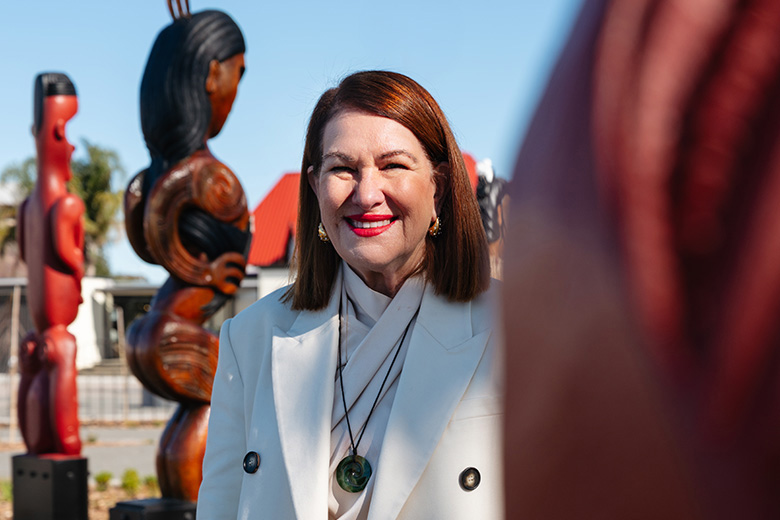
Sandra Hazlehurst
Māori ward undeniably positive
Our community will vote at the upcoming referendum on the future of a Hastings’ Māori Ward.
Over the past three years, I have seen first-hand the positive impact the Takitimu Māori Ward has had in helping to build a healthier and more unified community.
In 2021, our council voted unanimously to establish the Takitimu Māori Ward after hearing from more than 3,000 community members.
Was this political correctness? No. It was practical governance. Māori bring a unique values-based perspective to our decision making. Their intergenerational thinking, environmental understanding, and deep connection to our land makes their contribution to the future of our district invaluable. For far too long, in my opinion, a lack of Māori input into critical council decisions has diminished the quality and far reaching vision that those decisions demanded.
Our relationship with tangata whenua runs much deeper than many realise. We have worked together on infrastructure for decades – designing and managing our wastewater system at Clive using a true partnership approach. We developed the Waiaroha drinking water storage, treatment and education facility together. We have worked hard to solve our housing crisis – making changes to the District Plan to enable pāpakāinga, and progressing general housing projects that benefit our entire community. We also worked together to protect our outstanding natural landscape and culturally significant Te Mata o Rongokako against future development.
The strength of our partnership was highlighted through Cyclone Gabrielle. The outstanding leadership shown by tangata whenua supported our impacted Māori and Pakeha communities to recover and rebuild their lives.
The Māori ward is a natural extension of partnerships that have already delivered results that benefit everyone. It formalises what we have learnt works, that better decisions come from including Māori along with non-Māori perspectives.
Let me address the persistent myth that the ward is undemocratic: Māori Ward councillors are elected, just like all councillors. Māori can choose to vote in the Māori Ward, but they don’t get a second vote elsewhere. So: If you’re on the Māori roll, you vote for the Māori ward; if you’re on the general roll, you vote for your urban or your rural ward.
Over three years, our Takitimu Māori Ward councillors have proven their worth, bringing knowledge and networks that strengthen our community’s resilience, supporting our district to grow and develop economically, culturally and socially. Like all councillors, they take an oath to serve the entire district, and I’ve seen that commitment in action. This isn’t about advantage; it’s about using all available knowledge to make better decisions for everyone.
A collaborative approach opens up wonderful opportunities for all of us. In Flaxmere, we have co-designed and built partnerships with mana whenua for the new housing developments. While across the district, we have infrastructure projects that meet practical community needs while also showcasing Heretaunga’s rich Māori heritage. We have seen critical cyclone repairs speeded up because of these relationships.
In the private sector, developers and contracting companies typically engage with mana whenua in the localities they are working in. They understand that this enhances their projects and provides them with information and knowledge they would not otherwise have access to. It makes common sense.
Our council honours te reo Māori through initiatives like Ngā Pou o Heretaunga – the pou representing our 19 marae standing proudly in Civic Square. We have embraced tikanga Māori not as tokenism, but as part of effective, culturally responsive governance. These initiatives take nothing from the wider community and, in fact, enhance our community. The Māori ward does not divide our community, but enhances it.
Beyond the practical benefits, the Local Government Act requires councils to honour Treaty of Waitangi principles and establish processes for Māori to contribute to decision-making. Our Takitimu Māori Ward fulfils these obligations while proving that inclusive governance delivers better outcomes.
In my view, the Māori ward supports effective governance and makes our whole community stronger. I have been proud to serve alongside our first Takitimu Māori Ward in Heretaunga Hastings.
And while I cannot speak for them, I know that Mayors Alex Walker and Kirsten Wise have had the same positive experience with their engagement with tangata whenua and support establishment of Māori wards for their councils.
Outgoing Sandra Hazlehurst has served as the Mayor of Hastings since 2017.
Martin Williams
Making your Regional Council vote count
Commitment to regional interest
Hawke’s Bay is going nowhere as five separate local authorities each protecting their patch, and nor should candidates promise to put the interests of their ward (eg Napier/Hastings etc) first. A united regional voice was critical to Hawke’s Bay negotiating much needed financial support for cyclone recovery from the Crown. The degree of regionalism shown in the aftermath of Cyclone Gabrielle was a real tribute to our mayors, councillors, and the Regional Recovery Agency through which we spoke to Wellington “with one voice”.

More recently, as the stress has piled on, my sense is that each council has retreated to its corner, particularly around issues such as tourism funding, responding to climate change, future urban planning, and (the big one) local water reform: witness Wairoa going it alone, and Central Hawke’s Bay halving its proposed (and essential!) water infrastructure investment programme because costs will be ring fenced to each district making it unaffordable for CHB, with the original proposal of sharing the funding burden regionally having been abandoned. To me, this is a real shame, even tragedy.
A councillor’s oath on being sworn in is to act in the best interests of the region. I would be looking for someone who would take the wider regional perspective – where on any tough decision presenting a choice between local and regional interests, they would put the region first.
Policy over politics
I get very concerned when I hear about political parties standing candidates in council elections. Local government is about values and priorities that cannot and should not be defined on a traditional political spectrum.
Water, biodiversity, rivers, pipes and drains, roads and bridges do not care about ‘left or right’. They need to be sustained, maintained and improved at the necessary scale and with the necessary degree of urgency, regardless. This is about good policy and working with other councillors who have different views and perspectives to contribute.
You need to know where your candidate’s values and priorities are, not who they vote for to fill the seats in parliament.
They should also have proven ability to work as part of a diverse team, and not get offended because someone dares to disagree with them. Perhaps test that with a few tough questions at ‘meet the candidates’ evenings!
Healthy cynicism
Councillors need to know what questions to ask and how to challenge the advice they are getting from staff, to ensure that it is robust. That however is the easy bit. The real challenge is figuring out what is missing from the narrative. The biggest surprises I have had in my two terms on the Regional Council have been on ‘discovering’ – after the fact – the consequences of serious weather events which were beyond the capacity of our flood protection schemes (and staff) to manage or control. Things happened and people suffered in ways that I did not even know were possible. As the old adage goes “You don’t know, what you don’t know!”.
So, it is not just a case of asking questions about what you are being told, but drilling down and finding out what you are not being told. Candidates should reveal an ability to be on enquiry with a healthy degree of cynicism (or scepticism), rather than taking all the information and advice they receive at face value. Be very clear, if elected, candidates will need to be able to read and digest thousands of pages of information and reports every year. Is that professionally crafted and detailed advice “sugar coating the pill” or are you getting a “warts and all” honest briefing on the issue to hand?
If you get the chance, ask any candidates you talk to about how they would approach this issue, and their capacity for critical inquiry and testing of complex information.
Courageous respect
Juggling the tension between governance and management in local government is perhaps the most difficult task councillors face. On the one hand you have to stay connected to the communities that elected you, and be alive to their concerns through continuous engagement, the demands for which are becoming extreme. Many of the concerns you hear as a councillor are about operational activities affecting council assets that are important to ratepayers, like drains, stop banks, parks and recreation areas. You need to then bring those concerns back to the council table and ask staff what is being done to address them.
However, raising expectations in the community that are out of step with the ability of staff to deliver ‘on the ground’ or the capacity of the organisation to resource, risks both crossing the line into operations and undermining the “social licence” from ratepayers generally, who will ultimately have to foot the bill.
Simply put, candidates should not promise what the organisation is not resourced to deliver or at odds with the strategic priorities they would set as councillors for the organisation, assuming elected. But they should be willing to lean into the governance/management line, to make sure the CEO delivers on that strategy in an efficient and cost-effective way, while respecting that operational decisions are his or her domain. Does the candidate you are looking at voting for, seem to have those skills?
Long term view
I would shy away from any candidate that simply promises to keep rates down over the next three years, without saying how. Any such promise is not only disingenuous, but in my view facile.
The tragic legacy of local government over the past 50 or more years is a systemic trend of under investment in infrastructure, including as needed now to protect our communities from increasingly severe weather events; witness the Napier floods in 2020. For decades mayors and councillors across New Zealand have been elected on short term promises to cut rates, but then promoting “nice to have” public amenities rather than investing in below the ground essential pipes and drains while in office.
To be fair, that trend is now being halted and reversed, including here in Hawke’s Bay. But the scale of both the deficit and pace of accelerating demand for additional asset capacity to match climate change, is greater than rate increases at CPI can sustain. In my view, if any candidate is simply promising to cut rates without explaining how, or their alternative plan to fund both maintenance and delivery of new infrastructure, I would not just look, but run the other way.
Martin Williams is an outgoing two-term Regional Councillor.
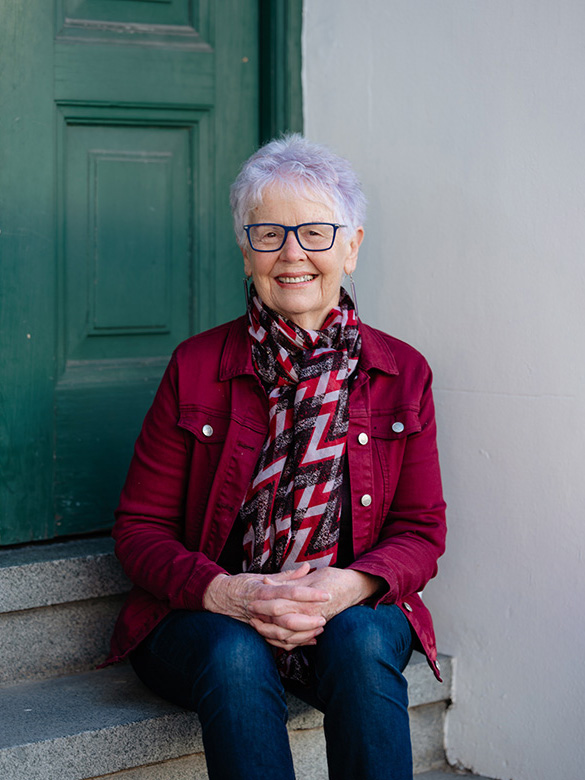
Maxine Boag
What I’d hope to hear from serious NCC candidates this year
“If you relish a career with minimal influence but considerable responsibility; if you’d like to spend your evenings being yelled at by residents about late buses, contaminated drinking water and rising rates, then patronised by the officials who deliver these services – or increasingly, don’t – then life as a local body politician may be for you. At least the pay is terrible.”
Danyl McLauchlan, politicalcommentator, Listener, July 2025
In spite of such cynical public perceptions, we have 22 contenders vying for 12 positions in this year’s NCC elections, all keen to have their say in the governance of Napier.
With the task of setting Napier’s direction, approving budgets and adopting strategies, policies, bylaws and plans, these would-be Elected Members want to represent the community in democratic decision-making processes involved in things like ensuring toilets flush, rubbish is collected and dogs are registered.
They all have something to offer and I applaud them for putting their hats in the ring.
So, seriously, as someone who’s spent the last 18 years as a Napier City Councillor, and am stepping down this year, here’s what I hope to hear from the people who want our votes.
Relationships are everything
To be effective, councillors must be ‘people people’. That means engaging with the wider community, explaining decisions, making information easy to find, being accessible and accountable.
Good relationships mean listening to real voices – including those who don’t normally engage, like younger residents, renters, migrants, and people in poorer suburbs. Candidates need to say how they will listen not just to the loudest voices, but tell us how they will connect with some of the quietest members of the community.
Candidates who have shown their ability to maintain respectful relationships in their workplace and community are well positioned to work collaboratively as a councillor – with colleagues, staff and the community – for the best outcomes.
A real plan for housing and homelessness
Napier faces a housing crisis – not just a shortage of houses, but of affordable, healthy homes. I’ve seen families living in cars and tents, people couch-surfing, and seniors priced out of long-term rentals.
Candidates must be clear on how they’ll work with government, iwi, and community organisations to get more homes built, especially social housing. Council’s role could include using its own land, expanding pensioner housing, speeding up consenting, and ensuring developments deliver genuinely affordable homes.
And for those already homeless, I want to hear about practical, compassionate responses – initiatives like Āhuru Mōwai (Napier night shelter) and Te Hiwa a Māhiki (youth homelessness project), and supporting wrap-around services that help people get back on their feet, rather than punitive measures.
Financial responsibility without cutting our future short
Rates are rising, and the cost of living crisis is real. Everybody wants lower rates, but we can’t slash our way to a thriving city. Candidates should be upfront about balancing manageable rates with essential investment in infrastructure, amenities, and services.
Vague talk about cutting ‘vanity projects’ won’t do. Where exactly would they cut — and what would it mean for services? If they promise to cap rates, they must say what projects or services would go, and be prepared for scrutiny.
Climate change isn’t optional
Cyclone Gabrielle proved Napier’s future depends on preparation and adaptation. Candidates should talk about prioritising flood protection, stormwater systems, managed retreat, and resilient infrastructure – and how they’ll help the community prepare.
Adaptation means planning where we build, how we use land, and ensuring vulnerable communities aren’t left at risk. Let’s hear about nature-based solutions like wetlands restoration alongside hard infrastructure.
Authentic partnerships with Māori
Napier’s future must include Te Tiriti o Waitangi and a strong relationship with mana whenua and tangata whenua. Councillors should be willing to embrace genuine partnership, through meaningful consultation, co-designing projects, and recognising Māori contribution to decision-making as a strength.
That includes respecting the Māori ward decision already made by council. I’ll be watching to see who stands by it, who wants to reverse it, and which candidates refuse to tell us which way they’ll vote in the referendum – which to me reveals a lack of transparency, and not having the courage to stand by their convictions, whichever way they lean.
Courage to be a lone voice
Council decisions are driven by numbers, and it’s tempting to go with the majority. But Napier needs leaders who’ll stand alone when it matters – speaking up for what’s right, even when unpopular.
I want to hear about times candidates have stood their ground, challenged bad decisions, or put community needs ahead of political convenience.
A focus on everyday liveability
Big projects matter, but residents care about basics, such as safe footpaths, maintained parks, clean public toilets, safe drinking water, timely rubbish collection, and road safety measures. These aren’t ‘little’ issues – they’re what make a city liveable.
Candidates should explain how they’ll ensure the basics are done well – and how they’ll respond promptly to residents when they’re not.
Working with, not against, community organisations
Napier benefits from passionate community groups – from environmental kaitiaki to food rescuers to residents’ associations to youth programmes. Council should be a partner, not a hurdle. Candidates need to commit to making it easier for these groups to access funding, facilities, and support.
This means attending meetings, building relationships, and helping them access council resources.
Leadership for the long term
Governing this city means listening closely, observing carefully, and never stopping learning. Even with years of governance experience, no one arrives knowing it all – after 17 years I’m still learning. That’s why I expect every elected member to commit to ongoing training and upskilling, so they’re equipped to make the strategic decisions that will shape Napier for the next generation.
I want councillors who will lead with integrity, an open mind and compassion – who listen, work collaboratively, and base their decisions on evidence, not hearsay.
The challenges are real, but for those with the courage and commitment, there’s no more meaningful way to serve our city.
Maxine is an outgoing six-term Napier City Councillor.
Malcolm Dixon
Assessing HDC candidates
What should voters look for?
As we recover from the cyclone there is a huge workload and many vital decisions still need to be made. We also have a government that is slowly but surely trying to take over control of local councils. ‘Local Waters Done Well’ is just one example. The level of debt for councils across New Zealand is growing and rates are steadily increasing.
Just a few decisions the next Hastings Council will need to make:
• Hastings Library and Art Gallery – needs major repairs and upgrading. What does its future look like? How should it be funded?
• Splash Planet – currently subsidised by the ratepayer. How and should it make a profit?
• Senior housing – all need updating. How can this be achieved?
• Health and well-being – how should council improve the security and safety for all?
• Showgrounds – now council owned. How can it be developed and who should pay?
• CBD development – what is needed to stimulate its future?
• Development contributions – who should pay for development in the future and when should they pay?
• Infrastructure – how should council prioritise what needs to happen in the future and why?
• Coastal hazards – who pays for properties requiring managed retreat?
• Climate change – what interventions are required now to secure our future?
• Amalgamation – is this now the way of the future for all Hawke’s Bay councils?
• Council debt – solutions required … any suggestions?
• Saving our soils – how should we encourage developers to build up and not out?
• HB Regional Sports Park – flourishing, what needs to happen to see this continue?
• HB Tourism – HBRC has stopped its funding of this organisation. How can they survive in the future?

What should you look for in a person before voting for them: integrity, honesty, energy, approachability, experience, personality, capability, qualifications, communication skills, financial acumen … to name a few.
Question why they are standing. Have they got a fixed agenda? Can they actually achieve what they are saying they will? Have they stood before, where and what was the result? Are they standing to serve you or are they standing to serve themselves? Does their Voter Guide Profile answer those questions?
With all candidates officially declared, voters are now left to make a choice. Remember, you don’t have to vote for the maximum number.
Food for thought for candidates
All councils are very complex organisations, however it is always important to remember that as a councillor you are elected by the ratepayers to serve the Hastings District Council community.
How do you plan to meet their needs, demands and be available to attend meetings and events across the next three years? From my experience this ranges from fifteen to twenty hours per week. You need to consider family, whānau, work and your own requirements. Strong time management and an active working diary worked for me.
As a councillor you will need to work alongside, listen to and assist people from all walks of life. You get asked a wide variety of questions from feral cats to overhanging branches, leaking tobies, dangerous footpaths etc. They are all important to the person who made contact with you.
As you campaign Central Government is requiring a Referendum on Māori Wards in conjunction with Local Government elections. You will definitely be asked your opinion by voters. Make certain you have thought about how you will answer this question.
Rates cause the most angst for ratepayers and councillors alike. The challenge is how would you go about reducing them and still provide core services and make progress when you have ever increasing costs working against you? You will receive an intensive workshop within your first two months on a range of priorities and the challenges the council faces.
When you are a councillor the first thing you need to be able to ascertain is who is paying: Central Government, Ratepayers, Council Loan, Public Private Partnership, Joint Council Project?
An excellent example is the new HB Museum Archive and Research Facility. Total cost around $25 million. Funding $15 million Central Govt, $4 million Napier City Council, $5 million Hastings District Council, $1 million HB Museum Trust Board. Why wouldn’t you bring this fantastic asset to Hastings when only 20% of the total funding was required by our ratepayers?
Think about what others say about your style of communication and its effectiveness? Are you a good listener? As an elected councillor a considerable amount of time is spent reading council papers and preparing for meetings. How do you analyse what you are reading and where else could you source information that would help you with your decision making? I made my notes as I read the papers – others tabulated pages. Question the necessity, the how, the when, the why and the cost. For anything to pass it needs a minimum of eight votes.
During 2024 our Youth Council presented a paper to council requesting a vote at standing committee time. After intense debate the decision required a casting vote from our mayor.
Would you have voted Yes or No and why? Councillors were completely split, as they were with the future development strategy policy.
Sometimes you win, other times you lose. My advice is always be true to yourself and your values and if you lose build a bridge and move on. If you win never gloat.
Most importantly
For me the most important thing is that everyone who is entitled to vote actually does vote. It’s about having confidence and trust in those you vote for.
We are all equal and we all have had equal opportunity to stand for election. You, our voting public, decide who will best serve your community. This is true democracy in action.
Please use your democratic privilege and ensure that you vote.
Malcolm Dixon is a retiring Hastings councillor, having served since 2013.

Geez, NCC councillor Boags Terms of earning herself only around some $400,000 plus ….read a really hard grind!
Enjoy some retirement Maxine