

[As published in March/April BayBuzz magazine.]
I often tell young people to travel the world, but then to come back to Hawke’s Bay and raise a family here. Too often they say, “I’d like to, but there aren’t enough high paying jobs”.
Let’s fix that.
The big opportunity for Hawke’s Bay is to grow high quality, high value food for the most discerning of billions of mouths in the emerging markets. There are many empty paddocks in Pakōwhai awaiting an enterprising spirit with access to capital. Or am I just a dreamer?
The 20th Century is littered with leaders from Cambodia to Ireland who held visions of an agrarian utopia. I suspect they dreamed of looking out upon fields of happy peasants, making a meagre but honest living. It didn’t happen. But we’ll come back to Ireland shortly.
Northland Inc began the Pūtake Whakatupu project a couple of years ago, identifying an abundance of land and labour up there, but not many ideas about how to use it. They received $470,000 from Sustainable Food & Fibre Futures (i.e. your taxes) to explore new, higher valued crops that could be grown. I follow this project with interest as its thinking is exactly what we need here.
Our friends up north identified several crops with commercial potential. Among these were mangoes, papaya and bananas. Sadly, they failed to identify that you can’t import any plant material of these species. You also can’t import persimmons, passionfruit, pears, black currants or many other crops that could drive our economy.
Biosecurity is essential for NZ but plant material is an honest broker. You can look and identify any pests, or test for the likes of viruses. To my knowledge, plant imports haven’t resulted in a biosecurity incursion in the past 30 years.
Instead, these come from travellers to NZ or cargo. That’s why they make TV shows like ‘Border Security’ or ‘Border Patrol’ – there is lots of action. Plant imports aren’t very exciting – but we need them.
Let me outline one obvious opportunity.
Persimmons
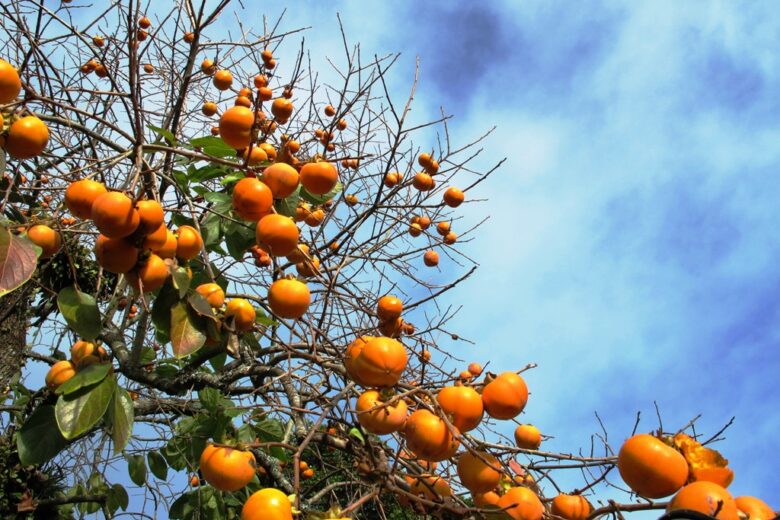
China produces and largely consumes 4 million tonnes of persimmons. Here in the southern hemisphere, our production season is the opposite to theirs and persimmons don’t keep very long – there is an obvious counter-seasonal supply window. Currently we have one, old, non-astringent variety called Fuyu. It’s serviceable but not inspiring, so our exports total around $10 million.
Overseas they have red persimmons, cinnamon persimmons and even chocolate persimmons. If we had access to these new varieties, or perhaps started a breeding programme to develop new ones, what could we grow our persimmon exports to? $100 million? $1 billion?
There are currently no major persimmon growing countries in the Southern Hemisphere. Brazil produces some, but mostly sells them in Brazil. Shipping from São Paulo to Shanghai takes about a month longer than it does from Napier. Our persimmon industry in NZ isn’t likely to attract capital or our best and brightest young people … but it could with some rejuvenation.
The good news is that MPI have recognised our ponderous plant import pathway isn’t working very well. They are undertaking a review of the system, but if the Australian example is anything to go by, it will take most of a decade.
Yet the Australians have already shown the way. In 2015 they opened their Mickleham quarantine facility, which reduced the quarantine time from three years to just one. They aren’t cutting corners. New technologies can map a genome or identify unwanted genetic material very quickly. What once took a decade, now takes a day. Covid19 was the most recent catalyst for innovation, spawning many advances in effective, low-cost virus identification technology.
All this brings me back to Ireland. Ireland has a lot in common with New Zealand. We are both capitalist democracies with a social conscience. We’re also somewhat remote islands with unpredictable weather, plenty of greenery and a drinking problem. It is worth comparing our economic journeys.
After WW2 a great many people emigrated from Ireland and by the early 1960’s the population was only half what it had been 100 years previously.
The Irish Republic adopted protectionism rather than free trade and from 1959 to 1966 their GDP grew by just 8%, compared with the (then just six) founding members of the Common Market who grew at 42%.
A visionary statesman was needed. That might sound like an oxymoron, but, while rare, they do exist. In 1957 the not very memorably named Ken Whitaker was appointed secretary of the Department of Finance. He immediately began writing a white paper outlining his vision for Ireland’s economic development. ‘Shut the door on the past’ he said.
The government listened and so began a trend of more extensive international trade and the attraction of investment capital. The economy grew and the obvious opportunities caused the emigration rate to fall and the population to rise consistently over time.
Today Ireland’s GDP per capita is roughly double that of NZ, while in 1960 our GDP per capita was more than three times Ireland’s.
Ken Whitaker got the ball rolling.
It’s an election year and it’s hard to find any inspiration from the two major parties. Labour didn’t execute their policies well and ultimately made a hash of things. National have steadied the ship but seem woefully short of ambitious ideas. We already have in place new councils and new mayors … perhaps they might have a real impact.
Who will be our new Ken Whitaker, who shuts the door on the past and shines a light to our future?
Paul Paynter is our resident iconoclast and cider maker. Weather permitting, he grows stuff at Yummyfruit.

New Zealand does tend to stagnate with the past being considered the best option at any time – perhaps Paul’s outlook should be fast-tracked into the halls of power to get our economy moving – there certainly doesn’t appear to much thinking going on in Wellington (apart from how to win the next election!)
It is good MPI are looking into this. If we could grow something here to export as well as have available locally for a fair price, that would benefit all.