

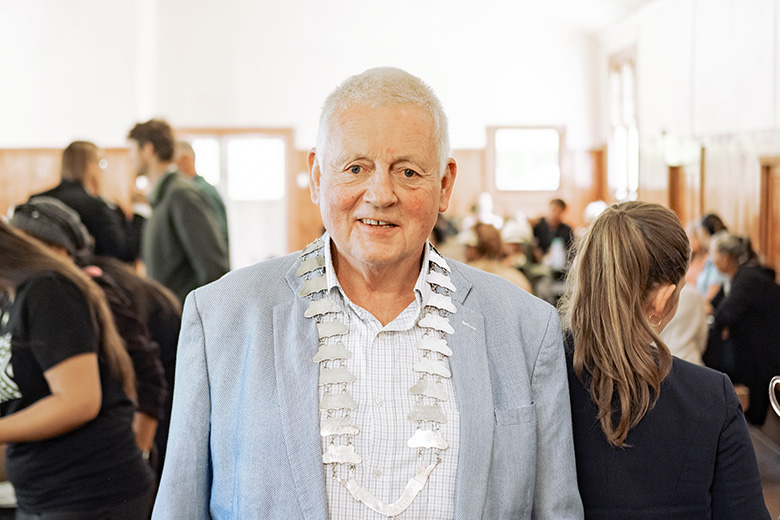
[As published in May/June 2026 BayBuzz magazine.]
Wairoa District Council supports the Government’s recognition that reform within the sector is necessary.
However, Local Government Reform will only succeed if it delivers genuine reform based on the principles of subsidiarity and localism – with decisions that affect communities being made at the most local level possible and not by a centralised authority far removed from the district or community affected. The reform must deliver localism in practice, not just a rearrangement of existing structures that are distant, both geographically and ideologically, from the communities that are impacted by the decisions made.
We therefore support reform that actually results in better Local Government, that strengthens local democracy and delivers value for money. Our concern is that the current proposals may do the opposite – by shifting decision-making further away from the people most affected.
Centralised decision-making does not serve the Wairoa community well. There are numerous examples of that over the years.
Wairoa is unique.
It is geographically isolated, with tenuous transportation and communication links, all of which failed during Cyclone Gabrielle and other weather events. It has a population of approximately 10,000 people with an even smaller ratepayer base servicing a large rural hinterland comprising about a third of the land area of Hawke’s Bay.
That hinterland is highly productive, with the rural and forestry production of Wairoa contributing significantly to exports through the Port of Napier. But the benefits of that production are substantially regionalised or nationalised by export and value-added operations outside of the Wairoa District. At the same time, the disbenefits of that production on land use, catchment management, river controls, rural roads and the community generally are all borne locally.
Wairoa has lived through the utter devastation caused by Hawke’s Bay Regional Council’s failure to listen to our local voice, our local knowledge, and our experience in managing our rivers. This contributed to the June 2024 flooding event, which saw a large area of Wairoa, an area that had not flooded during the extreme event of Cyclone Gabrielle, inundated by floodwaters.
The unintended consequences of blanket decision-making have had significant detrimental effects on our communities, resulting in our people not being able to access the most basic of services.
Local Government that relies on a “one size fits all” approach risks shifting power away from local communities. For districts like Wairoa, this would represent a further step backwards, a loss of capacity within our community and a loss of resilience. The prospects, not only for Wairoa, but for the whole of rural New Zealand, would look very dim.
After three and a half years, since Cyclone Gabrielle, we are still living without an aged care residential facility and with a health system that just can’t seem to find a solution.
Flexibility is key
Flexible collaboration across regions, not limited by regional boundaries, is key. So often, Wairoa gets stuck between Hawke’s Bay and Tairāwhiti. As an example, for police we come under the command of the Gisborne East Coast commander but for other emergency services such as St John’s, Fire Service, and health services, we come under control agencies based in Napier or Hastings.
For Civil Defence, we are statutorily required to be part of the Hawke’s Bay Civil Defence Group Control, but three of our “problem” catchments flow to us from Tairāwhiti, with no “problem” catchments flowing from Hawke’s Bay. These mismatches often result in inaction, difficulties in coordinating responses, and a lack of accountability.
The mismatch between the nationalised and regionalised benefits from production generated in Wairoa and the incidence of the “costs” arising from that production being borne locally creates a structural imbalance.
Governance and funding models based primarily on population fail to recognise the true cost drivers in districts like ours. Population-based models undervalue Wairoa’s productive role. Local Government reform needs to include funding frameworks and HBRC asset distribution to reflect real cost drivers – such as land area, catchments and river systems to be managed, and production intensity – not just population.
More local authority
Territorial authorities already understand and should take on operational responsibility for functions like catchment management, river control, gravel extraction, and pest management. While these could still sit within clear national policy or regional environmental limits, the principle of subsidiarity would streamline decision-making and monitoring so that decisions are made within and in the context of the communities affected by those decisions. Operational authority should sit where impacts are felt and where accountability is clearest—at the local level. Such an approach does not preclude cooperation where there are common interests, such as where a catchment flows from one authority to another.
A concern is that the creation of the Combined Territories Boards, or CTBs, which would take over functions currently held by regional councils, risks substituting one centralised governance body for another. If we don’t change the delivery of operations, we won’t have achieved anything. The CTB must be seen as a transitional step toward localised governance, including shared services.
This does not mean that each Territorial Authority must become a unitary authority, standing alone in all respects. Coordination between Local Government agencies, irrespective of whether they be adjacent or even in the same area currently identified as regions, will still be possible, indeed essential.
Reformed local government should allow the flexibility to look both to neighbours and further afield when forming strategic alliances and shared services. For Wairoa, that might mean we look to Tairāwhiti for some things, like Civil Defence, to Hawke’s Bay for some things, and for others, such as transportation, seek to form relationships across multiple agencies to enable the roading network to be viewed as the essential corridor linkage between Tairāwhiti, Hawke’s Bay and beyond.
Across the country, Local Government reform is an opportunity to get the local governance that we need and deserve. Centralisation is not the answer, as it will result in reduced local accountability, marginalisation of rural districts, slower responses to urgent issues, and the loss of critical localised institutional knowledge and relationships.
For Wairoa, this poses a real risk that decisions about our land, rivers, and infrastructure could be made from a distance by those less connected to local conditions and communities. That is not consistent with the principles of localism and subsidiarity.
Our Council supports the Government’s intent to strengthen local democracy, improve accountability, and bring decision-making closer to communities, but the key is to ensure the reform actually achieves what it sets out to do, delivers genuine reform and ensures that Local Government and local democracy remain local and continue to grow.
Wairoa cannot afford to lose any more.

Wairoa is a special case (that probably won’t be considered under the new plans) due to its comparative isolation from the rest of HB and Tairawhiti. Should they be forcibly included in either region or should they be stand alone with operational ties to both regions. Mr Little makes a lot of sense with much of his comments – but will they get the attention of the bureaucrats making decisions from Wellington – doubtful – they have a political agenda and the benefits (or otherwise) of the local communities is of no real consideration
The history of building empires has demonstrated they dont last.
Mayor little is on the button on emphasising local governance focussed on its communities. I have found him and his council to be the most responsive to community needs of all the Councils I have dealt with.