

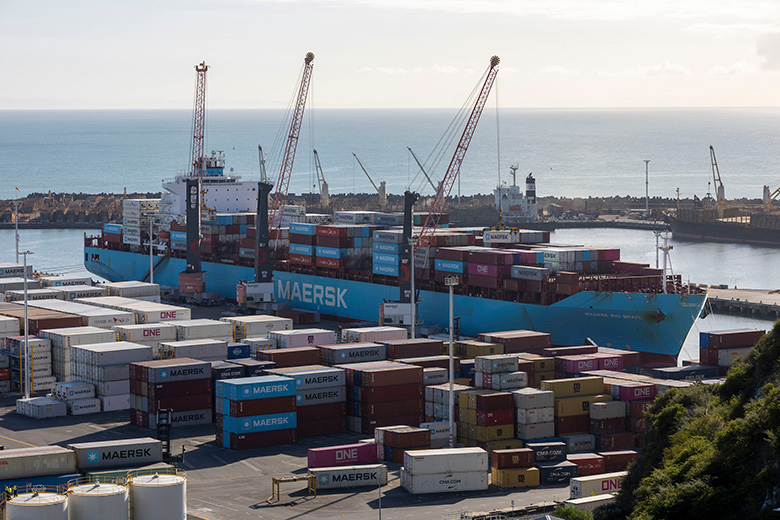
Impressive Napier Port half-year results have been released, with the company’s confidence confirmed by announcement of a 5.25 cents per share interim dividend to be paid in June. Last year’s interim was 4.0 cents.
Although the Port team is monitoring its own fuel use carefully, the Mid-East situation has yet to show impact on Port operations or earnings. As the Port’s slides put it: “Insignificant effects from Middle East conflict to date.”
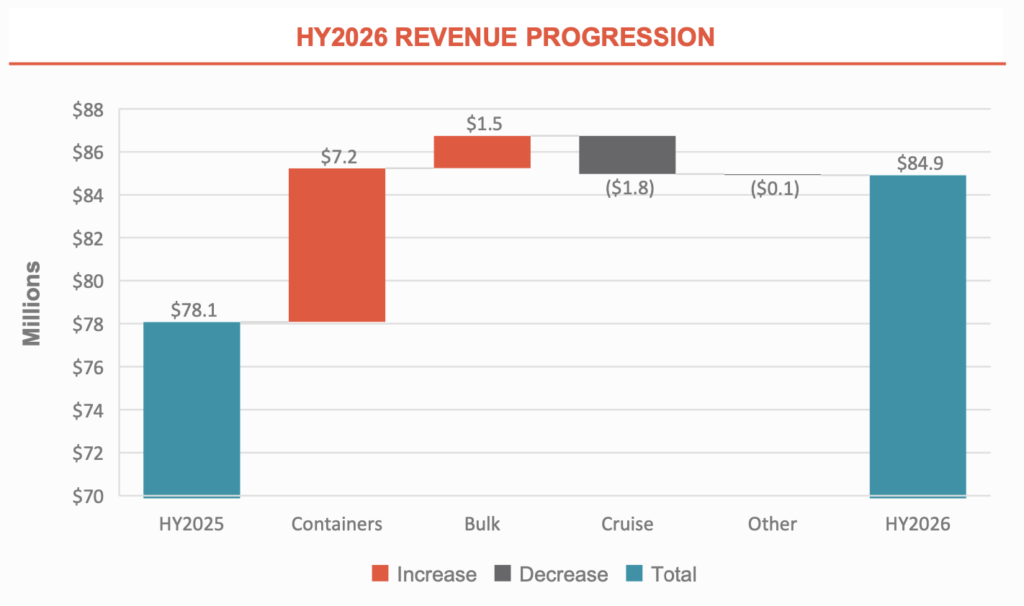
The strong financial performance in this period was driven by the Port’s refrigerated container exports (think apples, squash, onions).
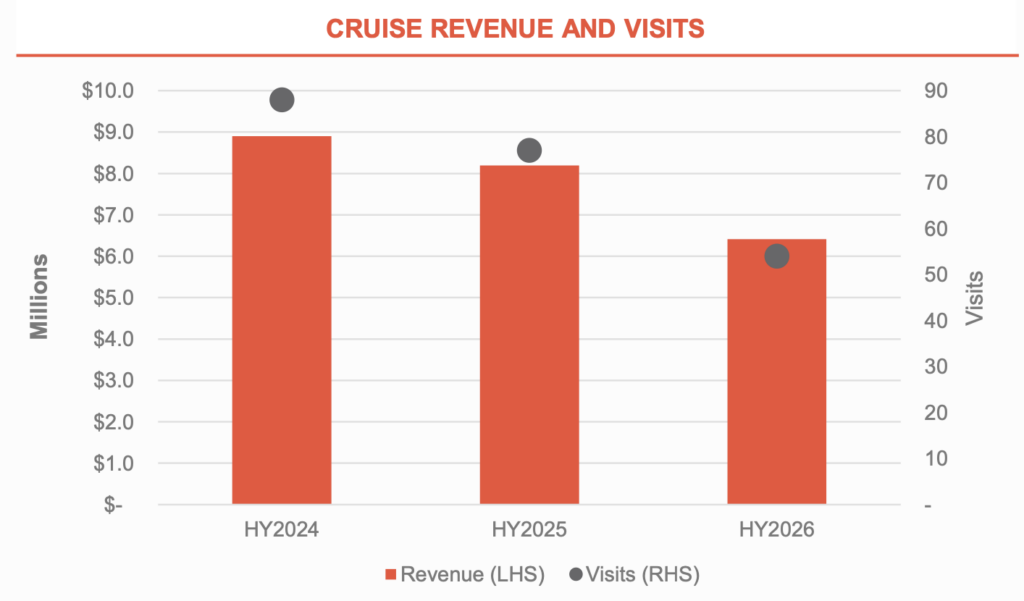
Log exports were a bit down, affected by shipping costs. And cruise revenue continued to sink, with the 25/26 season seeing only 54 vessel visits, accounting for approximately 86,000 passengers and $6.4 million in revenue. Noting strong global demand for cruising, Port officials said they expect this situation to ‘bottom out’ in the coming season, with 52 currently booked for 26/27, before a possible uptick in the 27/28 season.
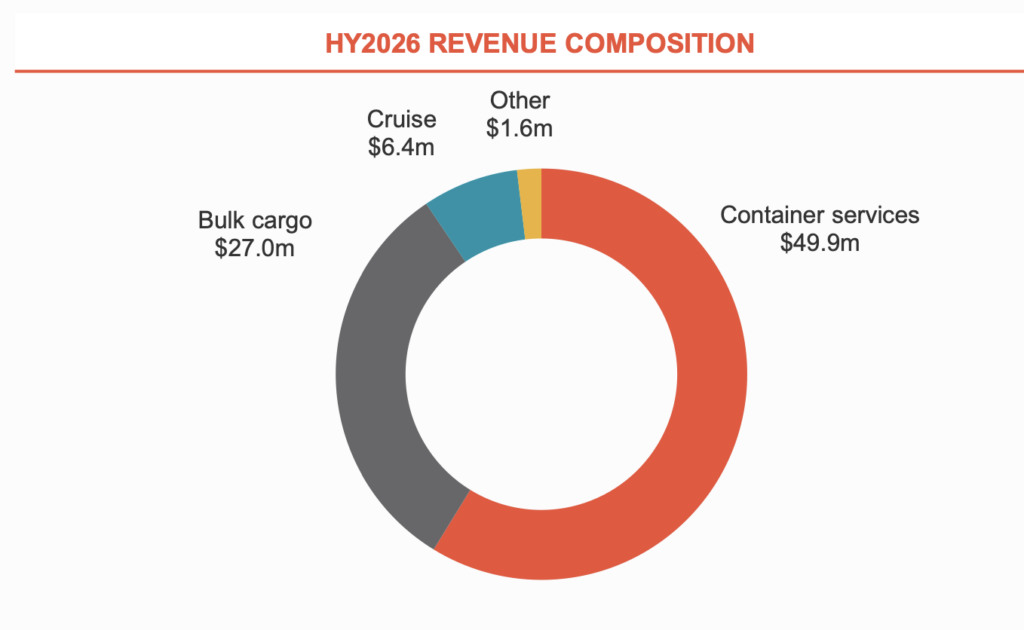
Those hiccups aside, the overall financial results were strong. Total revenue of $84.9 million (HY2026) was 8.8% over the previous comparable half year. Net profit after tax was $17.9 million (HY2026), up 21.5% over the comparable HY2025.
Finally, the capital improvements programme seems to be sailing along. Port chief executive Todd dawson commented:
“We are delivering on our strategic projects to enhance our operating capability. Our investments in our existing cranes, dredge vessel that is under construction, new mooring technology, and our container terminal transformation are progressing well. These will deliver improved capacity, service capabilities and operating efficiencies as they complete over the next year.”
In terms of rougher seas ahead (perhaps more ironically, land mines), no mention was made of HB councils’ reorganisation looming over the horizon, which will raise the question what happens to future Port ownership and accountability (HBRC owns the ‘public’s 55% of shares) and how future dividends might actually get spent!
