

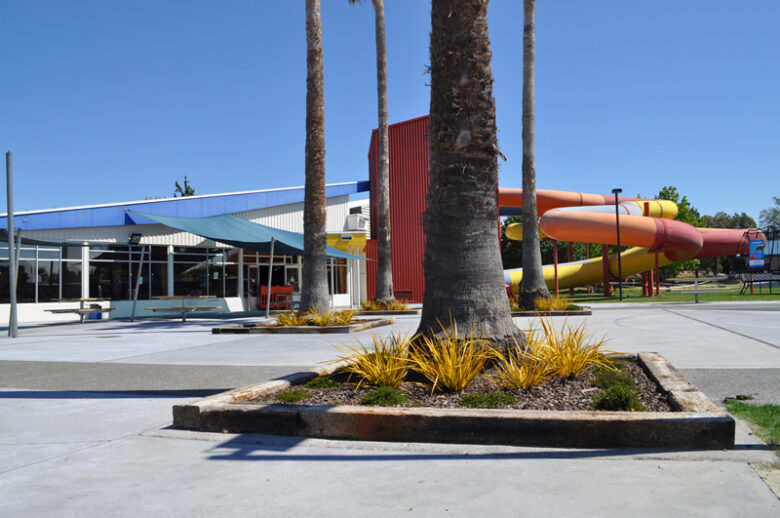
What type of aquatic facility would best meet the needs, values, and priorities of the Napier community and where should it be located?
This is the question that NCC will tackle in a Citizens’ Assembly process to be run over four Saturdays in September and early October. The Assembly recommendations will be endorsed by NCC, “subject to confirmation of feasibility”.
The future of the Onekawa Pools, a much-loved community facility, will be discussed and planned to determine, not only what it might look like, but also whether a new site for the water facilities might be better. Onekawa Pools completed a $4 million refurbishment in April, but this would only keep the pools fit for purpose for another 8 to 10 years.
The Assembly will focus on the options for the period after that: whether to build extensions to the Onekawa site to serve a growing demand for water facilities; or to build a new facility on a new site. In this scenario, the Onekawa site could continue to operate and serve the community during construction, according to the existing Long-Term Plan.
Mayor Kirsten Wise said she wants the public to have as much of a voice as possible, and input from a wide spectrum of people in the community. “We have made a promise to the people to listen to them, to show the rest of Napier what they recommend, and to consider their views in our future planning for the aquatic centre.”
Plans for the Aquatic Centre were a “key focus” for next year’s Long-Term planning, she said.
Applications to be part of the Assembly closed on Monday August 11, with applications reaching 652.
All the names will go into a random selection sortition process designed to produce a final list of 40 people based on Napier’s demographics, but skewed to ensure higher representation from youth, renters and ethnic minorities. Participants will be notified if they are successful around August 22.
The council endorsed its commitment to the recommendations made by the Citizens’ Assembly and promised to:
- Publish an unedited version of the Assembly’s recommendations on the Council website within one day of their handover.
- Invite representatives of the Assembly to present to Council at the meeting where recommendations are formally considered.
- Acknowledge in writing each recommendation, explaining next steps and rationale.
- Incorporate the Assembly’s preferred sites into planning, subject to confirmation of feasibility.
- Keep the development of a new aquatic facility within the Long-Term Plan (LTP).
- Use the Assembly’s advice on features and purpose to inform the design brief and community outcomes sought.
An evening orientation will take place in early September and the Assembly will then meet each Saturday from September 13 to October 4, running from 9:30am to 5pm. Subject matter experts will present to the Assembly, before members request who they want to hear from again, and in which subject areas.
The timing of the Assembly – in the middle of an election campaign – was queried by BayBuzz. A council spokeswoman for the council said community engagement could not stop for elections.
“The Citizens’ Assembly was identified as an appropriate engagement method to add to the suite of tools used for pre-engagement for the Long-Term Plan 2027-37. We will begin work on the LTP early in 2026.”
In July, Mayor Wise said that an election year is the right time to to try something new, because voting on how decisions were made was on people’s minds. “So this a good time to get people really involved in being part of that process”.

Just wondering if anyone will be asking Napier council why they chose “pools” as the topic for their first citizens assembly?
If a citizens assembly is designed to tackle otherwise “stuck” but imperative issues, why was this one selected? Can council not figure out this seemingly simple matter on its own?
I just feel like surely there are far more pressing and stickier issues than this one, where a citizens assembly could actually make a difference. Could the spend and effort be better used elsewhere? Or is there a genuine reason that this topic is such a “tough nut to crack”.
I was excited for the Citizens Assembly process to land here, a process which helped see abortion abolished in Ireland. Then as soon as I saw the topic announced the balloon deflated and made fart noises all over the room.
Why on earth is this expensive assembly happening just before an active local body election? Surely it is best to convene this AFTER the final results are in – the issue will still be just as ‘fresh’ then?
The point made by Mayor Wise of “All the names will go into a random selection sortition process designed to produce a final list of 40 people based on Napier’s demographics, but skewed to ensure higher representation from youth, renters and ethnic minorities.”
How can this be random if it’s skewed – and more importantly skewed towards those who don’t have financial ‘skin in the game’ as ratepayers! It is very easy to be influenced towards the ‘nice to haves’ in our community planning when you aren’t the one directly footing the bill.
Finally the article states “Subject matter experts will present to the Assembly, before members request who they want to hear from again, and in which subject areas.”
Are these a curated set of experts, selected by the Council with a vested interest in a predetermined outcome, or can a member of the Citizens Assembly request to have an independent expert called to offer alternative advice and view to allow the assembly well rounded access to all information to better make an informed decision?
I have concerns that this Assembly is nothing more than an expensive virtue signalling exercise to allow Council to give the impression the citizenry of Napier appear to be making an decision on a project which falls into the ‘nice to have’ not ‘need to have’ category and allow Council to leap frog this ahead of other more pressing infrastructure projects such as stormwater and wastewater maintenance, water safety and security, footpaths and roading and dull issues that don’t appeal to renters, youth and ethnic minorities but are quite high on the list of priorities for those who pay the bills, the ratepayers.
Maree, you beat me to it. Another system skewed against the very ratepayers whose voices should be first and foremost in this issue. Keep the pools at Onekawa. They are vital to the community they serve. Better yet, make it outdoor like it was when it first opened. Anything can be maintained if you put your mind to it. Stop spending ratepayers $ unnecessarily and listen to us! Kirsten, it is time for you to go! Read the room!
Well said Maree! Those were my immediate thoughts as I read that “skewed” selection process. They clearly think rate payers are stupid, let’s show them we are not. Start by voting for a councillor that supports a rates cap and back to basics.
Well said. I 100% agree with your comments.
Having participated in something very similar in the past I agree with points raised by Maree and Council must be very careful in how it progresses this plan.
I would ask,
1/ What are the key parameters/restrictions/considerations the group must consider and meet when coming up with a plan?
2/ Who sets those parameters/restrictions/considerations and are they truly independent?
3/ Can those parameters etc be altered if justified by common sense or are they set in stone?
4/ Will it be a “clean sheet” plan free of coercion and leading?
Entities like Councils can use these “Citizen/ratepayer” groups to come up with a decision that appears to have been made independently when the restrictions that group must work within means the result is actually dictated by those restrictions or “guidelines” and as such the result can be predetermined and is often what the entity proposing such an exercise planned to do all along, only now when challenged on the outcome by disappointed or affected parties, they can absolve themselves of responsibility for it, shrugging and throwing their hands in the air and claim “Your community came up with this plan, not Council”.
Remember, the results of a survey can be predetermined by the questions asked, how they are asked and who is asked.