


One of HB’s typical ‘joint committee’ work-arounds for dealing with regional issues – the Joint Waste Futures Project Steering Committee (with HDC and NCC reps) – has recommended a new Waste Management and Minimisation Plan (WMMP) for adoption by the Hastings and Napier Councils.
The draft plan is slated to go before the respective councils this month. Then, if formally endorsed, would be issued for public consultation in April.
Once finally approved, the Waste Management and Minimisation Plan 2025-2031 will form the basis of the two councils’ work on waste for the next six years.
Some factoids about our Hastings/Napier waste …
- In 2023/24, the two councils spent over $50 million on waste services (HDC $34m and NCC $19m), a portion of this coming from the Government’s waste levy ($60 per tonne now, rising to $75/tonne from July 2027), 50% of which is shared with territorial authorities for local projects to minimise waste – HDC got $1.4 million in 23/24, NCC got $1.1 million.
- The report informing the new strategy, prepared by Tonkin & Taylor, estimates that 39% of waste going to the Ōmarunui landfill could be diverted to recycling or composting.
- About 30% of the materials collected from bins at curbside is presently recycled, whereas 58% could have been, especially food waste and plastics.
- And we could be diverting to recycling more than 50% of the waste presently deposited at our transfer stations. Timber and construction rubble are the villains at these locations.
- Despite operating an electricity-generating gas capture system that reduces emissions by two-thirds, the Ōmarunui landfill still produces about 45,000 tonnes of CO2e – equivalent to five million car trips between Hastings and Napier.
- The good news is that Ahuriri Napier and Heretaunga Hastings produce less waste per capita than the national average (706 kg per capita). Waste from residents hasn’t changed significantly in recent years; the increase is driven by commercial waste.
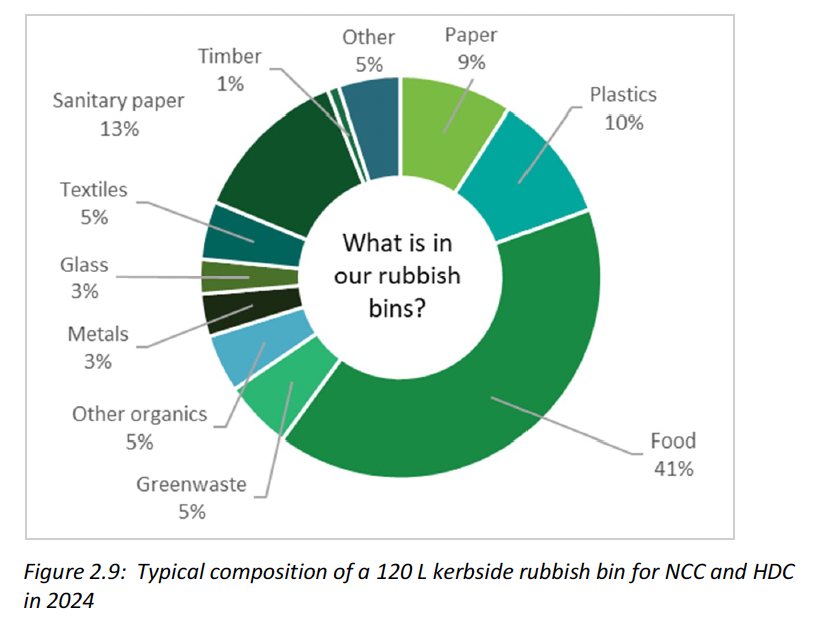
So, what’s to be done?
No silver bullet. The Tonkin & Taylor plan lists over 50 potential actions, including pricing, regulatory and infrastructure changes. But largely the strategy rests on educational initiatives aimed at changing the behaviours of both households and commercial entities. The estimated cost of proposed new actions in this plan is $2.1 million per year across both councils. This will be funded through existing budgets and increased waste levy revenue.
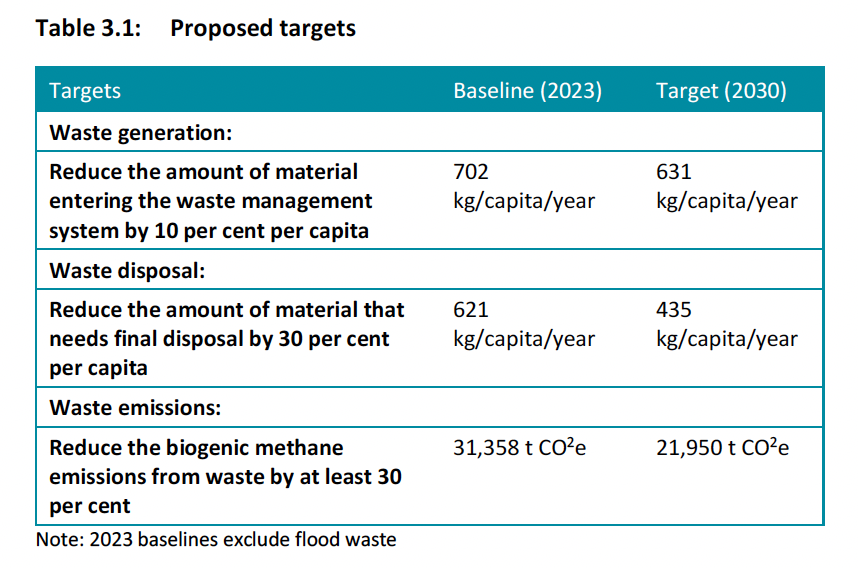
The focus would be on these waste streams: organic waste, construction and demolition waste, and commercial waste. With these targets …
BayBuzz will alert you when the public consultation on the WMMP gets underway.
Meantime you can see the draft materials, including the Tonkin & Taylor report, here.

There are new technologies that turn domestic and other waste into electricity. Is that a option being considered as it would help resolve two problems?
Vernon Winitana is working with a Korean specialist on bringing a Waste to energy technology and plant to Aotearoa.