


What does our Hawke Bay seafloor look like post Cyclone Gabrielle?
That’s something NIWA scientists are trying to find out. They are currently mapping around 200 square kilometres of our Hawke’s Bay seabed onboard the 13.9m-long research vessel, Ikatere.
Hawke’s Bay Regional Council, in collaboration with MPI (Ministry of Primary Industries) and NIWA, have invested in mapping our subtidal habitats over the last five years. This is now paying off as a valuable baseline for assessing the sediment deposited on the seafloor from the Cyclone.
Anna Madarasz-Smith, Science Manager at the HBRC, says the work that NIWA are doing will provide important information on the effect of the Cyclone on some of the significant areas in our coastal marine space.
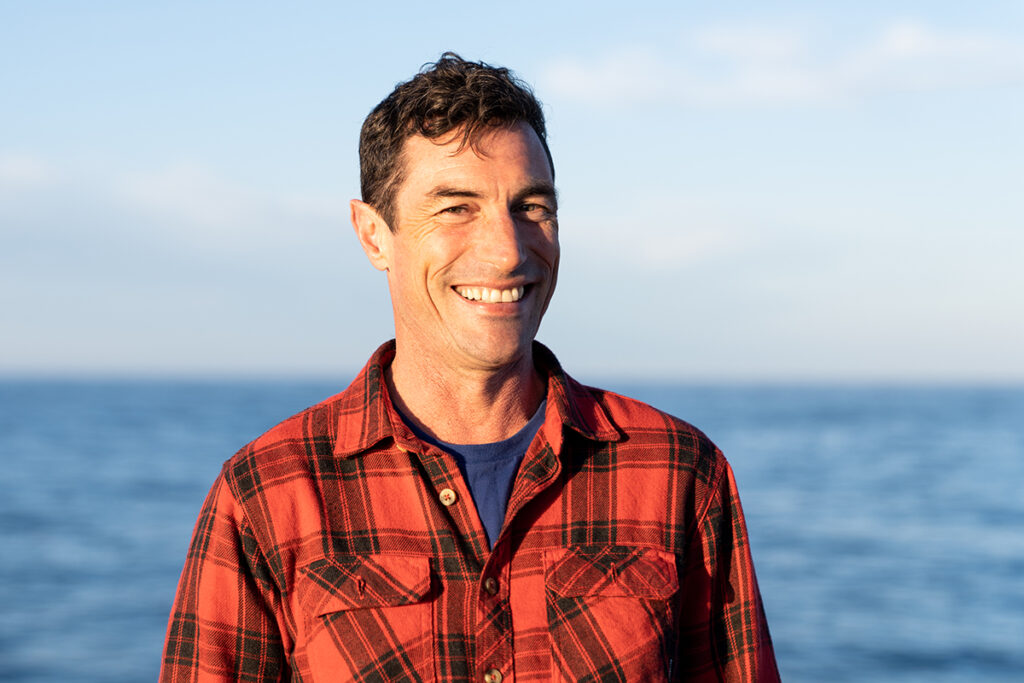
NIWA marine geologist Dr Joshu Mountjoy told BayBuzz that he hoped his team would have enough data by the end of next week, 28th April, to give an indication of how our seafloor might have been impacted.
NIWA has been involved in mapping vast amounts of New Zealand’s seafloor using multibeam echosounder equipment from a 15m water depth and deeper. These provide images of the seabed shape and contours of the seafloor and identify different seafloor physical characteristics.
The echosounder records sound pulses as they bounce back off the sea floor. “We can have 500 beams bouncing back several times a second,” explains Mountjoy.
His team collects strips of seabed data covering up to a depth of 100 metres and 400 metres wide. This is then fed back into software, with algorithms importantly measuring “back-scatter”. This is the term for the state of the ocean floor’s surface. If the “back scatter” is rocky and hard it will indicate sediment hasn’t settled on the ocean floor. Conversely if it’s soft it will mean a lot of sediment has settled.
“It’s hard to anticipate what we will find,” says Mountjoy. “There have already been a few storm-generated wave events that we know can stir up sediment offshore and may have moved some of it around. We expect to see changes where rock or other structures have been smothered in sediment and we can image these with our multibeam bathymetry data.
“These areas are rich in biodiversity and an important coastal marine ecosystem, so we are very interested in what we might find.”
Public Interest Journalism funded through NZ On Air
