

[As published in May/June 2026 BayBuzz magazine.]
The Hawke’s Bay economy has a confidence problem.
This has recently been made worse by McCain and Watties shuffling towards the exit door. From a multinational’s perspective we have expensive labour, land and shipping to export markets and sometimes volatile weather.
The straw that finally broke them is probably high energy costs.
Even before the Iran conflict, gas users were apoplectic about prices, which were up 120% since 2021 and with potentially no gas available in 3-4 years. Big users like Watties have scoped a biomass alternative but why would you spend millions on a new energy project when you’re struggling to make money here anyway?
The previous government’s banning of oil and gas exploration sounded like a great and progressive policy. Regrettably, banning something and accepting the applause was the easy part. To make it meaningful it should have been followed by ‘and we will invest $5 billion in a major geothermal power project to warm our homes and grow our economy’.
The greatest asset we have in NZ is the potential to produce cheap and sustainable energy. We’ve completely messed that up and banning oil and gas exploration simply exposes central government’s ineptitude. This didn’t stop the use of fossil fuels, it just necessitated their importation from other countries.
The Huntly power station is part-powered by coal and located close to existing underdeveloped coal fields. My inside word from the plant is that they receive 28 truckloads of imported coal daily from Auckland and several trainloads from Tauranga. They have Indonesian coal contracts for up to 100 million tonnes.
Almost everyone I’ve spoken to supports a reduction in CO2 emissions and the move towards renewable energy. MBIE statistics surprised me in terms of how well we are doing on that journey. Since 2020 we have reduced our per capita consumption of oil by about 15%, coal by almost 27% and natural gas by 47%. The media narrative often suggests that we’re ‘doing nothing while the world burns’.
There are many idealists in the war against fossil fuels, represented at the extreme by ‘Just Stop Oil’ protesters. Progress can only be made at a steady pace, as that is all western societies can cope with. Which brings me to a few home truths.
Home truths
Food production runs on diesel and processed foods on gas. I hope by the time you read this, that the US and Iran will have resolved their current intransigence and I never see another map of the Strait of Hormuz.
If the supply of diesel and gas isn’t resolved, this conflict will be more economically damaging to us than Covid19. Most people don’t understand just how fragile our supply chains are. Without diesel, there are no functional tractors, harvesters or trawlers. In a short space of time we will see severe food shortages and our export revenue will be in tatters.
In terms of food processing, one of the big users of both coal and gas is the dairy industry. They obfuscate by using co-generation plants but roughly 75% of the energy for dairy dehydrators comes from fossil fuels. The likes of Fonterra have a bold plan to move to other energy sources and will eliminate coal by 2037. This might seem half-hearted but making capital transitions is impossibly expensive and can be environmentally damaging.
The initial purchase and installation of a biomass system requires a great deal of mining – steel, cobalt, copper, and the vast amounts of energy extracting it. The emissions impact is heavily front-loaded. The best thing you can do for the global environment is to keep using the fossil fuel systems until they have reached their end of life.
This is true of my 54 diesel tractors too. The oldest of these is a 1992 Fendt with 48,000 hours on the clock; a testament to quality German engineering. We’ll keep using it while it works efficiently. I am yet to actually see an electric tractor outside of a Google search or trade publications. Electric tractors do exist, but their development lags EV cars by about 15 years.
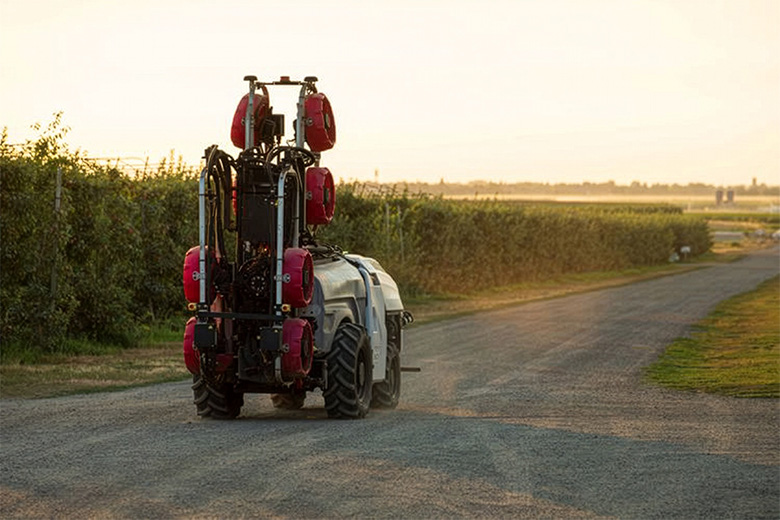
Agricultural companies are trying to move beyond electric tractors to entirely autonomous units, and it’s proving a challenge. I met with tech innovator Steve Saunders (of Robotics Plus, now Yamaha Agriculture fame) last week and he has a new unmanned, hybrid ‘tractor’. Steve’s new machines are great, but don’t provide a total solution. There are many different tractors used for different purposes. Mulching or cultivation require a lot of horsepower, while mowing or spreading fertiliser do not.
Once the farming world has realistic electric alternatives, it will take about 20 years to make a complete transition. Yamaha’s hybrid ‘tractor’ costs about $350k, compared with $100k for an equivalent diesel model. Telling me to convert to electric tractors is a bit like telling a beneficiary to buy a Tesla right now. Post-Gabrielle we are on capex life support
So what solves all of these problems? There are a range of solutions, both dirty and green. As long as we require transitional fossil fuels, I’d suggest we use our own.
Similarly, oil and gas exploration, extraction and refining should be recommenced on a modest scale and for our national security purposes.
The government’s position seems to be that this is a Middle East problem and our suppliers in South Korea are completely reliable. I’d suggest North Korea, the Taiwan Strait and South China Sea are all potential hotspots.
Small modular oil refineries can be highly efficient, and something that could cope with 5,000 barrels a day (30% of our current requirements) would be a sensible backstop measure. These new plants can be built in 6-12 months, once you get past the RMA.
My suggestions might not sit well with you, but I’m genuinely scared about what our future holds. My son rails against the flatulent rhetoric of Donald Trump and I remind him ‘a small country in a dangerous world needs powerful allies’. We’re currently aligned with USA, but you could choose Xi Jinping or Vladimir Putin if you prefer.
Sometimes the ideals we aspire to need to be put to one side as we swallow the rat of reality.
On the green side there are several renewable energy projects underway, but more is required. It’s one of the few areas where I’m happy to let Shane Jones off the leash.
Energy is the heart of any economy and we need to get this on the right track … and the fast track.
Paul Paynter is our resident iconoclast and cider maker. Weather permitting, he grows stuff at Yummyfruit.


I like some of Pauls’ ideas and think they may be worth following up by the powers that be – I don’t know that I’d like Shane Jones to be let “off the leash” – that could be close to an uncontrolled forest fire given his past record. But we are entering, or have entered, a crisis about energy, and some out of the square thinking is definitely needed – maybe Paul might like to enter politics? But that would mean he’d have to lose independent thinking to become a party mule?