
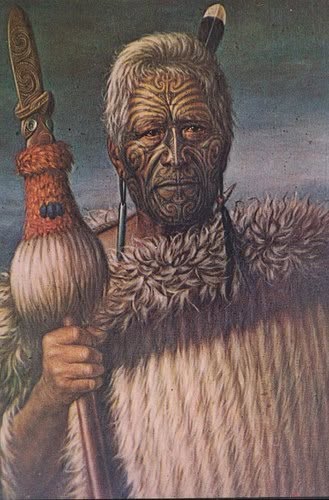
As Aotearoa marks 186 years since Te Tiriti o Waitangi reached Hawke’s Bay in June 1840, Te Taiwhenua o Heretaunga Chair Mike Paku reflects on the promises made, the losses that followed, and the enduring responsibility to uphold its principles today.
Some documents sit quietly in archives. Others reach across generations, shaping the lives of people, our environment and our nation.
186 years ago, one such document arrived in Heretaunga — a simple parchment carrying promises of respect, partnership and nationhood.
That document was Te Tiriti o Waitangi.
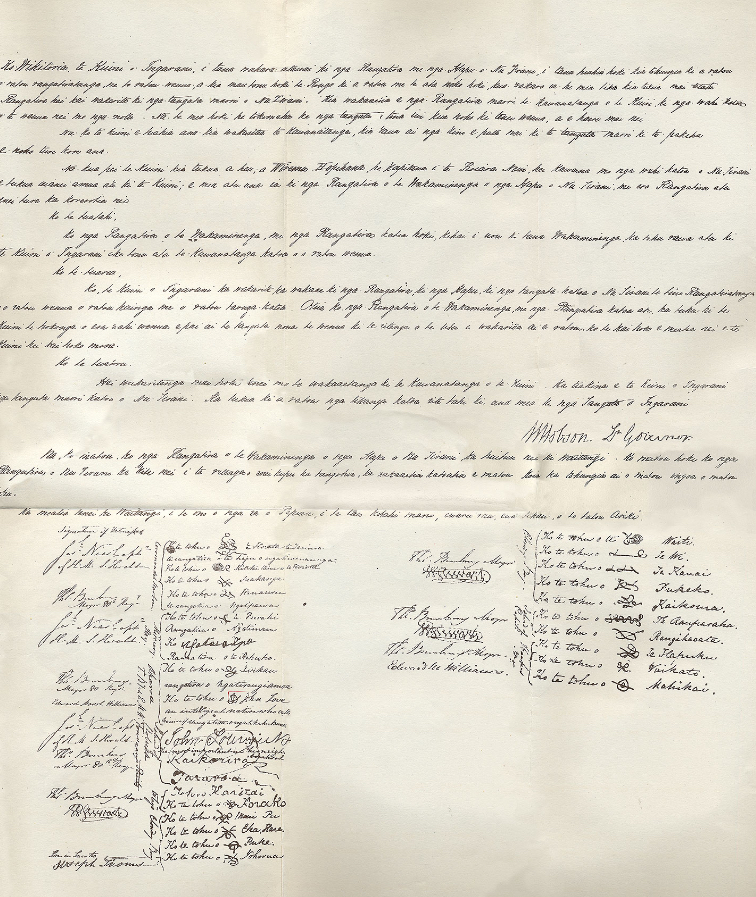
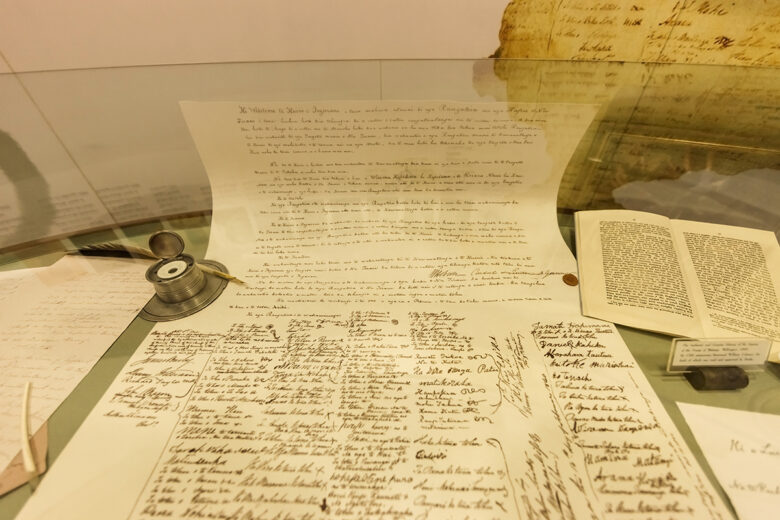
Known as the Herald-Bunbury sheet, it arrived in Hawke’s Bay on 24 June 1840. The document is also identified as sheet 7, and is one of nine official copies of Te Tiriti o Waitangi.
For more than two months in 1840, Major Thomas Bunbury sailed around Aotearoa New Zealand on HMS Herald, acquiring signatures from rangatira across the lower North Island and South Island. It was a journey that would carry Te Tiriti into communities far from where it was first signed. He secured 27 signatures on this Māori language copy.
On 19 June 1840, Major Bunbury stopped at Mana Island, Wellington, and acquired the signature of Te Rauparaha, the Ngāti Toa war chief who composed the globally recognised haka, Ka Mate, Ka Mate!
Five days later, that same journey brought the Bunbury delegation to the mouth of the Tukituki River at Waipūreku (Clive), where they gained the authorisation of prominent Ngāti Kahungunu rangatira Te Hāpuku, Hoani Waikato, and Hariwira Mahikai.
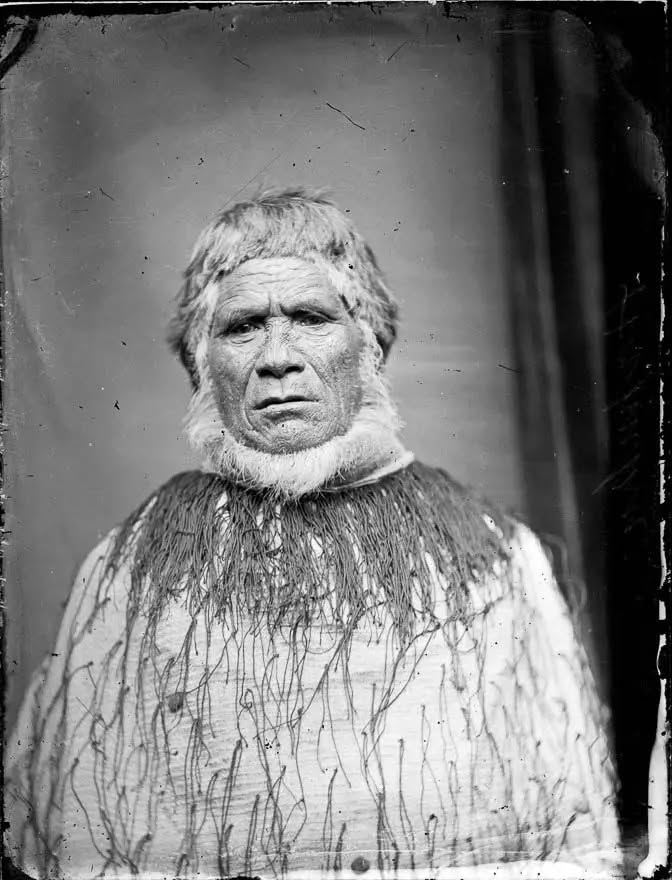
While other Ngāti Kahungunu rangatira would go on to sign Te Tiriti, these three were the only rangatira to do so in Hawke’s Bay. Yet the promises carried in that moment would not be honoured for long.
The chiefs were clearly moved by promises of prosperity through technology, trade and education.
For their part, the Crown representatives were highly motivated. The Heretaunga Tamatea district was considered to have some of the richest and most fertile soils in all of Aotearoa.
The traditional tribal rohe of Heretaunga Tamatea comprises 1.475 million acres spread amongst lofty mountain ranges, deep valleys and vast alluvial plains, with five main river systems — the Tūtaekuri, Ngaruroro, Tukituki, Maraetōtara and Pōrangahau/Tāurekaitai — fed by the Heretaunga and Ruataniwha aquifers.
In less than three decades, much of the Heretaunga Tamatea estate was alienated.
The loss was swift and far-reaching.
Some whenua was taken through questionable sales, but much was lost through the Native Land Court and the so-called “10-owner rule”. The 10-owner rule was a highly controversial provision of the Native Lands Act 1865. It restricted titles for Māori customary land blocks to a maximum of 10 named owners and, in doing so, ignored traditional collective ownership. The rule was repealed in 1873, but by then much of the whenua in Heretaunga Tamatea had already been lost from Māori ownership.
In an ironic reflection of the Government’s attitude and commitment to Te Tiriti, the original Treaty documents were nearly destroyed by a fire in Auckland in 1841, and later discovered in the basement of the old Government Buildings in Wellington — severely damaged by water and rats.
That neglect of the documents themselves came to reflect a deeper neglect of the promises they contained — promises that would take generations of courage, persistence and advocacy to finally bring back before the Crown.
In 2018, the Heretaunga Tamatea Claims Settlement Act was passed to settle all historical Treaty claims in the Heretaunga Tamatea district. Key features of the settlement were a Crown apology, cultural redress components, and financial compensation of $100 million. A further $5 million was set aside to support the long-term sustainability of Te Aute College.
Despite the misdeeds of the past and the dismissive attitudes to Te Tiriti, I believe its core tenets are as relevant as ever. At its essence, Article One speaks to the importance of good governance — a principle our current crop of MPs would do well to consider. Article Two affirms the right of Māori to control our own affairs and destiny. Article Three upholds equality for all citizens of Aotearoa New Zealand.
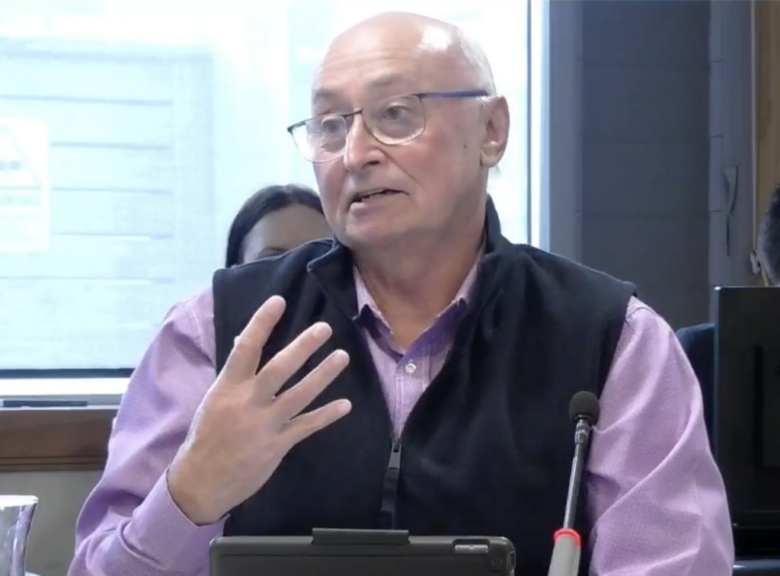
I invite all people — Māori and non-Māori — to learn more about Te Tiriti, not as a relic of the past, but as a living covenant that still speaks to the heart of who we are. It carries the hopes of those rangatira who signed it, the grief of what was taken, and the enduring promise that our mokopuna should inherit something better.
If we are serious about justice, freedom and equity, then Te Tiriti must be more than words preserved on old paper. It must live in the way we govern, in the way we care for our whenua and our wai, and in the way we uphold the mana of every person who calls Aotearoa home — because our mokopuna deserve nothing less.
Mike Paku is Chair of Te Taiwhenua o Heretaunga. The Taiwhenua board is made of representatives from the 14 marae in the Hastings district. Te Taiwhenua o Heretaunga is one of the largest social services providers in the country with more than 300 staff delivering 80-plus services spanning health, housing, education, economic development and environmental domains.