

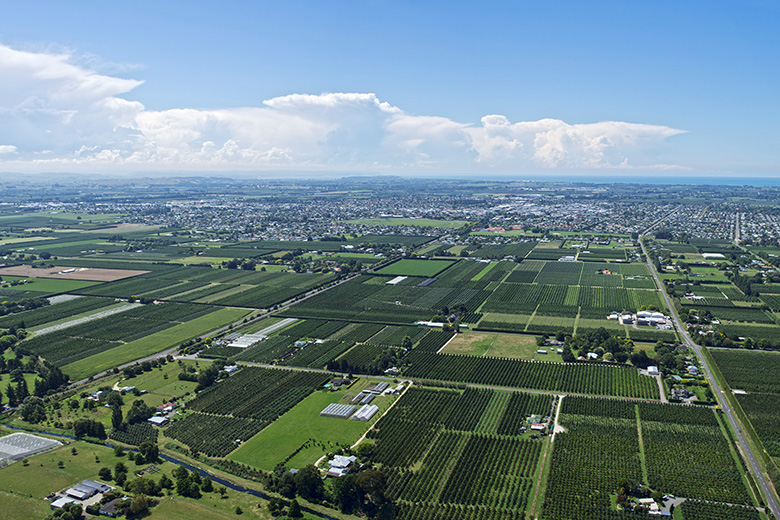
Submissions have now closed for the consultation on the draft Hastings and Napier Future Development Strategy (FDS), with 139 submissions made. An independent hearings panel has been appointed and hearings will begin 24 March, aiming for a report to be ready for consideration by the joint committee (Hastings & Napier Councils/HBRC/iwi) in May.
When the hearings report is accepted by the joint committee and then approved by the councils, it will give direction to where residential, industrial and commercial growth will occur over the next 30 years in the Hastings/Napier urban areas.
Politics at its best and worst.
The FDS is directional only, all specific developments must still proceed through normal territorial and regional councils’ consenting processes. However, inclusion in (or exclusion from) the FDS clearly will signal councils’ predispositions and will certainly carry very significant weight.
So the stakes are high as the FDS gets finalised over the next three months.
Glancing through the 139 submissions (all viewable here), a broad range of interests are represented. Individuals and businesses with projects to advance, iwi groups pursuing housing projects, environmental voices, corporate interests, insurers, lobby groups and developers.
HB Winegrowers, HB Vegetable Growers, Mr Apple, Bunnings, HB Racing, Marist Holdings, Insurance Council NZ, Transpower, Ministry of Education, Mana Ahuriri Trust, Summerset, Natural Hazards Commission, Horticulture NZ, HB Airport, Ngāti Kahungunu, Kainga Ora, Ahuriri Estuary Protection Society, Forest & Bird – that partial list should give you a sense of the stakes and passions involved! Including skirmishes and competing agendas amongst erstwhile allies.
Submissions range in style from simple letters to costly in-depth ‘cases’ prepared at considerable expense by major business interests.
Two major themes emerge clearly from the submissions, reflecting battles already joined during the FDS drafting process:
- Protection of productive farming soils from further encroachment by development.
- Growth aspirations (especially the projected need for 16,000 new homes) versus avoidance of building on hazard-prone (think: flooding) land.
On the former, the chief voice for protecting farming land has been Save the Plains (Sub 079), representing growers like John Bostock and Paul Paynter, with a heap of supporting individuals. Of course, no one can be for paving over productive soils, but many still want their small bite … even Mr Apple, oddly enough.
Save the Plains spokesman Richard Gaddum says of Mr Apple’s proposal: “We are NOT happy about this initiative from Mr Apple. 34ha of the best soils in the world; LUC Class 1 soils over the whole property, and Mr Apple’s proposal is to put the whole area under concrete and asphalt in the form of an industrial business park. Absolutely scandalous and should not be allowed to happen.” More to come on this.
The ‘more homes’ versus ‘flood resilience’ battle pits iwi (championing housing in the flood-prone Riverbend Road area and major housing/commercial development at Ahuriri Station, adjoining the low-lying airport) against insurers, environmentalists, HB Airport and, perhaps most significantly, the Hawke’s Bay Regional Council.
HBRC has a duty of care when it comes to flood protection … and indeed class-action and insurer-initiated lawsuits are being contemplated against HBRC for alleged insufficient response to recent Wairoa flooding. Small wonder that HBRC would take an ‘over our dead body’ position with respect to the Ngāti Kahungunu-led Riverbend housing proposal.
In fact, HBRC itself filed a submission, apart from its opposition as a Joint Committee member, reviewing the reasons for its opposition to the Riverbend development, with this final ‘warning’:
“Irrespective of what areas are ultimately identified in the finalised FDS as necessary and suitable for residential development sometime during the FDS’s 30-year planning period, the Regional Council submits that inclusion of those sites within the FDS in no way guarantees any or all necessary consents and approvals required by the Hawke’s Bay Regional Resource Management Plan or national regulations administered by the Regional Council.”
If that’s not a line in the sand, I’ve never seen one! Like it or not, Napier City Council needs to sell its lifeboats and stick to the hills for its future housing.
The FDS process provides a terrific window into HB’s local politics. It’s about a modern land grab, thankfully occurring in full public view, but with plenty of room for maneuvering and less than transparent agendas to play out.

hey Tom, is there a link to the submissions here?
Yes, see post now. And here.
https://www.hastingsdc.govt.nz/hastingsnapierfuturedevelopment/