

[As published in July/August 2026 BayBuzz magazine]
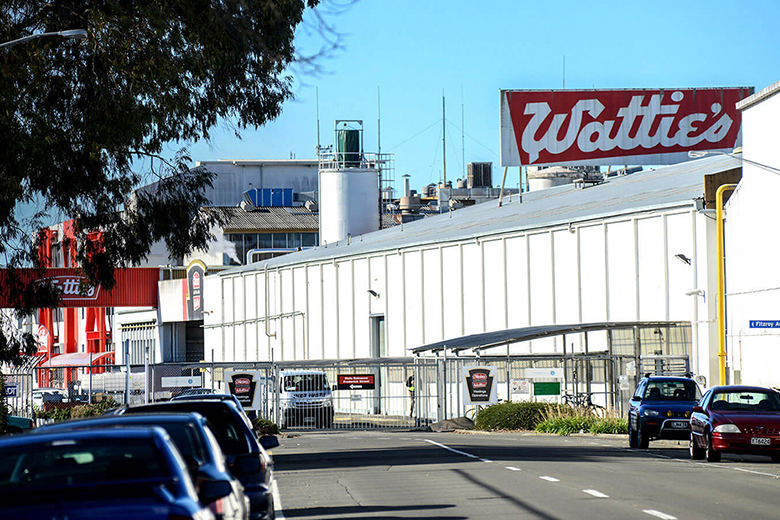
The proposed Heinz Wattie’s cuts have hit many people hard, and rightly so. Heinz Wattie’s has proposed closing manufacturing facilities in Auckland, Christchurch and Dunedin, ending the sale and production of frozen vegetables and some other lines, and stopping frozen packing at one Hastings site, with about 350 roles affected nationally.
This is not only Wattie’s.
In March, McCain Foods announced it will close its Hastings vegetable processing plant on Omahu Road in Twyford at the end of the current processing season, by 31 January 2027. The site takes more than 50,000 tonnes of peas, beans, sweetcorn and carrots a year. In its letter to growers, McCain said it could not identify a sustainable pathway under the current model. The Hastings Mayor called the closure devastating.
Two announcements. Same district. Same season.
That is not coincidence. That is a pattern.
• For some, this is about jobs.
• For others, it is about a Hawke’s Bay icon.
• For many growers, workers, contractors and families, it is something more unsettling again: the feeling that another piece of New Zealand’s productive backbone is being quietly weakened while the country talks about resilience as though words can replace capability.
I have a personal connection to Wattie’s. It runs through Golden Queen peaches and family history in Hastings, including some of the first pea viners. So yes, there is a human and emotional layer to this for me. But nostalgia is not the point here. The point is far bigger than one company, one district, or one brand.
The real issue is food security, food sovereignty, and whether New Zealand still takes seriously the industries that feed us.
Too often, food security is spoken about as if it is some abstract policy phrase. It is not. It is practical. It is the ability of a country to grow, process and supply enough real food for its own people. It is the ability to withstand shocks. It is the difference between genuine resilience and dependence dressed up as efficiency.
And that is where this issue gets serious.
Because processed vegetable crops are not just about a contract or a factory line. They are part of how farming systems work. Crops grown for processors such as Wattie’s and McCain help make rotations possible. Those rotations matter. They help break disease cycles. They help manage weeds. They help spread risk. They help keep vegetable land functioning as vegetable land.
Pull enough of that processing demand out of the system and you do not just lose one market. You weaken the rotation logic that underpins wider growing systems. That matters for agronomy. It matters for soil. It matters for pest and disease pressure. And over time, it matters for what can viably be grown at all.
That point is not well understood outside the sector. But it should be.
New Zealand also needs to stop kidding itself about the role of frozen vegetables. Fresh is excellent, of course. But snap-frozen vegetables are still very good food. They are not ultra-processed junk. They are not part of the long, sad march toward diets dominated by synthetic convenience and shelf-stable nonsense. They are real vegetables, preserved in a form that gives families access to practical, nutritious food year-round.
• Are they quite as good as fresh? In my opinion, no.
• Are they close enough to matter? Absolutely.
That matters for household budgets. It matters for working families. And it matters for public health.
If New Zealand keeps weakening the ability to grow and process real food locally, what exactly does it think fills the gap? More imported product. More dependence. More highly processed alternatives. More distance between the grower and the plate. That is not some sophisticated future. It is a failure of seriousness.
We also need to be careful not to let this debate collapse into lazy slogans about food miles. That argument misses the point. Distance is only one variable. Production efficiency, storage, shipping mode, standards, inputs and waste all matter. New Zealand has long shown that food grown well and shipped efficiently can compare strongly on total emissions, and research has warned for years that “food miles” alone are a poor measure of environmental impact.
But that does not rescue the deeper problem.
A country becomes fragile when it outsources too much of the real capacity to feed itself. Efficiency is not the same thing as sovereignty.
And this is where the national hypocrisy starts to bite.
We are constantly lectured about climate change, carbon, sustainability and net zero by people who appear to have no issue at all with food being grown offshore, shipped vast distances, then sold back to New Zealanders as though this is somehow enlightened. That is a mind bender.
Apparently local resilience matters right up until someone offshore undercuts local growers. Apparently sovereignty matters right up until the country has to decide whether producing things here is worth defending. Apparently sustainability matters right up until the numbers on a supermarket shelf point somewhere else.
That contradiction is everywhere.
I keep thinking about the absurdity of how New Zealand talks about fuel security. Fuel on a ship heading here, or fuel sitting in tanks in Singapore, is deemed part of New Zealand’s fuel security. Seriously. Get real. A ship can be delayed. Diverted. Blocked. In the worst case, it can sink. You do not own true resilience just because something exists somewhere in the supply chain and might arrive.
Food security is not identical, but the logic is similar.
A country is not food secure because global trade exists. A country is not food secure because supermarket shelves are full in normal times. A country is food-secure when it retains enough domestic productive capacity to feed itself properly when conditions turn ugly.
That means land. That means growers. That means processing. That means energy. That means logistics. That means policy settings that do not slowly suffocate the productive economy while pretending to support it.
And that is the harder truth sitting underneath the Hawke’s Bay closures.
For years, New Zealand has talked a big game about value-add, regional resilience, and backing local production. But in practice, we keep making it harder to do business here. Energy costs are high. Compliance keeps growing. Red tape stacks up. Input costs remain stubborn. Decisions are slow. Uncertainty is constant. Then we act surprised when manufacturing shrinks, growers lose markets, and productive capacity begins to slip away.
This is what decline looks like in the real world. Not one dramatic collapse. A slow grinding down. One line, one crop, one site, one decision at a time.
And once the processing muscle goes, it is not easy to rebuild.
That is why this matters beyond Hastings. Beyond Wattie’s and McCain. Beyond any single announcement.
Because if New Zealand loses enough local processing, we do not just lose factories. We lose confidence. We lose optionality. We lose rotation support. We lose a layer of nutritional resilience. We lose part of the living connection between our food and our people.
We also lose something more subtle but no less important: honesty.
We start pretending that “packaged in New Zealand” is the same as grown here. We start pretending that imported food is the same thing as secure food. We start pretending that dependence is efficiency. We start pretending that a country can neglect its own productive base and still remain strong.
It cannot.
A serious country would treat this as a warning. A serious country would ask why local manufacturing and processing keep becoming harder to justify. A serious country would ask whether free trade is still fair trade when local growers are expected to compete against systems carrying subsidies, lower costs, and lower burdens. A serious country would ask what happens to public health when real food gets displaced by imported substitutes and ultra-processed convenience. Most of all, a serious country would understand that food and fibre are not just about exports.
It is about domestic strength. It is about sovereignty in practical form. It is about the quiet dignity of feeding your own people well.
That is why this story matters.
Not because of sentiment alone. Not because Wattie’s is iconic. Not because people are resistant to change.
It matters because New Zealand cannot keep weakening the systems that grow, process and supply real food, then pretend it is building a resilient future.
It is not.
New Zealand is not losing productive strength all at once. It is losing it in stages, while telling itself that imported supply, better packaging, and softer language are somehow the same thing as resilience.
They are not.
Fenton Hazelwood is an agronomist with more than 30 years experience across the seed, agrichemical, and food sectors.
