


[As published in July/August BayBuzz magazine.]
“Whatever you can give – even if it’s organising half-time oranges or driving a carpool – it all counts.”
That simple truth from Sport Hawke’s Bay’s Play, Active Recreation and Sport Team Leader Caitlin McIver sums up the reality facing community sport. Volunteers don’t need titles or trophies – they just need to turn up. But across the country, fewer people are.
The latest National Sport Club Survey paints a worrying picture. The average number of regular volunteers at sport clubs – those giving three or more hours a month – has almost halved since 2019, dropping from 31 to just 18. It’s a shift that Gordon Noble-Campbell, chair of the Amateur Sport Association, calls an “existential threat” to grassroots sport.
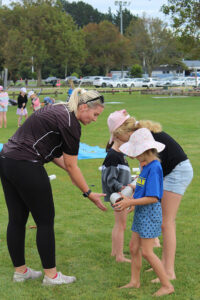
And while average club membership has recovered post-Covid, and in many cases grown, the volunteer pool has shrunk. Athletics, football and rugby union are especially feeling the pressure.
Here in Hawke’s Bay, Caitlin McIver sees it first-hand. “Volunteers are critical to sport,” she says. “Most people think of coaches and managers, but behind the scenes, it’s everything from governance and event planning to field setup and hospitality. Without them, sport doesn’t happen.”
McIver says the decline isn’t surprising in today’s climate.
“People are busy. There’s economic pressure. And the new Incorporated Societies Act adds more complexity to club life.”
But that makes celebrating and retaining volunteers even more important.
Sport Hawke’s Bay encourages schools and clubs to acknowledge their volunteers, and they run surveys like Voice of the Coach to help regional sports organisations better support those on the ground.
“Volunteers need to feel valued, that’s how you build a sense of belonging, and that’s what keeps people involved.”
McIver believes the conversation around volunteering needs a reset.
“You don’t have to give your life to a club, just a bit of time, in whatever way works for you. Every bit makes a difference.”
And beyond what they give to sport, volunteers often gain just as much. Research shows stronger social connection, better mental health and even improved physical wellbeing are among the benefits.
Despite the national decline, some clubs, like Napier City Rovers, continue to punch above their weight. With a mix of skilled volunteers and key paid roles, they create a match-day experience that runs on teamwork and pride. It’s a model McIver sees echoed in other strong clubs across the region.
And then there are individuals like Keith Bone and Shelley Cameron. The heartbeat of community sport. The ones still showing up.
Keith Bone: Swimming for life
“I swim for life,” says Keith Bone, matter-of-factly, as he talks about his daily journey over seven speed humps and 1.4 kilometres from his home to his second home – the Hawke’s Bay Regional Aquatic Centre at Mitre10 Sports Park.
Whether it’s pulling on his togs and easing into Lane 5 for some laps with his fellow master swimmers, or rallying the next wave of champion swimmers or water polo players, Keith is there. Morning, evening, rain or shine – the 65-year-old is part of the pool’s DNA.
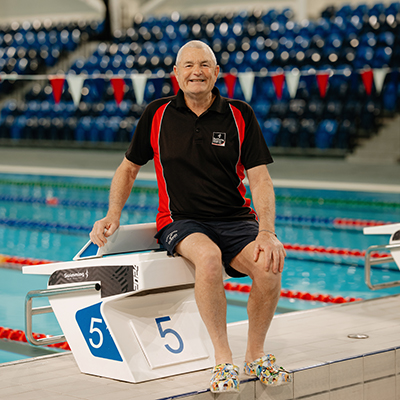
If the pool is a community, Keith is its unofficial mayor. Always on duty, even when he’s not.
“I swim for my health – and if I’m going to do that, I’ll drag in as many other people as I can too,” he grins.
Keith isn’t just a swimmer. He’s an orchardist-turned-volunteer powerhouse who’s given more than 30 years of his life to swimming and water polo.
He first stepped onto a pool deck as a parent volunteer when his three daughters began swimming competitively. One minute he was timekeeping, the next he was studying the rulebook. By 2003, he’d qualified as a national-level swimming referee.
He’s chaired the board of Swimming Hawke’s Bay-Poverty Bay, served as a board consultant, and helped lead the creation of Hawke’s Bay Water Polo. In between all that, he coaches, referees, and mentors – all voluntarily.
And what drives him? Health, heart and humanity.
Swimming is in the Bone family’s blood. His brother Mark represented New Zealand and coached the national team. Another brother, David, now coaches the New Zealand Under-20 Water Polo side and is currently in Croatia. Their sister Jan captained the New Zealand women’s water polo team for 10 years.
Swimming wasn’t just something the Bone kids did – it was a way of life.
Keith swam competitively too in breaststroke and individual medley, but it wasn’t until his three daughters took up the sport that he found himself deep in the volunteer world – officiating, coaching, chairing committees and always pitching in where needed.
More recently, life threw him a curveball: a serious back injury, followed just ten months later by a heart attack, right on the cusp of the COVID lockdowns.
That’s when swimming became more than a passion – it became his lifeline.
“If I don’t swim, my mobility is really poor,” he says. “Swimming is my rehab – my medicine. It’s the one thing I can do to stay mobile. So, I do it. And I do it with others.”
He’s in the pool six mornings a week – three swimming, three coaching. Add in the water polo sessions and Tuesday night training, and it adds up to more than a full-time job.
“Swimming comes first, water polo second, and fishing third,” he laughs. “And some days, swimming and water polo switch places.”
Ask around the Regional Aquatic Centre and most people will know Keith.
He’s the guy having a yarn on the deck, adjusting a backstroke ledge for a new swimmer, or running drills with disabled athlete Lance Dustow, a promising para swimmer on the autism spectrum.
“I just want people to have a good sporting experience,” he says. “What they learn in the sport will be small compared to what they take with them for life.”
His squad of fellow masters swimmers – the Heretaunga Sun Devils “Old Devils” – has grown into a bit of a movement.
Lane 5 is their spiritual home.
“We started back in Flaxmere,” Keith says. “Now we’ve got over 30 regular swimmers, from all walks of life. You’ve got to earn your stripes to get into Lane 5!”
That’s the thing about Keith. It’s never just about him. He’s the glue, the connector.
He’ll greet a new swimmer, make sure their parents feel welcome, and before long they’re helping out at events or sitting on timekeeper chairs themselves.
According to former Olympic swimmer Willy Benson, Keith’s contribution to swimming is immeasurable. “If our sport didn’t have people like Keith, we just wouldn’t be able to provide the amount of opportunities that we provide for kids within the day.”
Willy praises Keith’s commitment, saying he has given up his time to help “everyone else’s kids,” and notes that there aren’t enough people like Keith who are willing to dedicate themselves to supporting youth sports.
He also mentions that Keith loves a bit of banter and has found renewed enthusiasm through water polo, which has given him “another lease on life” to help kids and adults alike.
Keith himself gets enthused seeing new generations come through the pool – kids who once splashed in Learn to Swim programmes now bringing their own children back.
“I’m seeing third-generation swimmers now,” he says with quiet pride.
His own grandchildren – five of them – are all in swim programmes, in London, Cambridge and Wellington.
“We tried to get the Bone family together for a swim-off once,” he chuckles. “I challenged Mark to a race, but I’m not allowed to compete because of my heart. Still, we’re all swimmers.”
Keith has been a fierce advocate for better pool facilities over the years, including standing up for community pools like Frimley, which he believes should be restored, not removed.
He’s equally passionate about making swimming accessible for all ages, especially those in lower socio-economic areas who can’t always get to the main aquatic centre.
His pride in the Regional Aquatic Centre is unmistakable.
“It’s the best facility in New Zealand,” he says, still in disbelief. “Every time I walk through the doors, I pinch myself.” And it’s not just about performance – it’s about connection. “It’s a hub, a place where people of all ages come to move, to laugh, to be part of something.”
As for how long he’ll keep swimming and volunteering? “Until I can’t do it anymore,” he shrugs.
“My mother swam until she was 82. We taught her to swim properly at 50.”
Keith Bone swims for life. And if you’re lucky enough to cross paths with him, there’s a good chance he’ll have you swimming too – or at the very least, holding a stopwatch.
“We’re here on a journey,” he says. “Let’s go on that journey together.”
Shelley Cameron: All heart on the sidelines
It’s known as the beautiful game and for Shelley Cameron it’s also been a beautiful way to spend a life. Not as a pro, not in the spotlight, but from the sidelines – coaching, organising, planning, mentoring, and above all, giving.
Shelley has worn nearly every hat available in the world of local football. She’s coached junior and senior girls, helped run clubs, sat on committees, and steered strategy for the women’s game. If football was a team of volunteers, Shelley would be the playmaker – seeing gaps, finding space, and connecting people.

Her love for the game runs deep.
“I’ve always played sport, I come from a sporty family – it’s just what we did,” she says.
That upbringing instilled not just a passion for participation, but a sense that sport is something you contribute to as much as you take from.
It started small, helping out at her local club, Taradale, where she eventually became club secretary and then a life member.
When her eldest daughter turned five, Shelley took up coaching. “Just Saturday morning chaos with little kids running around,” she laughs.
But it wasn’t long before her coaching talents were spotted by Central Football’s Leon Bernie, who asked her to help with a rep side. From there, she was hooked.
Coaching was never just about wins and formations. It was about showing up, modelling what leadership looks like, and helping young women find belonging.
“I was probably the first female coach a lot of the girls had ever had,” she says. “It’s important for girls to see women in those roles. We coach differently, and I think that matters.”
Now Shelley coaches both the First XI and senior futsal teams at Napier Girls’ High School.
She’s also a key figure at Napier City Rovers, where she’s been helping build a proper women’s programme. “They’d be the first to admit they hadn’t done women’s football well,” she says. “But now they’re genuinely trying to get it right, thinking about things like facilities, what girls need to feel comfortable, and how to support them properly.”
It’s a big ask on top of a full-time job, but Shelley has found the right balance. As a sales rep, her role gives her enough flexibility to do what she loves outside of work hours.
“I just start early when I need to, so I can make it to school games or trainings. I’m lucky, but I’m also super organised,” she grins.
And then there’s the buzz, the reason she keeps turning up.
“Seeing the players enjoy themselves, watching them grow, that’s the payoff,” she says.
“You don’t have to be a star to get something out of sport. It’s good for your body, your head, your confidence. It teaches you how to lose, how to lead, how to get along with others.”
Teenage girls are a particular passion.
“There’s a huge drop-off in sport at that age, and it’s a real shame,” she says. “I get that there’s pressure – social media, part-time jobs, trying to fit in – but sport gives them so much that’s positive. We’ve got to keep finding ways to make it work for them.”
That might mean offering paid coaching gigs during school holidays, or making sure they see the many paths they can follow in sport – not just as players, but as coaches, umpires, organisers.
“There’s a role for everyone,” she says. “We just need to make sure those roles are visible and supported.”
Shelley has two teenage daughters, both still involved in sport.
One is studying teaching at EIT while coaching a junior team and playing at a high level herself. The other, in Year 12, plays football and futsal too.
“It’s really cool to see that they’ve picked up those values,” Shelley says. “They help their coaches, they pitch in, even when I’m not coaching them. They’ve seen what volunteering looks like – and that it can be fun.”
Not that it’s always rosy.
“Of course it can be hard. I’ve heard the odd grumble – people assuming my kids are in teams just because I’m coaching. That stuff’s not easy. But the positives completely outweigh the negatives.”
Some of those positives are personal. Lifelong friendships, watching girls she coached as kids become successful young women, or even seeing some of them progress to the professional side of sport.
She fondly mentions Charlotte Lancaster, who went on to play professionally for Wellington Pheonix as well as in Australia. “That’s pretty special,” she says.
And yes, she still plays – rolling subs and all.
“I mostly just coach now, but I’ll sub myself on if I need to fix something on the field,” she laughs. “Then roll straight back off.”
So what would she say to someone considering volunteering in sport?
“Just jump in. If your heart is in the right place, the rewards are huge. You’ll get more out of it than you ever expected.”
Shelley Cameron may not be scoring the goals, but she’s absolutely changing the game.
Starting like most kiwi kids playing rugby barefoot on frosty Hawke’s Bay mornings, Damon became a sports editor for the local rag and then a sport promoter for the ASB Tennis Classic, the national rugby championship and the Auckland Blues. He served 15 years on the board of Sport Hawke’s Bay, five years as chair, and continues to be involved in sport governance locally. A third-term Hastings District councillor, in his spare time he’s an action man – surfing, mountain biking, a gym bunny and a newcomer to water polo.