


Public engagement around specific flood mitigation options is now underway in the Wairoa community.
Will the process and outcomes yield lessons for the rest of HB?
Post-Gabrielle, $70 million of Government funding was ring-fenced to provide community scale flood mitigation for Wairoa, specifically North Clyde. Lawrence Yule was appointed in August as Crown Manager to supervise development of a flood protection scheme by the Wairoa District Council, HBRC and the Wairoa community.
In early October, the Tripartite Partners – Wairoa District Council, Hawke’s Bay Regional Council and Tātau Tātau o te Wairoa Trust – agreed to commence early engagement with mana whenua, including whānau and property owners potentially impacted.
“This important milestone came off the back of a long and careful process which included the Wairoa Flood Mitigations Scheme Stakeholder Group – a Group established by the Tripartite partners – working with river engineers, technical experts and mana whenua to come up with technically viable flood mitigation solutions to help protect the community of Wairoa,” Yule says.
While no formal date has been set for a decision on the preferred flood mitigation option for North Clyde, the broader community engagement process is expected to run through to the new year, ideally with a preferred flood mitigation solution confirmed, agreed and publicly communicated by February 2025.
The Government requires a confirmed preferred flood mitigation option, and a business case based on that preferred option, by 31 March 2025. If this deadline is not met, the $70 million of Government funding could be withdrawn.
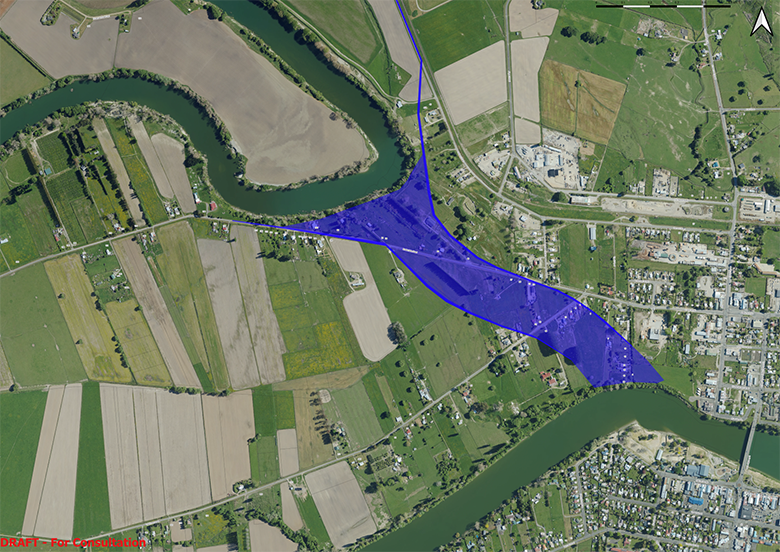
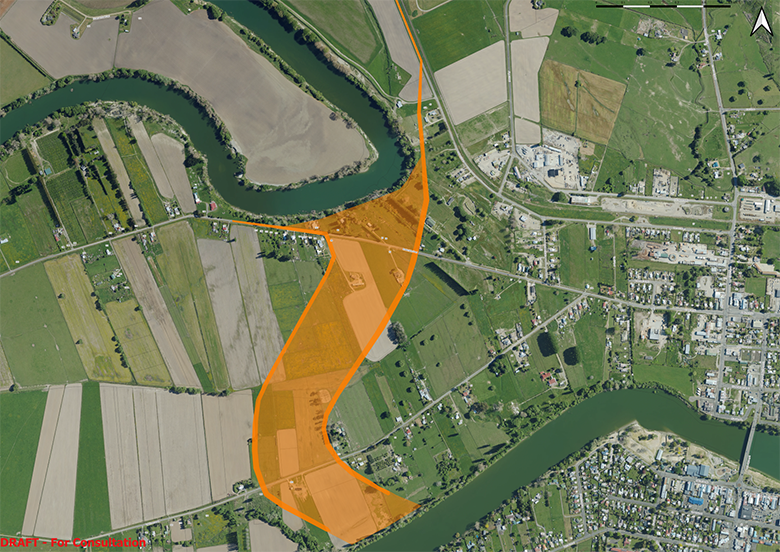
So the focus now is on the North Clyde area of Wairoa, with nearly 20 options initially developed and weighed. All are being put before the community, with two presented as the “most technically viable” options. As picture below, both of these would create ‘floodways’ protected by small stopbanks that would provide safe flow paths for excess water during severe rain events.
According to the Project website:
“A floodway, also called a spillway, is a channel constructed to take a portion of the river flow off the river to take pressure off the main river channel. The floodway then links back up with the river, which then takes the water out to sea.
“Floodways are typically dry and are commonly used for grazing during normal river flow conditions, and only operate during flood events when the river is high enough to flow into them. Floodways also typically have stopbanks on one or both sides and sometimes include manually controlled flood gates and/or weir walls (spillways) to let the water enter into the floodway.
“The land in the floodway can still be grazed if adaptive stock fencing or cattle stops are used along the roads. Alternatively, the grass could be harvested and bailed. The floodways could potentially be used for community recreation or ecological habitat purposes. Buildings, structures, and large trees can’t be in a floodway.
[No doubt floodways will be on the options list when HBRC presents plans for the Ngaruroro and Tutaekuri rivers.]
Of interest, Option 12, not recommended, would involve creating a permanently open river mouth by creating engineered structures. But this option would not prevent flooding in North Clyde.
Given the major kerfuffle over HBRC’s purported mismanagement of the river opening during the most recent flooding event, complete with threats of lawsuits, BayBuzz asked Crown Manager Yule about planning around the southern side of Wairoa.
He told BayBuzz that the initial focus has been the protection of North Clyde, as this is what the Government’s $70m is earmarked for, with a firm schedule as noted above. However Kopu Road (flooded in June) and management of the river mouth bar is clearly on the agenda.
Says Yule: “Work is now underway to look at how to protect Kopu Road and preliminary work is about to begin on what can be done to optimise the performance of the bar to reduce its impact on flood levels including looking at hard engineering options.
“In the interim a new Bar Management Protocol will begin next week which give more local input into bar opening decision making. This will include Wairoa District Council, Ta Tau Ta Tau and Wairoa Civil Defence. This will be assisted by the installation of bar monitoring cameras and weekly drone monitoring. Additionally a 50m pilot opening has been cut with a coffer dam on the sea side. This will allow the bar to be opened within a day. This cut is now maintained ( if required) on a monthly basis by HBRC.
“HBRC remains responsible for the river control works but more local input is now occurring as to how this will be achieved.”
Wairoa Mayor, Craig Little says, “History shows that Wairoa has been impacted by flooding for as far back as records were kept, and yet we have never had any type of flood protection in place.
“Now, through the Government’s $70m contribution, we have the opportunity to put solutions in place to help protect the community of Wairoa for generations to come. No decisions have been made yet and there is still a lot of work to be done, but we are making progress, and it is pleasing to see that this progress is now occurring at pace.
“We know there will never be a magic silver bullet to stop all flooding, but we absolutely have to do whatever we can to reduce the flood risk and help protect our community.”
The history of public engagement to date, the development of these options, and the pros and cons of all options is presented here.
