


[As published in September/October BayBuzz magazine.]
Walk past Guthrie Park on a weekday afternoon and you’ll see community sport in full flight – schoolkids chasing footballs, parents catching up on the sidelines, and coaches squeezing in sessions before the sun dips.
But behind the scenes, Havelock North Wanderers AFC is grappling with a major decision – and it’s not just about football.
“We’re at a tipping point,” says Aaron Hamilton, the club’s president and general manager.
“Do we keep growing as a stand-alone football powerhouse, or do we step up and help lead the creation of something much bigger – a shared facility for all of Havelock North sport?”
It’s a bold question, but one the club is well-positioned to ask.
From community roots to regional leadership
Founded in 1948, Havelock North Wanderers has been part of the village’s sporting fabric for more than 75 years. For decades, it was powered by passion and volunteers – the classic sausage sizzle model. But in recent years, the club has undergone a transformation. And it’s now arguably the most dynamic grassroots football club in the region.
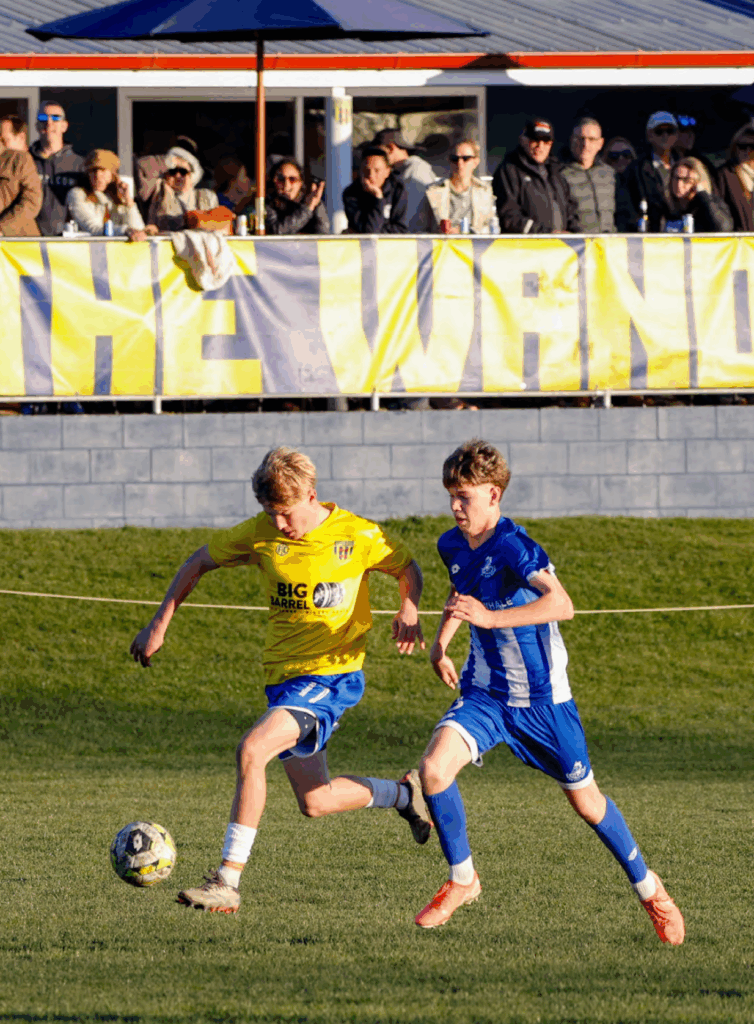
With over 1,100 members playing in more than 100 teams, Wanderers is the largest football and futsal club in the central federation – and likely the largest outside the main centres.
More than 800 of those members are juniors. Forty percent of them are girls. And membership is growing at a steady 15% year-on-year.
“We’ve gone from a typical community club to one of the most active in the country,” says Aaron.
“We’re running seven days a week, 48 weeks a year, across football, futsal, academies and holiday programmes. It’s not seasonal sport anymore. It’s a year-round operation.”
Football’s rising popularity is part of the story – the game is on the rise thanks to the rise of professional football in New Zealand – now with two clubs, Wellington Phoenix and Auckland FC, hosting the Women’s World Cup in 2023.
In Hawke’s Bay, junior and youth football participation sits at around 11%, compared to 17% in Auckland – giving clubs like Wanderers room to grow. In Havelock North, 7% of the population are now playing members. Factor in parents and guardians, and the club touches nearly one in five residents.
“My girls were in the club’s first all-girls junior team,” says club chairman John Steiner. “Now there are whole grades where the gender balance is nearly 50-50. The growth has been phenomenal.”
From volunteer-led to professionally run
To keep pace, the club has had to reinvent itself. One of the key steps was bringing Aaron, a seasoned sport administrator on board in a full-time general manager role.
“I live within kicking distance of Guthrie Park,” he says, “but I wouldn’t have taken the role unless we were serious about doing things properly. Structure, strategy, governance, sponsorship, value – that’s what we needed.”
Alongside a motivated board, the club has invested in systems, programming and partnerships that deliver year-round value for members.
Holiday clinics, pre-academy training, girls-only squads, Tiny Wanderers for toddlers – there’s now a clear pathway from age two to adulthood.
To fund a more organised club, membership fees have gone up, with most accepting that if the club wants to remain sustainable, it needs a greater contribution from its members.
“We used to charge $90 for the season,” says Aaron. “That’s what I pay for two private cricket sessions for my son. We’ve raised fees a bit, but we’ve also raised the bar on what we deliver.”
Guthrie Park: big on space, short on solutions
But all this growth has revealed a glaring issue: the infrastructure can’t keep up.
Guthrie Park, a Hastings District Council park, may look expansive on a map, but as a grass-only facility, its usability is limited.
To protect surfaces, the club’s top field gets just 180 minutes of use on a weekend. Meanwhile, junior matchdays are being pushed out to other fields across the city – from Frimley Park to Windsor Park.
“We’ve chopped Guthrie into 15 mini training zones just to get through the week.
“We’ve done everything we can, but we’re at capacity. What we need now is an all-weather turf – and facilities that match the scale of our club.”
The club has mooted the concept with council, but with council cash-strapped due to growing debt, the club is looking at alternative funding options.
The club is also eyeing the now-vacant land next door – formerly Oderings Garden Centre – as a potential expansion site. The land recently became designated residential – but there’s been no development progress.
“It’s a rare opportunity and if we miss it, we won’t get another chance like it.
The multi-sport moment
Wanderers’ situation is not unique. Other Havelock North clubs – rugby, cricket, netball – are all under pressure from growth and overuse of council-maintained fields.
Back in 2020, Hastings District Council and Sport Hawke’s Bay brought those groups together to talk about the future. The idea of a shared sports hub was floated. Locations like Guthrie Park, Anderson Park, and greenfield sites were all on the table.
Everyone agreed: the single thing that would make the biggest difference was a plan.
But since that meeting, nothing has happened.
I was at the table – wearing hats as chair of Sport Hawke’s Bay, a Havelock/Hastings ward councillor, and a former Havelock North Rugby player. There was a desire for all parties to work together, but there’s been little action since.
There’s been talk of community sports hubs in Havelock North since the early 2000s but for whatever reason, it never gets out of the starting blocks.
Meanwhile, Sport NZ has been clear: facilities should be planned with a 25-year functional life in mind – not 50. Why? Because sport and recreation are changing fast. Populations shift. Preferences evolve. Flexible, co-located facilities are the new norm, delivering scale, social value and lower maintenance costs.
A new vision
Wanderers have now outlined a concept with two options – investment in football-centric facilities or a broader community facility that could accommodate other sports such as rugby and cricket, as well as being a club house for other sport codes.
John says one idea is three all-weather turf fields (two football, one rugby), a shared clubhouse, indoor community space, and the flexibility to host summer cricket. With strong partnerships already in place with local schools like Lindisfarne, Iona and Hereworth, and growing links with other codes, the vision has legs.
“Why wouldn’t you?” he says.
“We can create a 12-month, multi-sport, multi-use facility. One that works for kids, parents, clubs and the wider community.”
But the clock is ticking. Havelock North Rugby, for example, is reportedly close to progressing its own facility upgrade. If that happens, the chance for a combined future may be gone.
“We’re not anti-anyone,” says John. “But if clubs go off and build in isolation, the opportunity to do something collaborative disappears. Possibly forever.”
Feasibility, funding and what comes next
The estimated cost of a full multi-sport facility is in the millions – depending on scope. But funding is only part of the challenge. What’s needed first is leadership – and a proper feasibility study.
That’s what everyone agreed on in 2020 and it’s still the right next step.
“The difference now is, we’re actually ready to act,” says John.
Wanderers are calling for the other clubs to come back to the table – this time with timeframes and intent.
“We’re not trying to control the process,” says John. “But if no one else is going to lead it, we will.”
Final whistle or fresh kick-off?
For a club that’s been part of Havelock North’s fabric for three-quarters of a century, the next 12 months may be its most defining yet.
Whether the Wanderers continue to thrive as a stand-alone force or become the anchor tenant in a new, purpose-built sporting hub, one thing is certain: they’ve laid the foundations.
“The work’s been done, the people are here. The demand is real. The timing is now.”
Because if the village misses this opportunity, it might not come around again.
Lily Smith: speed, skill and big dreams at Guthrie Park
When Lily Smith hits top gear down the wing, defenders have two options – keep up or get left behind. More often than not, they end up chasing shadows.
At just 14, the Havelock North Wanderers player already stands out for her pace, tenacity and love of the game.

Football has been part of her life since she was five, when her mum, Kerrie signed her and her brother Charlie up for Saturday mornings at Guthrie Park. She’s been hooked ever since.
“I’ve never had a time where I didn’t want to play. It’s the best feeling, kicking a ball around with people you love playing with, and then going out on the weekend to try and win together,” the Iona College student says.
Originally in mixed teams, Lily shifted into girls’ football, but now she’s back in a boys’ side at the Wanderers to test herself at a higher level.
“Our coaches think it’ll make us better, and I agree.
“The boys will be boys, but at the end of the day, we’re all just players,” she says undaunted by playing with and against boys.
Her speed, sharpened by participating in athletics is her biggest weapon, but there’s steel to her game too. “If someone tackles me, I’m not happy about it. I like getting stuck straight back in.”
That attitude is taking her places.
This season she’s been selected for the Central League Youth team, competing across the North Island against some of the best young footballers in the country.
Her ambitions stretch further still, pulling on the New Zealand shirt or even playing in the English Premier League.
At Wanderers, she’s found more than just a team.
“The environment is so inviting. You can play a serious, hard game but still have fun. And hanging around the clubrooms after, having chips and hanging out with friends, that’s what makes it special.”
As she looks out across the fields Lily says she’d love to see a few improvements at Guthrie Park, like a turf pitch and more access to the number one field.
“Some pitches are pretty bumpy, and the number one pitch is great but we hardly get to play on it. A turf would be awesome – it would make such a difference.
“The clubrooms work fine now, but an upgrade could be nice in the future.”
For now, Lily’s focus is on the next challenge, running hard, ‘bending it like Beckham’, and chasing the game as far as it will take her.
Starting like most kiwi kids playing rugby barefoot on frosty Hawke’s Bay mornings, Damon became a sports editor for the local rag and then a sport promoter for the ASB Tennis Classic, the national rugby championship and the Auckland Blues. He served 15 years on the board of Sport Hawke’s Bay, five years as chair, and continues to be involved in sport governance locally. A third-term Hastings District councillor, in his spare time he’s an action man – surfing, mountain biking, a gym bunny and a newcomer to water polo.


What a great read. Yes agree we need a multi functional facility for our for ever growing sports. We are building these new houses for families that may have children and we are running out of grassland for sports. This will affect health and wellbeing for everyone that is interested in their health. Therefore this is an awesome opportunity to get this in place and have an amazing facility that creates a sports community hub full of sports that people love, bringing people together and more. For a brighter future for our children.