


[As published in September/October BayBuzz magazine.]
A thriving Hawke’s Bay is only possible if our businesses thrive. In this article we talk to a range of people from the business community about what they’d like to see from local government ahead of October’s elections.
Data backed decision making
Hawke’s Bay needs local government leaders with strategic vision, says Erin Simpson.
Simpson, fresh from a stint on the board of Hawke’s Bay’s Regional Economic Development Agency, has spent much of the last few years in a number of governance roles spanning the connection between the labour and skills needs of a wide range of industries and employers, and potential workforces.
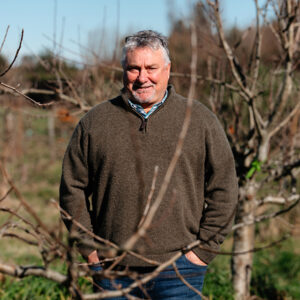
“Leaders need to look beyond immediate challenges to create a comprehensive, forward-thinking regional strategy.
“Our businesses need confidence. Confidence in infrastructure, land use, in things like the port. These sorts of things need to be really well thought through, and there needs to be a good strategy around what that looks like on a long term basis.
“For the food and fibre industries to continue to grow, they need confidence in the ability to utilise land and water. They need a clear understanding of regional priorities.”
He says the region needs a spatial plan that outlines land utilisation over the long term, and a workforce development strategy that will enable provision of appropriate skills and competencies for long term regional success.
“The ability to link the two is the glue that supports economic development. These two things would provide a good understanding about what’s needed for the region and the community to grow.
“Once we understand the skills matrix, it enables EIT and all education providers to be effective in developing programmes that add true value to industry within the region. It allows us to put in some metrics around immigration, where the required skills are not present, but are vital for the region to grow.”
A key point for Simpson is that regional leaders have the right information to be able to make good decisions, backed by data.
“What does the region need that will really provide the best jumping off point for economic development for the future? Regional leaders must understand emerging technological trends, particularly in sectors like horticulture, where artificial intelligence is transforming traditional work models.
Fragmentation between local councils and diverse priorities have historically hindered cohesive economic development, not to mention the region’s repeated failure to make an economic development agency work.
Simpson advocates for greater collaboration, potentially through council amalgamation, to create a unified regional vision.
“If we think about amalgamation, about the ability to get a collective viewpoint on particular ways to go forward, that’s one of the real issues that we’ve got at the moment.”
Workforce development – where improving the skills, knowledge, and abilities of individuals to meet the needs of the current and future job market – is a critical component of Simpson’s vision.
“Sustainable full-time employment drives community development. You can build communities economically from the ground up, rather than some of the thinking that says you need the big stuff at the top, to drive it down.
“There’s two schools of thought, and you need both. But at the moment, for the Hawke’s Bay Region it seems that community development is a really effective path to growth.
“We need regional leaders who understand this interconnection and can make informed, strategic decisions,” says Simpson.
Simplify, unify
Wine sector entrepreneur Steve Smith says Hawke’s Bay has an incredible opportunity to create one of the most prosperous regions in the country.
“And by prosperous, I mean an overwhelming sense of wellbeing. It’s not just about the money.”
He tells a story of a Saturday morning that encapsulates why Hawke’s Bay is amazing.
“I got up early, grabbed the dog and went to Ocean Beach. Hardly anyone there. I got a coffee on the way back at Red Bridge. Then I ran some errands: fruit, bread, meat and fish, and got another coffee. I went to all of my favourite places, and got everything I needed. And all of it, world class. The whole trip was just under two hours.
“I’ve been lucky to have lived in a lot of great places in the world, and there is no other place in the world (like Hawke’s Bay) where you can do all of those things.”
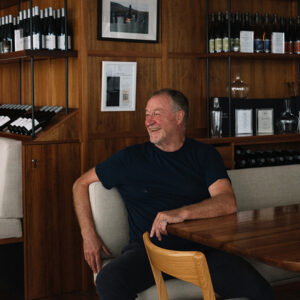
Smith says that Hawke’s Bay is a great place to live.
“But we have a big problem in that we have five councils.
“You cannot have a united vision when you have five councils.
“It doesn’t mean that you lose the independence of what Hastings or Napier means; everyone has a representational role to play, but it’s the region that’s important. People don’t say ‘we’re going to Napier or Hastings’, they’re coming to Hawke’s Bay.
“There needs to be a united voice at a political level, at a public relations level, at a community, and at a tourism level.
“I think it’s totally nuts that a region of 175,000 people has five councils. We’ve tried three times to amalgamate and it’s been shut down.
“But it can’t happen when you’ve got five different voices, five different hierarchies. Having five different councils drives the parochialism deeper.
“It needs real leadership to make that happen.”
Smith says that in the past councils had been easy to deal with, and harks back to when Craggy Range was established (Smith was the founding managing director). “At that point the council were wanting to help us get through the (consenting) process. They had an enabling culture.”
He compares that experience to some of his more recent interactions, when “they have been impossible to deal with”.
“I think that what’s happened over time is the culture within councils has changed. I understand that when you are the protector of the rules and regulations you become very risk averse. The culture seems to be more about making it hard to achieve something rather than trying to work with somebody to enable things.
“It’s resulted in councils becoming less enabling and more restricting of their local business community,” Smith concludes.
A customer service approach
Darren Diack, managing director of commercial construction company Gemco, deals with councils daily.
Gemco works all over Hawke’s Bay, and has completed a number of high profile projects including the Hastings Opera House, Wai Aroha, and Delegat Winery.

Our experience in dealing with councils is excellent, says Diack. “We have built up trust which means fast and professional inspections, and plenty of support on the job. Obviously when we start work, the client/customer already has obtained building consent.
“Our customers, the ones seeking consents, do tell us that they struggle to get a consent at times. If anything, I think this is one area the councils should look to improve. Instead of councils helping the customer get their consent, our customers say they’re putting up roadblocks,” he says.
Every delay in obtaining consent costs the customer time and money, or risks that the project could go elsewhere, that corners are cut, or that work goes ahead without consent.
“I understand their job. But instead of saying: ‘you can’t do this’, why don’t councils say: ‘if you change this, we can sign it off’. Every time there is a knock back, it’s back to the architect or engineer to try another way. Another plan is done, without knowing what is going to fit the bill.
“I would ask – on behalf of Gemco clients – that councils have a greater customer focus when it comes to consents.
“After all, the people applying for consents from the council are the council’s customers, and should be treated as such,” Diack concludes.
Flood mitigation, water, zoning
Ultra-premium pet food manufacturer ZIWI has three key issues that it wants to see prioritised by local councillors in the coming triennium: flood mitigation, water allocation, and zoning.
For context, ZIWI, New Zealand’s largest pet food exporter, moved the main part of its business to Awatoto, investing around $120 million to build its super kitchen and canning plant.
At the site, ZIWI employs 165 across roles in manufacturing, supply chain, procurement, research and development, health and safety, finance and people and culture. ZIWI also engages with suppliers, transport carriers, the port and many other local businesses around them.
ZIWI’s business took a considerable hit from Cyclone Gabrielle, forcing it to rebuild its super kitchen just seven months after it was first completed in 2022.

Mike Lal, Manufacturing and Supply Chain Director at ZIWI says that flood mitigation is a top priority for the long-term sustainability of the business.
“ZIWI can ill afford to sustain any further weather-related impacts or disruptions to our operations.
“We would like elected officials of both Napier City and Hawke’s Bay Regional Council to prioritise flood mitigation, by establishing a fair funding model that ensures that planning and mitigation work can get underway with urgency.”
The Awatoto Industry Action Group (AIAG) was formed after Cyclone Gabrielle to advocate for flood mitigation strategies on behalf of businesses impacted by the floods in the area.
As a result, the AIAG, Hawke’s Bay Regional Council (HBRC) and Napier City Council (NCC) entered into a Memorandum of Understanding around flood resilience for the area.
To date, the agreed approach between all parties has been a secondary containment bund to prevent floodwater from reaching the area in the event the primary system cannot cope, as well as doubling the capacity of the pump station.
All parties are now trying to negotiate funding for these mitigations.
“We see this as a top priority for incoming councillors of both HBRC, ultimately responsible for flood mitigation in the area, and NCC, responsible for the effective management of its Awatoto Treatment Plant,” says Lal.
Water allocation is another subject that looms large on ZIWI’s priority list, with the company – as a relatively new business to the region – only getting access to half the volume of water that it requires.
HBRC’s stringent new water resource consent conditions means ZIWI must face the significant costs of shutting down manufacturing to avoid breaching the water uptake consent. The most recent instance of this resulted in a three-day standdown. Alternatively, ZIWI purchases water to meet its requirements.
Lal says ZIWI takes considerable care to conserve water, engaging in water harvesting and monitoring usage at every phase of its manufacturing cycle.
“Despite our efforts, these strategies fall short in drier months, and when production is scaled up to meet higher levels of demand. Our current water allocation, therefore, is economically unsustainable.”
ZIWI asks HBRC to take a fair and equitable approach to water allocation, but more importantly, to collaborate and engage with businesses that are struggling within these resource consent conditions.
The final issue of strategic importance to ZIWI is zoning. ZIWI shifted its business from the Bay of Plenty, with the greenfield site in Awatoto of appeal due to its distance from residential housing.
ZIWI understands that NCC is considering residential zoning in the area.
This presents a high risk, as residents are likely to be impacted by Awatoto’s intensive manufacturing environment.
ZIWI itself operates 24 hours, 7 days a week, with large volumes of heavy vehicles. This would prove disruptive to locals from a noise and road safety perspective.
“With other large industrial plants operating in the area, we believe there are a broad range of environmental impacts that would impact residents,” says Lal.
“ZIWI would like NCC to carefully consider the health, safety and wellbeing of people under this proposed zoning, together with the potential economic impacts to industrial businesses based in the zone,” he said.
Come together, keep it real, get it right
Liz Read is a reputation consultant, trustee of Te Mata Park Trust, and chair and trustee of the Graeme Dingle Foundation in Hawke’s Bay.

Over the years, Read has consulted to (and is still consulting) to Hawke’s Bay’s councils. She says that there are some key asks that businesses have, given what has transpired over the last five years in the way of Covid, Cyclone Gabrielle, and even further back to the Havelock North water crisis.
“First on the agenda has to be amalgamation. It’s time. It’s needed. The duplication and waste that ratepayers are dealing with is eye watering. For a population the size of Hawke’s Bay it makes absolutely no sense to have five councils.
“The community is ready in my view, and I think what became very clear during Cyclone Gabrielle is that people don’t distinguish between which council provides what.
“They have local government services that they need, that they are paying for, and they want the best delivery of those services. Rather than having any kind of strong attachment to the council that delivers them, it’s the quality of the services and the value we’re getting that people really care about. The duplication and waste is only going to become more obvious and the argument for amalgamation is going to become more compelling.”
Read says that councils need to stop making promises to reduce rates, or limit rates increases.
“It’s neither realistic nor fair to make that kind of promise to your community. The reality is that our infrastructure is desperately in need of fixing and improving to support the economic growth that we all want for Hawke’s Bay, and get the level of resilience that we need as our climate changes.
“To have a platform of low or no rate increases is irresponsible, and could end up putting communities and business in danger. We need economic growth and resilience, and any council that claims they can achieve all of that within current rates is telling porkies.
“The promise needs to be about better value for money, and prioritising spending on things that will make us more resilient, more prosperous, and more equitable as a region.
“The community respects honesty, transparency and openness. It’s not the job of councils to deliver good news all the time. It’s the job of councils to deliver the real news.”
“There’s huge knowledge in the community and amongst business that can help councils make better decisions. A culture of openness and more willingness to seek outside perspectives would make a big difference to the regard that communities have for councils.”
The final item on Read’s agenda for councils is addressing the inequities holding the region back.
“From a business, social and economic perspective, there’s a real need for local government to throw serious energy into addressing the inequities in housing, in healthcare and in social inclusion.
“There’s no point in aspiring to thrive as a region if we don’t have enough GPs and other vital primary healthcare services that keep people out of emergency departments. If we don’t have enough affordable housing with the right infrastructure and the right transport networks. If families moving to Hawke’s Bay can’t get their kids into schools. If we have people living in communities which they fear will be flooded without warning. If we’re not nurturing the wellbeing of the natural environment that sustains us.
“All of these things hold us back from being the best place in New Zealand to live, work and play. It’s another incentive for amalgamation … a joint approach to addressing those key inequities, and for all the things that we need to thrive,” Read concluded.
So there it is. A range of views and priorities. Whether incoming councillors pick up the mantle, and direct their councils to do things differently, instead of the same old, same old, remains to be seen.
