

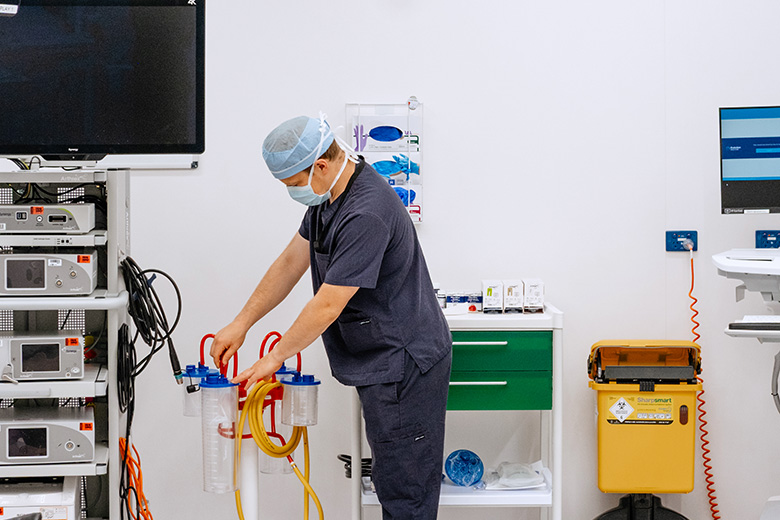
[As published in May/June BayBuzz magazine.]
Hospital waiting lists are in the news, with Health Minister Simeon Brown choosing to outsource more elective surgeries to private hospitals in a bid to reduce waiting lists.
How does this play out in Hawke’s Bay’s health sector? Who are the players, and what are they doing? Is outsourcing good, or does it create problems? In this article we hear from private and public hospitals about how they work together, and a health systems expert about the increasing role private hospitals are playing.
The OG – Royston Hospital
Royston is a name that’s been synonymous with private healthcare in Hawke’s Bay for more than 100 years. Established in 1921, the hospital has gone through a number of ownership structures over the years, and today is owned by Evolution Healthcare, an Australian-owned leading provider of healthcare services in New Zealand.
These days, Royston Hospital positions itself as the number one provider of private healthcare services in Hawke’s Bay with 180 staff and seven operating theatres serving more than 5,000 patients a year across day surgery and in-patient surgery supported by a 33-bed ward.
Then there’s the patients who come to the Royston campus for private consultations with surgeons, or x-ray appointments with Canopy Imaging or physiotherapy appointments with Focus Health Physiotherapists, all of whom work from the Royston site. Royston’s surgical specialties are regional anaesthesia, bariatric, gastroenterology and endoscopy, general surgery, gynaecology, ophthalmology, maxillofacial, orthopaedics, plastic and reconstructive, urology, and vascular.
Royston’s business comes from four main sources: clients with health insurance (of which Southern Cross is the largest provider), individuals self-paying, and referrals from the ACC system (about 15%). Outsourced patients from Health NZ represent less than 20% of Royston’s business, but this can fluctuate from year to year, with the volume driven by Health NZ.
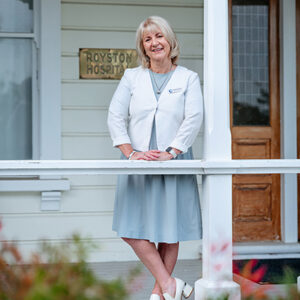
Denise Primrose, General Manager Royston Hospital, says that Royston has been receiving outsourced patients from the DHB since 2003.
“It has been a long standing relationship assisting with capacity issues at the DHB. There has previously been an MOU (memorandum of understanding) in place with HBDHB, now contract based agreements are negotiated with Health NZ (HNZ).
“HNZ outsourcing of patients for their procedures may be either under a ‘wet theatre’ arrangement, where the surgeon comes from the HNZ payroll to work in Royston’s operating theatres, with Royston providing the facilities, theatre staff, ward staff, and wraparound services. Or, more commonly, where HNZ patients are outsourced to Royston and we provide the same wraparound services, but the specialists work with us while in their private capacity, outside of their HNZ commitments.
“Over those years, thousands of people have come to Royston (from the DHB) as patients,” says Primrose.
In the last three years Royston invested $22 million to increase the number of operating theatres and expand post-anaesthetic care, and a further $11 million to create a brand new orthopaedic day facility as a joint venture.
Evolution Healthcare and leading local orthopaedic surgeons came together to establish Royston Day Surgery in 2022. This brand new two-operating theatre facility, with 28 staff, performed 1200 operations this past year with growth expectations of 10% next year.
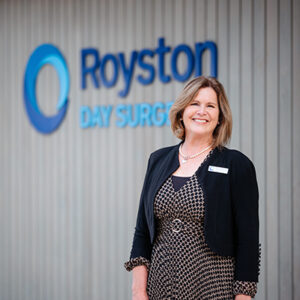
The bulk of Royston Day Surgery’s clients are funded by ACC says Lesley Henderson, General Manager Royston Day Surgery, with Health NZ referrals only 3%.
“Our demographics are completely different to Royston Hospital. Our biggest group of patients are working age, who are fit and healthy, that have shoulder or knee injuries that require reconstruction.”
By creating the new orthopaedic day facility and building two new operating theatres at its main campus, Royston Hospital has been able to increase the number of in-patient procedures that require a hospital stay.
Denise Primrose says that Royston Hospital can grow even further, by broadening service offerings, providing additional operating capacity for surgeons constrained by the public system, and expanding inpatient bed capacity as demand is evidenced.
“We have the capacity to do at least 1,500 more surgeries. There are opportunities that we need to continually look for. For example, in spinal surgery, where patients have been travelling out of region for their operations.”
With Health NZ hiring more spinal surgeons locally, Royston invested in a spinal navigation system to support these surgeons, creating capacity to increase the number of operations they can perform, so that patients don’t have to travel.
“By Royston investing in some of the equipment needed for spinal surgery, we can then offer it, not just for Health NZ patients, but for the broader community. Up until now that has been a constraint for the community,” says Primrose.
Robotics is another area of investment for Royston, made viable by the number of hip and knee operations performed. The technology, worth in excess of $1 million, helps surgeons perform joint replacement procedures with greater precision and accuracy, explains Primrose.
“The team has really embraced the technology, and it’s going really well. We’ve also introduced a new Capsule Endoscopy service to private patients where the patient swallows a small capsule and the camera inside it takes images of the small intestine to help with diagnosing gastrointestinal conditions.
“These are the opportunities that we look to expand.”
New kid on the block – Kaweka Health
Kaweka Health is the new entry into private healthcare in Hawke’s Bay with four operating theatres, 80 nurses, 28 surgeons and 31 beds. Funded by local surgeons, other local investors, and supplemented by bank lending, Kaweka Hospital is a $120 million, 75 year health resource for the community, says Colin Hutchison, CEO Kaweka Hospital.
“The banks have supported our project because they see it as a safe place for their money. If you look at healthcare in Hawke’s Bay in comparison to larger regions like Auckland and Christchurch, we are horribly under-invested.
“Ultimately to be able to borrow, whether it’s from a bank or a high net worth individual you’ve got to show them the business case.”
Kaweka’s second stage building is nearly finished, which Hutchison says provides the infrastructure for more operations, and allows for more complicated cases that require longer in-hospital care.
“It allows us more flexibility of what we can accommodate.”
Hawke’s Bay’s growing, aging and affluent population makes it an attractive prospect for private healthcare providers, and the region is an attractive proposition for doctors in the public system, who then may also work in the region’s private hospitals.
“Hawke’s Bay and Palmerston North are actually really nice regions, because they’re big enough to have sustainability and big enough workforces, but they’re not the big smoke, where you get complicated personalities and the complexities of running departments. That’s why regional New Zealand is very attractive for lots of specialties.”
Hutchison says that Kaweka will be operating on people to the tune of 4-5,000 a year, as well as providing wider care such as scans and hospital visits to another 10,000.
Kaweka’s surgical specialties are cardiology, ENT (ear, nose and throat), epidural steroid, general surgery and endoscopy, gynaecology, ophthalmology, orthopaedic and urology.
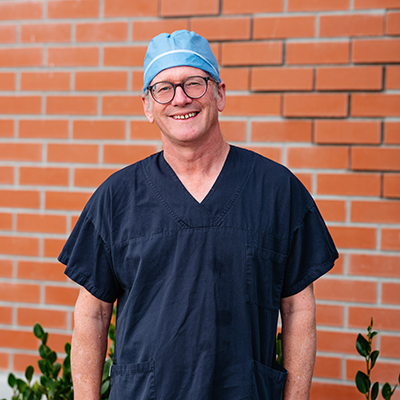
Stephen Toynton, Board Chair and Director of Surgery Kaweka Health, says lack of facilities and poor infrastructure are major obstructions to the delivery of public healthcare in Hawke’s Bay.
“Kaweka Hospital was built to increase surgical provision for both the private and public sectors. This has been a successful strategy. Since opening, two and a half years ago, 8,395 patients have received their surgery at Kaweka, 46% of whom were public patients.
“Without the Kaweka surgical facility many of these would have had their operation seriously delayed, and some might have never received it. The new facilities, up-to-date surgical equipment, and a friendly and efficient team have also been instrumental in improving recruitment of new surgeons and nurses to the area,” says Toynton.
Unlike Royston, Kaweka has an intensive care unit, which means it can take on more complicated cases that require longer stays in hospital. “It allows us to operate on people who have more health complaints,” says Hutchinson. “One of the main reasons that the private sector don’t operate on complicated patients is that they might need breathing or kidney support afterwards.
“Historically private hospitals did the really easy stuff, and then they did a bit more, and a bit more, and now Te Whatu Ora (Health NZ) is basically looking for the private sector to support them. And if you look at some of the Auckland and Hamilton (private) hospitals, they’ve got intensive care units that are just full the whole time.
“The majority of work that Kaweka does is for the public sector. It’s just in the private environment, which of course gives the patient a nice experience.”
Hutchison says that public and private hospitals fulfil very different roles, that will become more different for the foreseeable future.
“At the moment, over the last 10 years, they’ve really split away; public hospitals are about acute emergencies and mental health, and private hospitals have become lean machines that deliver elective surgical care.
“The private sector is going to be a wonderful support for public health care for the next generation. But that doesn’t mean you stop investing in public healthcare. The complicated stuff will get done in the public hospital, that’s why you can’t stop investing in it,” says Hutchison.
The mother ship – Hawke’s Bay Hospital
Access to planned care treatment as early as possible is important for the health of New Zealanders, says David Warrington, Hawke’s Bay Group Director Operations, Health New Zealand.
He says that Health NZ has started additional outsourcing to increase the number of planned care treatments across the country by the end of June.
“Hawke’s Bay Hospital has eight operating theatres that deliver a mix of both elective (planned) and acute procedures. The eighth theatre came online in May 2024 as part of the Surgical Services Expansion Project, and was commissioned to both increase the number of public surgical procedures the hospital undertakes each year and provide more capacity for acute demand.”
The outsourcing of elective surgeries in Hawke’s Bay has been common practice for a number of years. Most outsourced, publicly funded surgery takes place at either Royston Hospital or Kaweka Hospital in Hawke’s Bay.
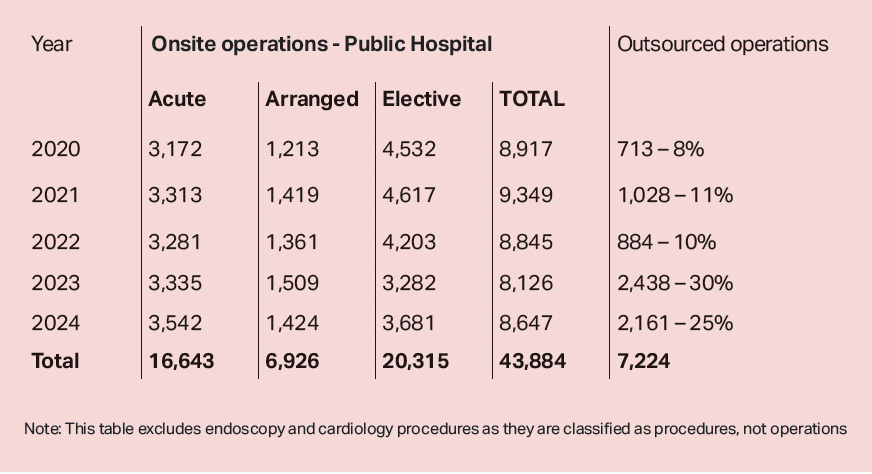
The table below illustrates the mix of onsite and outsourced operations in Hawke’s Bay Hospital since 2020 and reflects the growth in private hospital capacity. Onsite operations are performed at the public hospital, and outsourced operations include when the public hospital uses a private provider theatre with the public hospital’s own staff (surgeon and sometimes, anaesthetist, known as a wet theatre).
Who gets outsourced?
Factors such as the length of the wait list, complexity of cases, budget and performance against health targets assist in determining how many elective surgeries will be outsourced each year, says Warrington.
“Outsourcing elective surgeries is key to ensuring faster access to treatment for Hawke’s Bay patients, which is one of the Government’s five health targets. As a result of this approach, Hawke’s Bay elective theatre utilisation is one of the best in the country – sitting at about 90%.”
A lot of surgeons work across both public and private hospitals. Employment contracts articulate the responsibilities of staff employed by Health NZ and the hours they are employed to work, says Warrington.
“We do not keep data on the number of staff who also choose to work in the private sector.”
“The Health Workforce Plan takes a national approach to workforce planning across the whole health system, not just those employed by Health NZ, and we are working towards growing our workforce to ensure that public hospitals, general practice, allied health, community NGOs, private hospitals, aged residential care facilities and other healthcare providers all have the staff they need.”
How public and private fit together
There has always been a private component in the New Zealand health system, says health system expert Professor Robin Gauld, Executive Dean, Bond Business School.
“It all came about from the passage of the Social Security Act of 1938, passed by the first Labour government, which also passed legislation to set up state housing, state pensions, and universal access to education. There was also meant to have been a national health service.
“New Zealand would have had the first English-style NHS, ten years before England. The whole idea was that everyone would work for the public health system, and the goals were visionary. Primary care, hospitals and other services all working for the same system, working together, with a preventative rather than curative focus within the system.”
Gauld explains that the British Medical Association of New Zealand put up a fight against the legislation once passed, complaining of the state getting in the way of doctor-patient relations. A compromise was reached, where doctors could continue to charge patients, and the government would provide an amount of money per patient. That model continues today with capitation funding, which is funding per person enrolled in GP practice.
“That’s how primary care was set up, with funding from the government, and the freedom to build patients. The agreement was that doctors working in hospitals would be on a salary, but they would be free to have a private practice.
Nurses, and so forth, would all work for hospitals on a salary. That’s what we have today, and it all comes from this compromise.
“It’s an incredible piece of history, and it’s been completely locked up ever since.”
Gauld says that over the years, private hospitals have served an important role within the New Zealand health system, performing elective services.
“This is unusual globally. Normally a private hospital would be a full blown hospital that does intensive care and emergency care and so forth. But in New Zealand, private hospitals don’t do the tough stuff. They do the easy stuff, which is procedures: hips and knees, cataracts, dermatology and so on. It’s all day-to-day simple stuff, and relatively low risk in terms of what could be ongoing demand on the system overall, which is what the public sector picks up.”
The result of this interplay between public and private healthcare providers, is a two-tiered system, says Gauld.
“If you’ve got insurance or a reasonable amount of cash in your pocket, or if you can beg, steal or borrow, then the private system is for you. Otherwise you’re going to languish and wait in the public sector.
“The public sector does a great job for people who have urgent requirements. If you’ve got cancer, it’s probably more worrying.
“The constant claim that’s made is boosting the private sector reduces demand on the public sector. But there’s no evidence to suggest that’s the case at all. In fact, it’s probably undermining the public sector ultimately, because in many cases it’s the same doctors working in both systems, and more private work by those individuals means they do less public work.”
Surgeons can work under contract to the public hospital, a private facility, or both. Hopefully someone monitors their overall workload to ensure patient safety!
“Unless you have a major boost in the overall workforce alongside the boost to private hospital capacity, then basically it’s a zero sum game. You’re taking capacity out of the public sector to boost up the private sector. That’s a fundamental issue.”
The public system has capacity constraints. Operating theatres and beds are limited, which ultimately restricts the number of procedures that can be performed.
Any specialist you talk to would say that they’re a lot more productive privately, says Gauld.
“Because they can’t get operating theatre time in the public sector. They are frustrated. Surgeons want to get on with surgery, so they are (almost) being driven into the private sector because they want to keep up their practice. But at the same time, they want to work in the public sector, because that’s where they do their educational and experience development.”
Gauld says, critically, that contracting out to private hospitals undermines the public sector through shifting capacity to the private sector. But at the same time, it frees the public sector up to focus on the more complicated cases. To many, this is an appropriate trade-off. In Hawke’s Bay there are now thirteen private operating theatres to the public hospital’s eight … a major increase in capacity to care for patients.
But Gauld is concerned about equal access: “The Health Minister has said that the state is still the guarantor of the health system, which is important. But I think if that’s the case, they need to take the conversation one step further and start asking about the funding model itself.” He advocates national health insurance, which would operate like ACC.
“Equity is what’s really important about national health insurance. Those parts of the world that have this model are delivering on goals of equity. It means regardless of who you are or where you live, or your income or socioeconomic status, you’re covered by the insurance fund, and so it’s equitable.”Multiple challenges facing the public health system, including professional frustration with the work environment, and increasing public concern about accessing services is driving private hospitals’ success and growth.
Performing 67% of all elective surgeries in New Zealand, which includes more than 90% of ACC’s elective surgeries, they are an integral part of our health system, ensuring that people get timely care.
But, if doctors are performing more procedures and operations in private hospitals, without growth in the surgical workforce, it’s likely coming at the cost of fewer public operations, which is where the complexity and the really sick people are.
Greater support from the private sector helps in the short term, but will it be good for New Zealand’s public health sector in the long run? That’s a difficult diagnosis to make.
