

[Abridged from March/April BayBuzz magazine.]
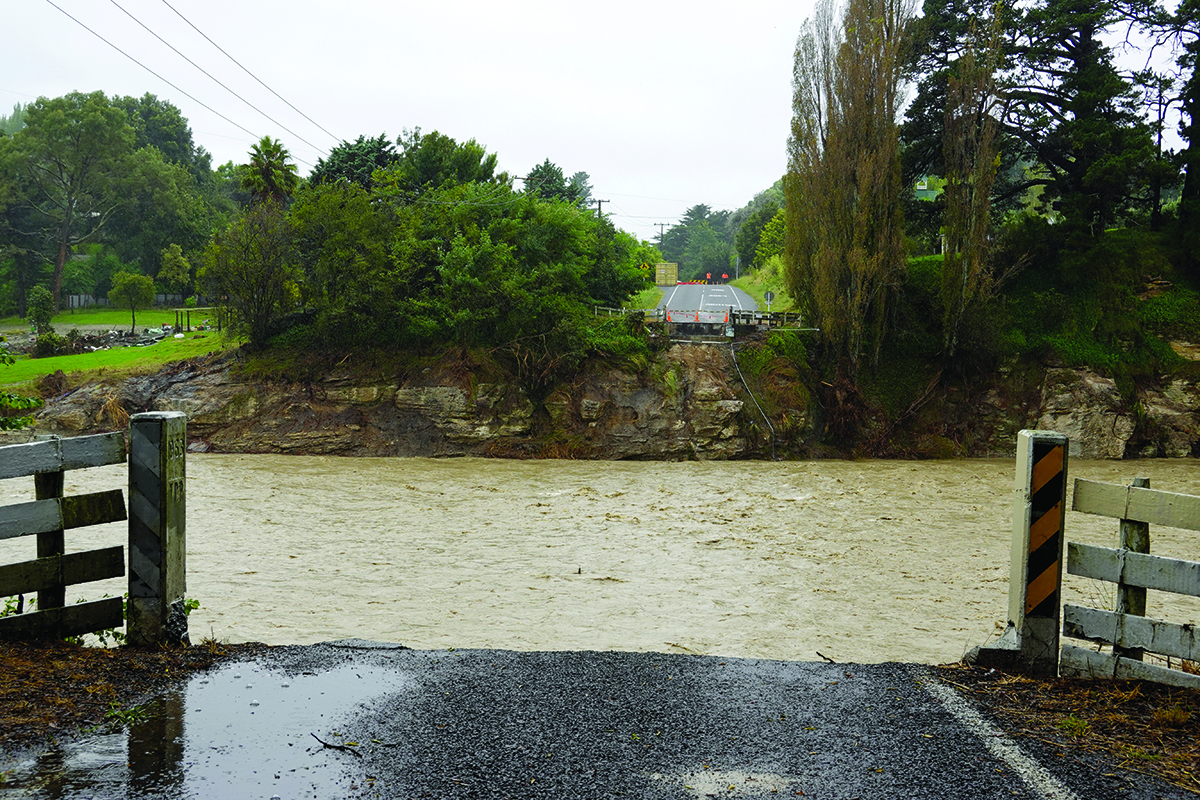
Napier MP Stuart Nash is at the eye of the political storm when it comes to the recovery and rebuild of Hawke’s Bay in the aftermath of Cyclone Gabrielle.
Along with his responsibilities to the people of Napier, he is Minister for Economic Development, Oceans and Forestry – each portfolio has come into focus these last weeks, as the damage to Hawke’s Bay’s critical infrastructure is assessed and plans for the recovery get underway.
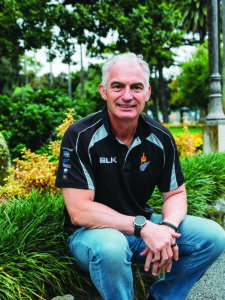
There’s no question he is under pressure to perform and get things right. The court of public opinion is wobbly though, and his decision not to include Hawke’s Bay in the slash enquiry he announced 10 days after the cyclone was immediately criticised, as was the question of why it took a storm of such force to get it done.
We can expect the outcome of that enquiry in April. Nash says it will inform the government’s wider response to the extreme weather events seen across the country.
I sat down with him to find out how he’s approaching what must be his biggest challenge as a leader yet – the region’s material and economic recovery post-Gabrielle and the opportunities for diversified economic development.
Turning attention to recovery
Nash is the regional lead for Hawke’s Bay on the response and recovery cabinet committee assembled by the Prime Minister, and he’s adamant that things are going to happen very quickly. An event the magnitude of Cyclone Gabrielle hasn’t been seen in the Bay for a very long time, he says.
“Unlike Christchurch where commerce was able to continue pretty soon after the earthquake because businesses were able to relocate, when you take out a decent chunk of the region’s productive area, then the consequences are far reaching and significant. You can spend a little bit of time reflecting on that but only a little bit of time. Because then you’ve got to really hit the ground running and you’ve got to start the recovery phase.”
This is what he’s spending all his time on at the moment. Ministerial leads have been instructed that the recovery will be tailored and unique to each region rather than a one-size-fits-all approach, and Nash’s first task is to assemble his team and set an order of priorities. This will happen under the auspices of a new Hawke’s Bay Regional Recovery Agency.
“I haven’t got all the answers. I need to get a whole lot of really good people around me who do have the answers, who are experts in certain areas. I have to put a CEO and delivery board in place, and make sure that we have a process where all the mayors and elected representatives and iwi feed in to everything that’s going on and have ownership of the recovery and the build-back.”
The delivery board will include experts in RMA law, construction, infrastructure, social services and horticulture, with each person either in or tied to Hawke’s Bay – the thinking being that if these people are in or are part of the region they will be wedded to its recovery.
We expect recovery agencyand leadership details to be announced by the time you are reading this article.
Urgent things would be addressed first – repairing stop banks, and getting basic infrastructure such as power, fibre and roads back up and running. We’ve already seen a lot of that done.
“There may well be some band-aids in the first instances – temporary patches for things like stop banks for the next three to six months, and then we do a longer-term fix over the next six to eighteen months.”
As well as stop banks, the integrity of Hawke’s Bay’s infrastructure will be looked at as a major priority. Again, temporary fixes may be a feature of that just to get commerce and people moving, he says.
Long term resilience will be a major part of recovery planning as we move past that phase.
Hard conversations to come
The Regional Recovery Agency will then address the short, medium and long-term priorities, in consultation with the region and delivery board. Nash says there will be some “really, really hard conversations”, including whether or not people will be allowed to build back in the Esk Valley.
“There was a massive flood there in 1938. I’ve read the report, the silt was two meters high in some areas. We’ve had that flood again. I’d like to think that is highly unusual and won’t happen again but none of us can say that, certainly with changing weather patterns.
And without pre-empting work the council may be doing in this area, Nash believes there is a need to cast a slightly different lens on decisions about housing developments, including whether we allow people to build back on flood plains, and whether we allow building on classes of land that were previously off limits, he says.
Another big question is what the region does with all the land that was highly productive prior to the storm, and now isn’t. The silt deposits that have landed across the region will need to be assessed, and calculations about how long it could take before they become productive again need to be done. “What are the costs of rehabilitating that land?” Nash asks.
These questions are of immediate consequence to those people whose property and homes were wiped out in the storm in places like Esk Valley and Puketapu, and who will be seeking insurance payouts in order to make decisions about their future.
“So, there are some very important decisions that we have to make to give people a lot more certainty than they have at the moment.”
Regional economic development post Gabrielle
The recently established Regional Economic Development Agency (REDA), chaired by Alastair McLeod, will be working very closely with the Recovery Agency’s delivery board, Nash says.
While the Recovery Agency’s main role is getting the resilience of the region’s infrastructure sorted, the REDA board’s mandate of economic diversification is even stronger, and takes on more importance in light of Gabrielle.
“I have always said our region is overly dependent on three variables we have no control over: exchange rates, weather and commodity pricing.”
The Bay has done extremely well in the last three years, particularly through Covid, with great summers, favourable exchange rates and decent commodity prices, and it had been a top economic performer when compared to other regions, he says.
“What we have now seen is one of those variables go horribly wrong in ways that we never anticipated, and it has just taken out a huge tract of our economic engine. We absolutely need to build that back but that cannot be the primary focus. Whilst the primary sector is a focus of the recovery agency, REDA must continue their focus of diversification of our region from an economic perspective.”
Nash believes that the region should look at avenues that can provide some competitive advantage.
Start-ups for example, can be based anywhere and incubator hubs are found in most big centres. They are one piece of the regional economy but Nash says with our high performing port and airport, which both have excellent governance teams, there might be opportunities in warehousing and logistics.
In his past, Nash traded in high volume, low margin commodities and recalls how holding stock in Auckland, depending on time frames, could be more or less affordable.
“Now, a company seeking to optimise their operations will look to warehouse and to ship into areas that are cheaper than Auckland at the moment and there’s no reason we can’t do that … Because these days you don’t need to be in the warehouse to know the stock you’ve got or to dispatch stock, and in fact you can be based literally anywhere in the world and understand what’s there up to the minute and what needs to be dispatched. There’s no reason we can’t be a logistics and warehousing hub for the central and lower North Island.”
Good infrastructure and roading would be a must for such an industry to take hold and given that Napier was an island for a period of time, building back must focus on the quality of the region’s infrastructure – hard and soft: roads, bridges, fibre and power.
The substation that flooded at Redclyffe, for example, was a major oversight that we got away with for 100 years, he says. Similarly, the integrity of Hawke’s Bay’s bridges would need to be determined very quickly and fixed as a priority.
I asked him if he was a supporter of the proposed film studios at Te Awanga. Nash had been briefed on it but had never spoken to the investors, or been asked for central government support. However, as economic development minister he had had responsibility for investing in film studios in Auckland, Wanaka and Queenstown.
“They are quite expensive to set up. So, I would have thought in order to justify that form of investment there would have to be some pretty solid commitments. To the investors behind it, more power to them. You don’t do that without some serious due diligence.”
Nash finished by underscoring his family’s long history in Napier and his commitment to Hawke’s Bay.
“I am an incredibly proud Hawke’s Bay boy and I love living here. One thing I am absolutely adamant about is that we will get things moving again as fast as we possibly can. You will not see inertia with committees set up and people talking without getting things done.
“I hope what I am conveying is a sense of optimism that the people who are in charge of this have been elected to do this, and will drive things forward in a way that I am really hopeful will see meaningful change.”
