


It’s like watching the pit crews at work during a Formula 1 race.
The pace is feverish … and there will be only one winner.
Two pit crews are hard at work in Hawke’s Bay to demonstrate they can produce the winning dam – the Tukituki Water Security Project (TWSP), seeking to resuscitate the failed Ruataniwha Dam, and the Heretaunga Water Storage Project (HWSP), the vehicle for exploring prospects for the so-called Whanawhana Dam, which would involve water storage on a tributary of the Ngaruroro River.
At first glance, one dam for CHB, one dam for the Heretaunga Plains … but it gets more complicated than that, as I’ll discuss shortly.
I’ve had updates recently from both teams as they prepare for the 2026 racing season.
TWSP is the more presumptuous of the two, basically holding the view that their dam would have been built by now if it weren’t for a legal glitch last time around (involving flooding conservation land). Truth be told, they couldn’t pre-sell enough water, even taking advantage of Government-provided concessionary lending.
But officially, they’re undertaking a ‘feasibility’ study, and report that: “All work streams are underway and working at pace, and investor funds are flowing into the project.” Their fresh work indicates that: “New contemporary design methods have been developed and improved in the past 10 years that appear to provide opportunities to reduce costs and meet higher seismic and hydrology standards.”
Of course they still have the conservation land issue to ‘remove’, but anticipate the current Government’s assistance with that.
That leaves the gnarly demand issue – who in CHB wants to pay for nearly 100 million cubic metres (cubes) of water each year, whether they actually need it or not?
That’s where their project goes ‘blue sky’ – now they hope to sell a major chunk of the water to Heretaunga irrigators, delivered either by pipeline from the Tukituki below the Red Bridge to, say, Whakatu, or, their newest gambit, by pipeline to an upper reach of the Ngararuro.
Reporting that distribution work is “also progressing very well”, TWSP adds: “…including assessing the lower Heretaunga supply opportunity that has always been contemplated. An additional concept is being developed to pipe water into the upper reaches of the Heretaunga as an additional option alongside the Heretaunga Water Storage Project.”
The economic imperative is plain – they must enlarge the user/payer base to make the scheme work financially.
So, what about the demand for Heretaunga water storage and the HWSP team?
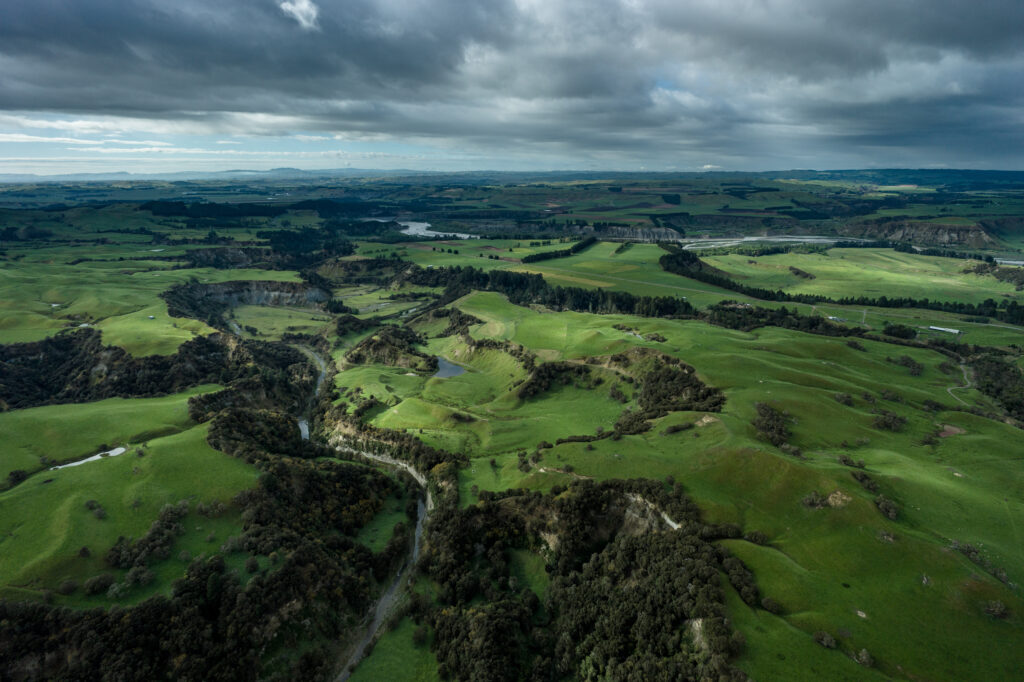
They appear more circumspect. Their geotech and environmental investigations are well along. But they also recognize that ‘water security’ for the Heretaunga Plains can and should be addressed in multiple ways … any dam would be part of a solution mix.
That said, actual Heretaunga demand is yet to be quantified in a more granular way. Barring an unexpected surprise on either the geotech or environmental fronts, the prospects for a Whanawhana Dam, like Ruataniwha, also boil down to costs, with users ultimately needing to decide whether they need the water storage badly enough to pay for it in a strictly user-pays financial model.
There the HWSP proposition has the advantage. The Whanawhana scheme would look to supply only around 27 million cubes of water and cost far less than the Ruataniwha Dam (even without its pipeline to the Plains).
The HWSP team will have its dam costings vetted and an indicative price for its water to float to prospective users in, roughly, August.
So, that gives the Tukituki team about six months to be ready to race – to establish they can more cheaply supply water, say 27 million cubes, to Heretaunga irrigators. Seems impossible. No one has yet seen a detailed scheme (location, costs, geotech, environmental considerations) for either pipeline from them … to say nothing of the new Dam 2 itself.
In terms of the battle for Heretaunga irrigators’ money and loyalty, it would seem that by next spring the Whanawhana car will have left the pit, with prospective buyers eyeing the test laps.
And TWSP will be back to trying to build a business case upon selling all its 100 cubes in CHB.
Finally, note that both teams say they are working exclusively against a strictly user-pays financing model – nocouncil or government funding (beyond the feasibility funding both projects have already received).
That promise aside, this week Newsroom reported that the Waimea Dam (in Nelson/Tasman) – touted by the Tukituki group as their model (indeed they hired its former CEO to drive the Ruantiniwha Dam 2 effort) – is now pleading for a $100m Government bailout. The problem – huge cost overruns and irrigators’ inability make ongoing payments.
We can’t warn ratepayers enough … beware of ‘free’ dams!
More on the Tukituki project here.
More on the Heretaunga project here.

Maybe we should pray for more rain…….
Don’t have enough information (yet) on the HWSP option – but it does seem to more realistic than the TWSP. The TWSP, with it’s history already in tatters, and with reluctance for buyers (apart from “pie in the sky” proposals), should be given a merciful euthanasia – reliance on central government to ride roughshod over environmental concerns and DOC land shows that the proposers have very little care for the land or the people (other than themselves)
Both are pie in the sky .jobs for the boys..rate payers being screwed again.. have seen no details of heretaunga scheme is it a earthquake risk as the chb faust is ..?
Councils cannot be trusted to built anything.
A warning from Nelson.
https://newsroom.co.nz/2026/02/18/waimea-dam-bailout-plea-shows-why-public-sector-fails-at-big-infrastructure/?_kx=8jtUerGcA4G-4hCWZlBqLSt7CXa_wUe88drxT8ig2kQ.VYfxNg
The Google AI response delivered by Mr Vowler in the comments to that article are quite instructive