

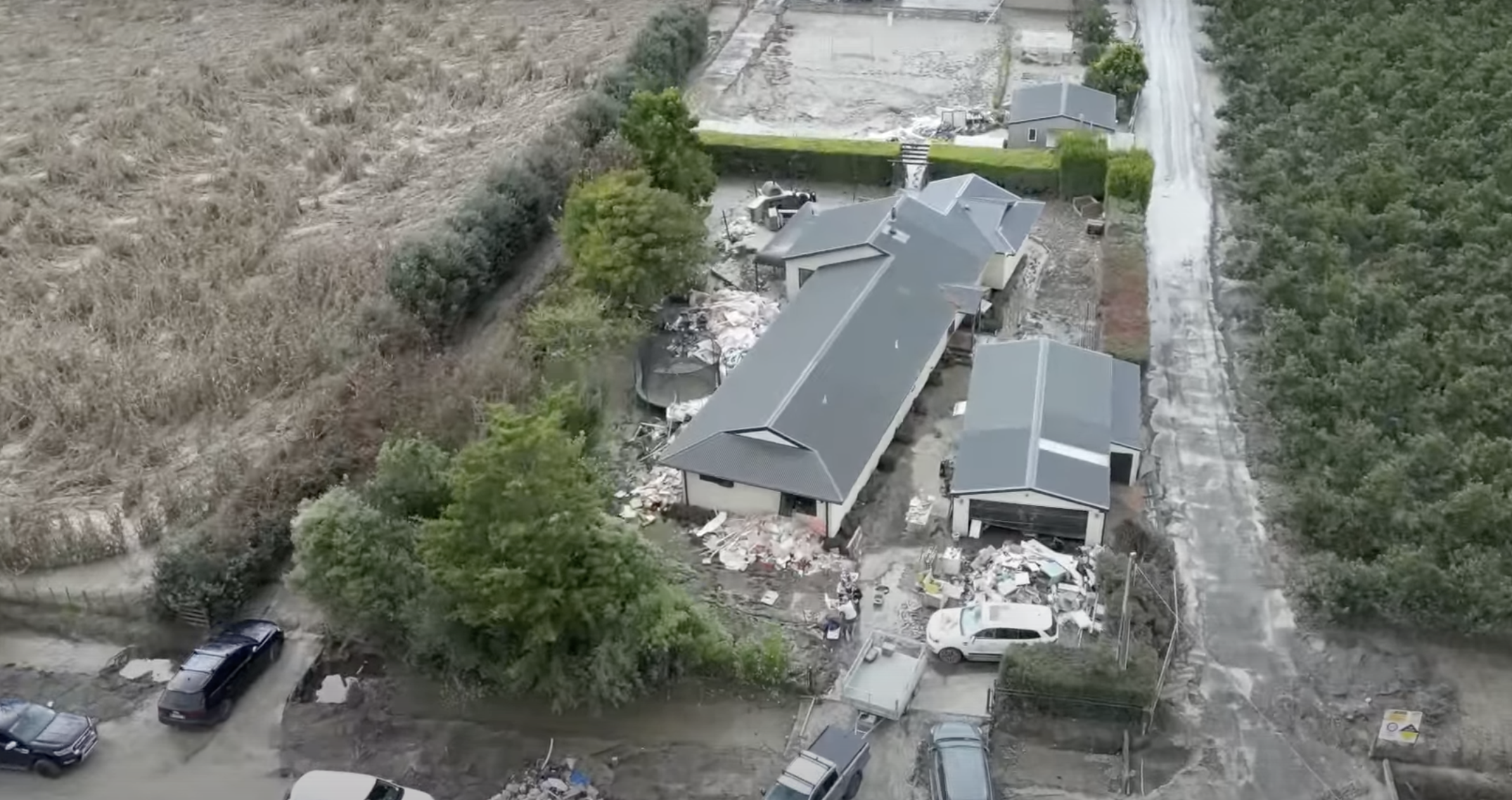
Assessment of low risk properties (Category 1) will be completed by 31 May.
Engagement around Category 2 and 3 properties will begin in early June.
In the words of Cyclone Recovery Minister Grant Robertson:
“Providing certainty as quickly as possible to those affected has been a priority, but it is complex job and we want to get it right.” Adding: “The worse thing would be for us to announce a property or community was in one category, only to change that shortly thereafter. We need to make the right decision not the quick one.”
“Assessments on low risk properties in the Hawke’s Bay will be completed and allow local engagement to begin with affected homeowners by 31 May. This will allow people to settle with their insurance companies and get on with the job of repairing their properties.
“Engagement with individuals and communities with Category 2 and 3 severely affected properties will begin in early June; outlining the process ahead and paving the way for consultation on specific outcomes for severely affected locations.
“This will be based on a shared understanding of the data on 31 May, subject to further assurance of the risk assessments.
“Local councils have a critical role both in the assessments and in decision making. Decisions on the future for residential properties affected by Cyclone Gabrielle and the 2023 flooding events are being made locally, supported by central government to give residents a path forward to recovery. The Hawke’s Bay Recovery Agency will play a critical role in their region.
“Engagement with Māori between the Crown and local government will take place in parallel in early June with specific consideration of whenua Māori, Treaty Settlement assets and taonga.”
Three categories have been settled on under which the future of flood and landslide affected properties will be assessed:
1. Low Risk – Repair to previous state is all that is required to manage future severe weather event risk.This means that once any flood protection near the property is repaired, the home can be rebuilt at the same site.
2. Managed Risk – Community or property-level interventions will manage future severe weather event risk. This could include the raising of nearby stop banks, improving drainage or raising the property. (Category two is split into three sub-categories as outlined in table below)
3. High Risk – Areas in the high risk category are not safe to live in because of the unacceptable risk of future flooding and loss of life. Homes in these areas should not be rebuilt on their current sites.
Initial risk categories and definitions:
| Category | Definitions | Examples |
| 1 | Repair to previous state is all that is required to manage future severe weather event risk. | Minor flood damage to repair but no need for significant redesign/retrofitting. |
| 2C | Community level interventions are effective in managing future severe weather event risk. | Local government repairs and enhances flood protection schemes to adequately manage the risk of future flooding events in the face of climate change effects. |
| 2P | Property level interventions are needed to manage future severe weather event risk, including in tandem with community level interventions. | Property specific measures are necessary e.g., improved drainage, raising houses is necessary. Benefits accrue to property owners but some may face affordability issues. |
| 2A | Potential to fall within 2C/2P but significant further assessment required. | Interventions may be required / possible but insufficient information to provide initial categorisation (these may subsequently move between “2” categories or to categories 1 / 3). |
| 3 | Future severe weather event risk cannot be sufficiently mitigated. In some cases some current land uses may remain acceptable, while for others there is an intolerable risk of injury or death. | In the face of enhanced climate risks the property may face unacceptable risk of future flooding. Other property could be subject to unstable land that poses an ongoing risk. |
