

[As published in November/December BayBuzz magazine.]
Are local sport organisations playing ball when it comes to ensuring there’s a strong playing field of pathways from the weekend warrior sport enthusiast through to the gold medal Olympian athlete?
Sport Hawke’s Bay and its mother-ship Sport New Zealand have created participation programmes, boosted funding streams and created a 10 sport code strong regional sport coalition to ensure that youth remain in sport as they progress through their teenage years and into adulthood.
As the saying goes, ‘Active for Life’ is a mantra that is attempting to be deeply ingrained in schools, in the home and within sport codes, those that have been regarded as the top four – rugby, cricket, netball and football – as well as sports that are growing in popularity.
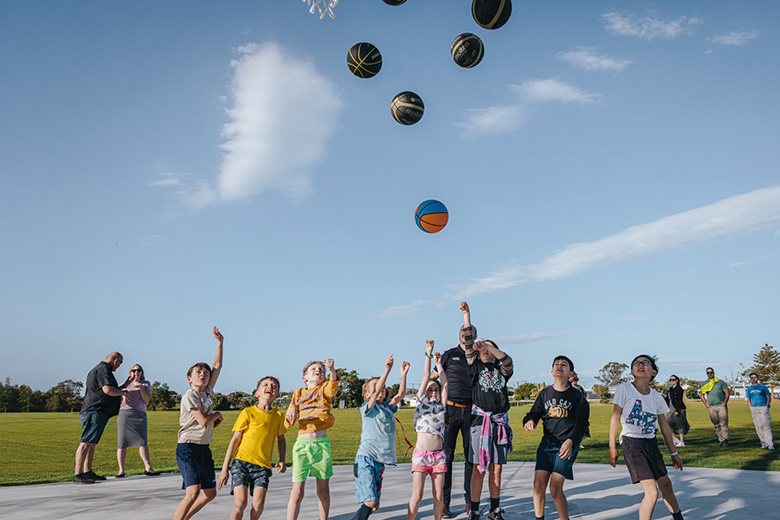
Growth codes include basketball, futsal and volleyball at a youth level, while if you head down to Windsor Park on any given Saturday, you’ll see the pickleball in action. Pickleball featured in BayBuzz last summer.
At the same time Sport Hawke’s Bay is on the search for new sporting initiatives that grow participation, and the regional sport trust is calling on sport codes, youth trusts and schools to come forward with out of the box ideas.
In 2020 Sport New Zealand established the Tū Manawa Active Aotearoa fund, which is administered by Sport Hawke’s Bay locally. Earlier this year SHB announced it had a further $2.7 million available aimed to increase accessibility to play, sport and active recreation opportunities for youth.
Sport Hawke’s Bay chief executive Ryan Hambleton says the fund incentivises partnerships across the region with the emergence of surf schools for girls and boxing and ‘get fit’ programmes in lower socio-economic suburbs such as Maraenui, Camberley and Flaxmere.
“A decade ago, many of the sport and recreation opportunities would have been aligned to major sports such as rugby and netball, and although they receive funding for innovative projects, so has new emerging opportunities such as Taiao Combat, Disability Sport and Recreation Hawke’s Bay and Sense Rugby.”
“The fund has had a positive impact, providing opportunities for young people to help develop new opportunities with emphasis placed on ensuring youth voice is an integral part of developing opportunities.”
“Two recent examples are the Sea Sisters, a wahine-focussed surf school and Shamrock Boxing, an initiative in Maraenui that uses boxing as a vehicle to get rangatahi being more physically active.”
Ryan says the timing of the Sport NZ funding being confirmed for the next four years is on point, as many organisations are facing financial challenges, either due to growth in participation or impacts of the cost of living.
“The financial environment has changed so we all need to look to how we get more tamariki and rangatahi physically active across the region,” he says.
Basketball Hawke’s Bay is one of ten sport organisations that has signed up as a member of the region’s sport coalition. The coalition uses a new national-led Sport Pathway Framework as well as a refreshed Balance Is Better programme to ensure young people in the Bay get a quality sport experience, regardless of what sport they are playing.
The 10 regional organisation codes are basketball, rugby, football, cricket, hockey, netball, volleyball, touch, badminton and tennis.
The Sport Pathway Framework outlines 11 commitments including ensuring all young people who play sport receive a quality experience irrespective of the level at which they are involved, raising awareness of the risks of overtraining and overloading, and identifying talent ‘later rather than sooner’ in young athletes.
It covers the three levels of participation – social, competitive and high performance levels.
Ryan says nationwide data shows current active recreation and sport offerings are not meeting the needs of young people and are leading to low participation rates.
“As a sector, we are all committed to getting more young people active.”
Examples of sport codes joining forces on collective programmes include Good Sports, a programme that tackles poor sideline behaviour and Balance is Better, an evidence-based philosophy to support quality sport experiences for all young people, regardless of ability, needs and motivations. It is about young people staying involved in sport for life and realising their potential at the right time.
The Hawke’s Bay Community Fitness Centre Trust based at Mitre10 Park is also actively involved as it has a New Zealand High Performance Sport Hub, and athlete development programmes nurturing the talents of over 130 athletes across athletics, equestrian, canoe racing, swimming, hockey, netball, softball and badminton. Youth learn the fundamentals of strength and conditioning that cater for various age groups and stages of development.
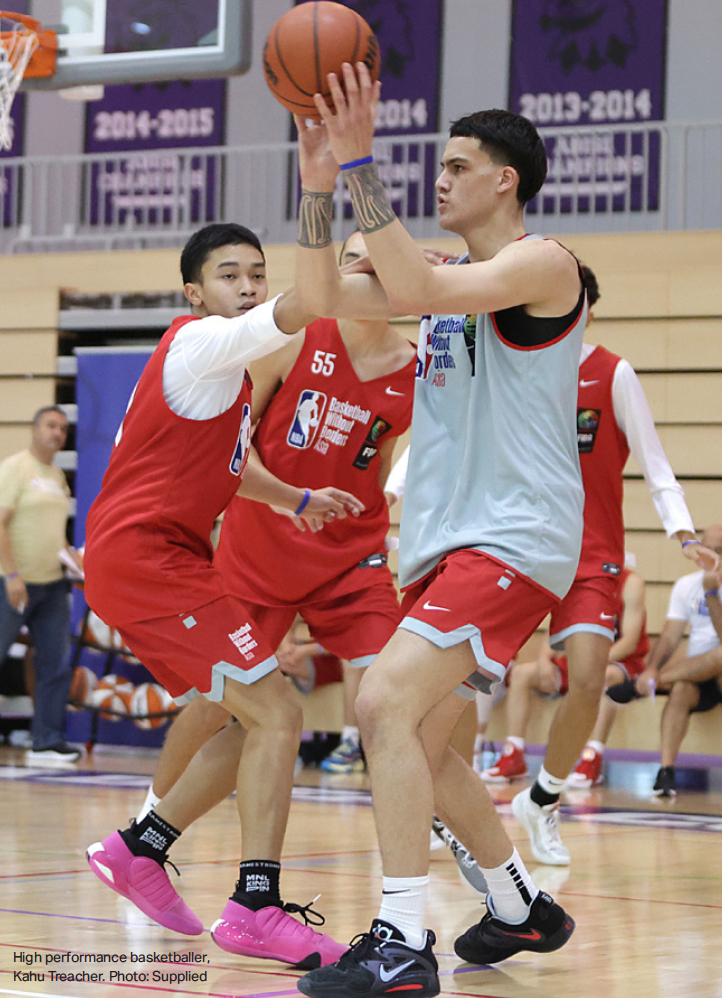
Basketball Hawke’s Bay General Manager Tim Baker says the indoor court sport is the fastest growing in the region with over 3,200 members, of which 2,000 are aged 5-12 years of age.
“The demand is so high that we’ve run out of available courts for our competitions. As a result, we have to limit the number of teams that can enter each grade.
In the last term of 2024 BHB has 170 primary and intermediate teams registered.
However although BHB is signed up to the coalition its biggest risk to participation is affordability of court space. Earlier this year it made the difficult decision to stop using the multi-million dollar new indoor court facility at Pettigrew Green in Taradale.
“The rising costs of venue hire is a significant concern for us. We don’t utilise Pettigrew Arena, because its venue fees are prohibitively high compared to council-run facilities.
He says with basketball being an indoor sport it faces higher venue costs compared to outdoor grass sports like rugby and football, which typically have minimal fees.
Another big concern is the reliance on funding from gaming grants (aka proceeds from Pokies) and sponsors.
“Everyone is competing for the same funding from gaming grants. We require over $350,000 annually to operate and given that many in the community are currently struggling, this limits our ability to hire more staff or expand the game, despite the demand.”
He adds securing sponsorship to support grassroots growth is also challenging, especially when compared to sports that have semi-professional or professional teams, which offer a more marketable product.
Tim believes that the sport coalition will only be a success if the traditional big sports actively play in the same sandspit as emerging sports, especially when it comes to competition scheduling.
“The coalition is a promising step forward, but it’s crucial for all sports to be involved in this initiative.
“Rugby recognises that they no longer hold a monopoly over the community and that other sports are experiencing significant growth and higher participation than in previous years.
“Currently, many sports schedules revolve around rugby; for example, rugby clubs and schools typically train on Tuesdays and Thursdays, with games on Saturdays.
“This scheduling limits our ability to host competitions on those nights, as we want to accommodate rugby players as well. Additionally, we can’t schedule games on Friday nights because schools with 1st XV rugby teams often travel for matches that evening.
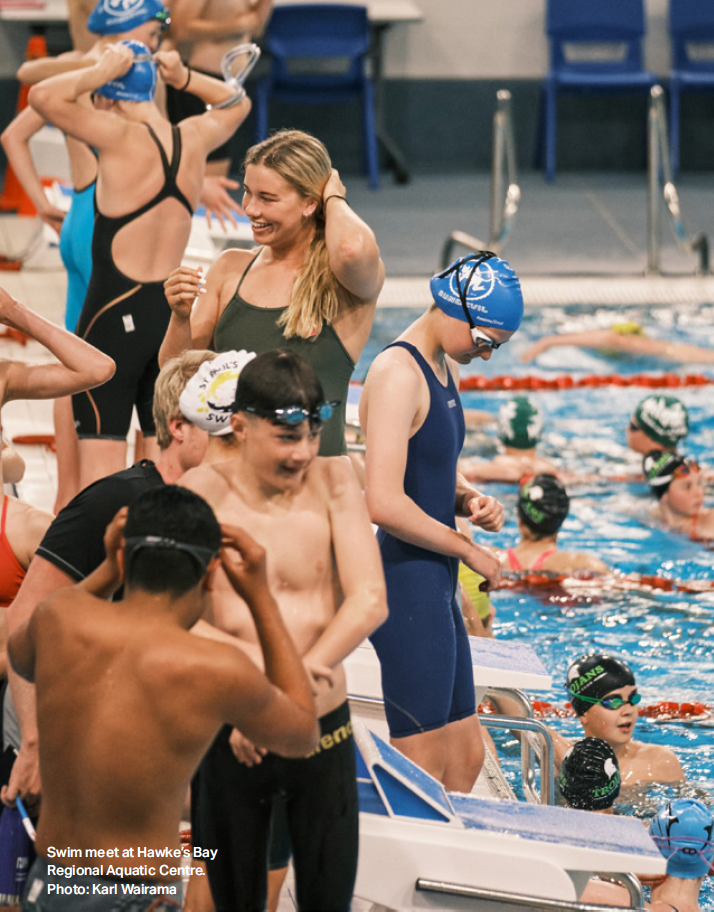
In 2022 the Aquahawks Swimming Club completed a ground-breaking project using both Balance is Better and Good Sports to ensure the long term future of the club, after the club was facing a decline in junior members.
It followed a national trend of a 46.5% decline of youth participation over the last five years and the club initiated a new strategy aimed at increasing membership, retaining membership and to foster a thriving and inclusive club culture.
Swimming as a sport has a culture of high training load and a young performance pathway. The club separately surveyed its young swimmers and parents, with 68% of swimmers saying what they liked most about swimming was the social connection and friendships created from training and competing, followed by including fun activities as part of training at 21%, while 16% liked the fitness gains and improving performance.
Least enjoyable was the training load, which 33% said was too often and difficult, followed by early morning training at 21%, while 19% referenced negative adult behaviour, expectations or pressure.
The young swimmers said they wanted to have a say and to be included in their own sporting journey, and not just swimming up and down a lane and finding some room for fun, as well as competition.
One of the immediate changes the club was to empower the junior members to create the theme for the end of year Christmas event and future club nights based on their desire for more social connection and fun.
Some of the children suggested making use of the basketball court located at Napier Aquatic centre, to be used in their down-time such as in between races at club nights, or before and after training sessions.
Hawke’s Bay Rugby Union CEO Jay Campbell says it is vitally important for the future of their games that they all agree on the key philosophies of the coalition and fostering every young player’s love for playing sport.
“It’s around enjoyment and friends and getting a cross-section of skills and everything else that are the key social fabrics of why you play sport.”
Rugby has already made some key changes with age group representative rugby not starting until U16 levels. “We see that there is no need to have high performance in those younger age groups.
“History has shown, generally speaking, rugby players don’t really come into their own until post that age anyway so playing a variety of sports and making sure that they are very much a holistic person based on what they do inside and outside the classroom, and across a whole lot of codes is better for them in the long run.”
In the end, it’s clear that collaboration across sports codes is not just a necessity but a crucial part of ensuring all athletes, from the casual player to the future star, have the chance to stay in the game for life.
Kaweka Hospital is pleased to sponsor BayBuzz coverage of sport and fitness in Hawke’s Bay.


Damon, great article and well done for raising these issues. The coalition is a great start but unfortunately some codes are not playing ball. As much as I know you are an advocate for SHB, I am not. Too much fluffy talk and not enough action.