

[As published in Summer 2025/26 BayBuzz magazine.]
Keith Newman learns that Hawke’s Bay’s continued apple growing dominance will depend on next level investment, diversification and leading-edge technology to monitor and manage everything from individual trees to the packhouse and beyond.
While Hawke’s Bay continues to produce 64% of the country’s billion dollar quality apple exports, the long tail impact of Cyclone Gabrielle is forcing fundamental changes to industry economics, ownership, operation and opportunities.
The high cost of recovery has opened the way for corporate investors to take a dominant hold aided by automated processing hubs and tools that streamline growing, harvesting, packing and processing.
The game plan is to double apple exports within the next decade by micromanaging growth from tree to market, including when it’s best to harvest for optimum size, flavour, texture, colour and crunch.
The shift will require orchardists to adopt new growing layouts, optimise picking processes and deploy smart sensors that report vital statistics with artificial intelligence (AI) filtering masses of data to support critical decision-making.
Crippling crunch
Prominent Hawke’s Bay apple grower, cider maker and industry advocate, Paul Paynter of The Yummy Fruit Co, says the best investment in recent decades has been in automated packing and segmenting by quality.
While AI, sensors and the Internet of Things (IoT) will help shape recovery, growth and efficiency, much more investment is needed in our orchards beyond the ‘bleeding edge’.
Paynter likes technology to enhance quality, but insists robotic harvesting is still something of a dream, and like other leading-edge offerings is amazing, costly and mostly doesn’t work well.
“New tech never delivers on its promise early on…it’s expensive to begin with and full of glitches. Five years down the track it’s half the price and works well.”
He warns new technology users to boost annual budgets for “lights, cameras, software updates” and bug fixes for things that aren’t performing like the sales pitch suggests.
Paynter believes growers significantly affected by Gabrielle will not survive in their current form and likely end up joining the long-term trend toward consolidation. “In 2000 there were about 1800 growers in New Zealand and now that would be 180, many with split ownership in partnerships or trusts.”
While the region has exceptional soils, a benign growing environment, is extremely efficient in terms of yield and closer to a port than almost any other producing region, we also have high labour, land and shipping costs.
It’s hard for growers in their 60’s struggling to recover and find new investment or sell up when banks are punishing poor-performing loans and security is reduced. “My guess is most of the larger unlisted apple producers will have different ownership in part or in whole within five years.”
While a skeptic when it comes to overnight technology fixes, he does hold high hopes for the ability to manage orchards at a tree level.
Whispering trees
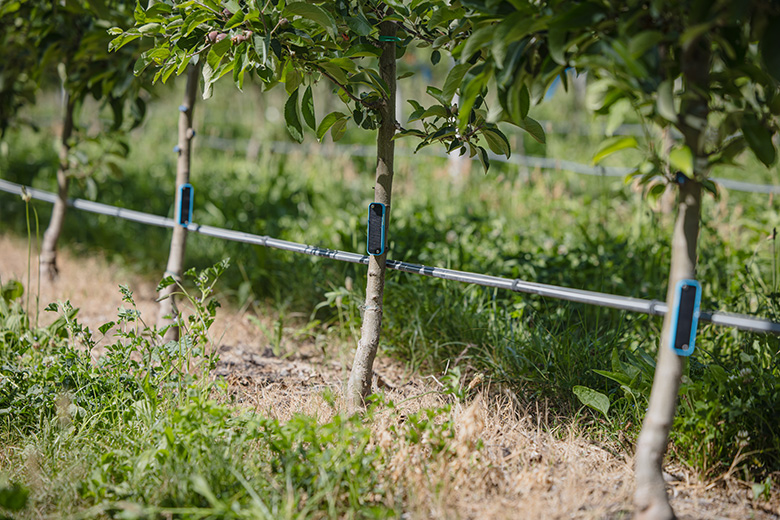
Croptide appears to be setting the scene by letting the trees decide what they need and when, capturing live data from sensors attached to vines and apple trees to improve fruit quality, reduce waste and optimise plant management and packhouse scanning.
The company continues to explore plant water, nutrient and health needs and is now interfacing this with Alora, an intelligent voice-based phone app.
Alora enables orchard workers to access essential data, set reminders and record field observations as part of “a true conversational experience,” says Croptide founder, entrepreneur and engineer Hamish Penny.

‘Rosetta’ sensors or probes attach to trunk tissue of fruit trees, “translating the language of plants” through key phenological events; leafing, flowering and other ecological and seasonal changes, so growers get a heads up for improved plant development.
Croptide uses low-powered wide-area networks (LoRaWAN) and IoT to connect devices and sensors through gateways into cloud storage. The technology, also used for smart cities, smart agriculture and environmental monitoring, transmits small amounts of data over long distances.
Croptide integrates with HortPlus’ Metwatch platform for pest and disease information and real-time climate and weather forecasts, Metris for frost forecasts and Grapelink for spray diaries, so growers know exactly what’s needed on a tree by tree basis.
It built the plant-technology interface at its Hastings head office with an injection of Silicon Valley and local investment in the early 2020s. It is working with early adopters in Hawke’s Bay including Envy and Rockit, has been in test mode in the US and Europe since 2022 to determine their unique seasonal characteristics.
Croptide is currently delving deeper into the underlying science to unlock a more holistic understanding of plant health including plant nutrient stress.
“We are built to be a global company. Others have comparable solutions to parts of our product, but no-one offers a scalable plant-first solution like ours,” says Hamish.
Under the skin
Cyclone Gabrielle destroyed or damaged 610ha of apple orchards or 50% of the planted area of Hawke’s Bay, and while we like to tell a good recovery story the pain is far from over.
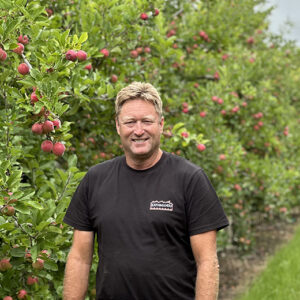
Brydon Nisbet, vice chairman of Horticulture New Zealand and president of Hawke’s Bay Fruitgrowers, says growers are still grappling with increasing wages, transport, fuel and on-orchard costs, consenting plus tighter margins and loan restrictions.
When BayBuzz called there were high hopes for a bumper 2025-2026 crop of premium fruit, but it’s a risky business at the mercy of unpredictable seasonal issues, export prices and a slowing market.
Nisbet says the use of smart technology is pivotal to determine when crops are ready and which market they will go to. “The more information they have about an apple and its growing conditions including soil, climate and when to harvest, the better.”
The market remains volatile with heritage apples such as Braeburn, Royal Gala, Red and Golden Delicious, Splendour and Cox’s Orange and Galaxy being displaced on the supermarket shelves by an abundance of new scientifically-developed varieties.
For some traditional and other growers the 2024-2025 season was the best in a decade but some licensed IP (intellectual property) varieties struggled with an average or “extremely poor” season through internal issues or inability to sell.
Capitalising on scientific development and protecting IP rights for varieties such as Dazzle, Envy and Jazz requires striking the right balance between supply and demand.
That’s often a fine line with New Zealand currently leading the world in boutique apple varieties and new brands coming on all the time. Even having different varieties harvested at the same time can cause complications from a labour and market point of view, says Nisbet.
“For the most part it’s everyone for themselves, trying to get to market first with the right size, storage ability, crunch, colour, texture and taste.”
While there’s been strong investment in automating packhouses and cool stores, there still a lot needed out on the orchard, says Nisbet. “We have a lot to learn. No-one has come up with a robot that can pick apples, that’s still a long way off.”
While large platform machines can elevate people and bins to pick fruit making it easier for older people than ladders, they’re still not that efficient. “I don’t think we’ll ever get rid of manual labour but we should be investing in machines that can aid that.”
Agility essential
Hawke’s Bay does a great job of tracking and tracing apples across the supply chain from the consumer almost back to the tree they came from, but David Cranwell, says growers need to become more nimble with smart use of technology.
Cranwell, a fourth-generation grower and apple industry consultant, says the industry needs more efficient ways to get apples to market on time at a high quality.
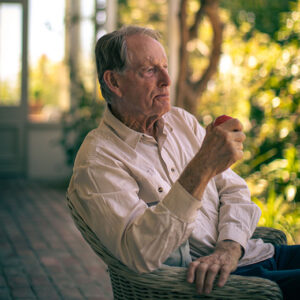
Finding the right people at the right time to help with the harvest is an ongoing challenge. “Without the RSE scheme to pick the fruit New Zealand wouldn’t be a major apple exporter.”
He says times are changing along with market demands and one size doesn’t fit all. “While there’s a strong focus on providing sweet apples for huge markets in Asia … they will soon want something with more flavour, something more interesting.”
If you feed people the same thing all the time they will lose interest, says Cranwell.
Investors or growers?
Nisbet says the apple industry belongs to those who can continue to invest in hi tech innovation, including vertically integrated businesses who own orchards, packhouses and marketing and sales channels.
“They can afford to take the hits like flood and hail and because they’re so widespread they’ll always make money on the packing sheds and sales.”
However, he urges investors or equity companies to consider why they’re wanting to own the bulk of our apple orchards. “Typically when they come in to make as much money as they can they also have an exit plan to sell or get out of the business. That’s a difficult scenario,” says Nisbet.
Local and offshore investors are acquiring and developing massive orchard acreage across Hawke’s Bay, consolidating holdings, developing farmland into apples and locking in new growing, picking, packing and storage technology
In July, Auckland-based Erskine Owen’s Veritas investment fund acquired a 7,000m2 purpose-built, smart logistics and cold storage hub in Groome Place, Whakatū, for $24 million with a 20-year lease to Mr Apple.
The fully integrated and automated hub cuts orchard-to-packhouse time by 25%, operates with eight staff and can process roughly 3,000 apple bins daily.
Mr Apple, New Zealand’s largest vertically integrated apple producer and a subsidiary of NZX Listed agribusiness Scales Corporation, exports around 80% of its fruit annually including Dazzle, Posy and NZ Queen.
Scales Corp supplies apples to over 33 countries including Asia and the Middle East with strict standards around firmness, colour and sugar levels. It expects profit of around $74 million to December 2025.
In late 2025, T&G Global alongside Australian Roc Partners and FarmRight invested in 50 ha of orchard redevelopment in Longlands Rd and Tukituki Rd using modern growing systems such as 2D horizontal trellis.
That investment builds on its existing multimillion-dollar investment in orchard redevelopment, automation and packhouses to support its premium Envy and Joli apples.
T&G owns Apollo Apples, which has 500 hectares of apple orchards in Hawke’s Bay and uses state-of-the-art technology at its large packhouse and cool store facility in Whakatū.
But with all that going on, T&G is up for sale by its German owner, BayWa.
In 2024 Dutch wealth manager Van Lanschot Kempen purchased the 62-hectare organic Gold Water Orchard from John Bostock in Ongaonga for $5.7 million, planning an additional 22 hectares.
Bostock, the largest organic apple producer in New Zealand, manages the orchards and sales of varieties including Granny Smith, Braeburn, Fuji Lady in Red, and Honeycrisp.
Meanwhile Kiwi-based rural investment company Craigmore Sustainables, on track to become one of the country’s largest apple growers, leveraged offshore funds to acquire and redevelop orchards in Springhill, where it already has about 720ha.
Craigmore partnered with Freshco to grow Sonya apples at Springhill and is managing 70ha of apples at Twyford sold by Kiwi Crunch to German Company Beehive Demetria. Kiwi Crunch also sold 97ha at Twyford to NZ Rural Land Company on a leaseback arrangement.
Skin in the game
While corporate investment in the apple industry is welcomed there are concerns growers aren’t being taken along for the ride.
“Horticulture isn’t like the big commodity agricultural businesses, it’s a niche area that needs seasonal nurturing and careful marketing,” warns David Cranwell.
Growers need to find niche markets for high quality boutique brands “that retain some exclusivity and excitement” and exporters who look after their buyers and consumers.
He says fruit growing is probably the second oldest industry in the world and only those who understand the region, the people and how the orchards work, will win. “It’s a Hawke’s Bay history. If you haven’t got skin in the game you may as well go and make ball bearings or something.”
Brydon Nisbet says Dazzle has stopped selling licenses to ensure continued demand and a good margin and to avoid market saturation, something now front of mind after three years of consecutive losses for the Rockit brand.
Rockit, mini-apples in plastic tubes, is owned by private equity firms Pioneer Capital and Oriens Capital with 950 hectares licenced in New Zealand and another 750ha overseas. Those orchards continue producing despite a market glut.
Hastings-based Rockit Global Ltd, responsible for licensing, marketing and global sales, had promised license holders/growers $1.50 per tube, but has been delivering as low as 60 cents, way below break even.
Lincoln University agribusiness specialist Dr Nic Lees warned the company was repeating the mistakes of the kiwifruit industry in the 1980s by chasing volume without controlling supply and sustainable consumer demand.
In an October issue of Farmers Weekly, Lees predicted a “dire future” unless the company changed its strategy, which had left growers paying licence fees of $100,000 per hectare highly exposed.
He questioned a forecasting model of prioritising short-term capital over long term value. “A premium apple delivering commodity level payouts is not sustainable.”
Within weeks of Dr Lees comments, investor MyFarm announced its Rockit partnership with Rakete Orchards, was in voluntary administration. The $17.39m investment involved 55ha across six separate Hawke’s Bay orchards.
Core issues ignored
Apples are typically a 25-year investment and pulling out the old and planting the new is a risky long game. Growers and industry leaders spoken to by BayBuzz were concerned big investors wanting quick returns are skewing the industry toward commodification.
Hawke’s Bay’s hard won apple growing legacy and the skills of its growers will be at risk if innovation, sustainability and long-term needs aren’t considered, says Paul Paynter.
It’s not like dairying or kiwifruit. “A lack of experience and the Harvard Business School playbook is not the best mix for fruitgrowing, which is a nuanced biological system that can’t be managed on a spreadsheet,” warns Paynter.
And yet the dilemma remains, without new capital “our industry will wither” and face a decade of austerity. What’s needed, he says, are facilities that have a marketing and output focus.
Despite all the tech-talk Paynter says human innovation remains paramount for accessing export opportunities.
Investors must drive value with compelling product, new varieties and quality brands and work with growers who have diverging strategies and can focus on retail packs for direct shipping to the Asian eastern seaboard.
He says that’s where major export opportunities exist. “They want the best … and New Zealand has a reputation for delivering.”
Hawke’s Bay orchard history is that we’re “innovators and disruptors”, however, Paynter warns big packers “don’t like innovation”, they’re focused on logistics and throughput.
Ideally, suggests Nisbet, the pillars for investors should be a sound knowledge of the industry, the people, employment, what it means to grow fruit here and whether it will help the grower and benefit the region. “They need to take the growers with them.”
Don’t just become an extractor. “If you are going to leave in five years’ time at least commit to leaving the place better than you found it when you first invested.”
