

[As published in May/June 2026 BayBuzz magazine.]
Naturally, the impact of the Mid-East war draws the most immediate attention these days when the topic of Hawke’s Bay’s (and NZ’s) agribusiness sector comes up.
However, there’s a lot more going on in the food production sector that should have our region’s farmers and growers concerned about their futures. Here is a brief canvas of the troubling issues, most of which are trends that could well outlast Trump’s folly.
Keep in mind that HB’s agribiz sector is export-driven – led in dollar value by sheep & beef, then food & beverage, then horticulture, then logs. So it’s overseas customers and their tastes and product stewardship expectations that determine the economic viability of what we produce.
You might recall that Trump’s first folly was his imposition of tariffs on the rest of the world. These were motivated by an aim to punish rather than economic reasoning. Fortunately, New Zealand seems not to have attracted any particular ill-will from the US President, so the tariffs our economy must digest (reaching beyond our food and beverage exports) are on the ‘mild’ end of the spectrum.
As for the war and fuel prices and supply disruption, read Brenda’s Newth’s feature herein, titled Strait talking. She covers the issues involved across the region’s economy, but the main points relevant to agribiz in particular are the higher costs of diesel (the ‘blood’ of farming equipment and food transport) and fertilisers (urea went up 50% in a month). Even once the war has actually ended, these costs will take months to work their way through to consumers’ wallets.
The ‘good’ news is that in terms of managing their current budgets, both sheep and beef farmers and apple growers – the region’s main income producers – are coming off excellent circumstances.
The apple harvest is up with good fruit quality; the only hiccup for these folks might be getting some of their product to Mid-East markets. For example, some 6-8% of Mr Apple’s exports go there.
As for sheep and beef farmers, they are enjoying extraordinary prices – lamb prices have been 40% above the five-year average and beef is 60% higher. Presumably that provides some headroom room to absorb war-inflicted costs … at least temporarily.
At the corporate level, it seems these costs can be managed. For example, Silver Fern Farms has put its extra war costs at about $35 million, but this is less than 2% of the company’s $2 billion turnover. As with apples, our meat exporters seem to be finding alternative access routes to their Mid-East customers – currently, about 2.7% of our beef exports by value and 4.6% of lamb/mutton go there.
But all is not savoury for our meat producers. Some could fall over if diesel becomes either too expensive too long, or too scarce, or both. And they face other challenges as well, to which I’ll return.
The region’s growers most in jeopardy at this point are those in the wine industry, for reasons unrelated to the war.
And the same is true of our region’s veggie growers and the local (using the term loosely) processors who will no longer take their peas and peaches to market.
Challenges ahead
Let’s dispose of our wine industry first. NZ’s wine business is Rocket Apple’s calamity on steroids – huge oversupply outstripping demand, with both domestic and overseas wine consumption falling dramatically.
We appear to have three wine producer segments – commodity (as in Marlborough sauvignon blanc, now exported bulk in plastic bladders), boutique producers of every variety (however exceptional many of these wines might be, very few have the critical mass to be more than labours of love, scratching by economically), and a tiny group whose high-end wines have captured expensive restaurants and overseas connoisseurs.
Yet on this basis, we sit amongst the ‘Great Wine Capitals of the World’, all of whom seem to be suffering from the same global indigestion. Elsewhere in this edition, wine entrepreneur Steve Smith offers a way forward for our besieged Hawke’s Bay winemakers. See what you think.
No matter how successful, this sector of HB’s agribusiness is not going to be a major economic driver going forward. Assuming we do make outstanding wines, their main economic value might be the ‘food and wine’ tourists they help attract to the region as opposed to their direct dollar sales.
Commodity peas
Peas are our veggie growers sauvignon blanc – a commodity product. NZ and our region are painfully discovering there’s zero economic future in growing commodity anything.
Take the recent closure announcements from McCain (the entire plant) and Heinz Watties (just the frozen food line, for now). Why are they shutting down? Because there’s no such thing as a ‘premium’ pea or peach.
So, the stuff we do produce cannot earn a price that yields a profit for our multi-national processors. They and their competitors overseas can source plenty of commodity veggies and fruits elsewhere – in fact so cheaply that imports to NZ are less expensive than our local product. It’s all about scale and return on investment.
We shouldn’t expect Heinz Watties to hang on much longer – the owners in Chicago and Pittsburgh have sharp pencils.
What about them apples?
Our orchardists (unless they were growing peaches for our ‘local’ processors) seem to have rebounded surprisingly well from Cyclone Gabrielle. Trees appear to be producing well, and replants are yet to come to full potential. And our growers seem adept at developing new varieties suited to beckoning Asian markets. The premium segment of the apple market is projected to grow at 7.6% annually. T&G’s premium Envy apple has just become NZ’s first billion dollar apple in global retail sales. Yet ‘local’ T&G is for sale by its German owner (BayWa).
Only growers of Rockit apples and orchardists on whom Gabrielle has loaded major debt weight (needed for re-establishment capital) seem stressed. Rockit managed to break out of the commodity mold with product novelty, but then totally mismanaged its business. Growing 10% of Hawke’s Bay’s apples by variety, Rockit getting back on a profitable trajectory would be good news for Hawke’s Bay.
So, fingers crossed for the fruit folks.
Now, back to meat
Sky high meat prices won’t last for sheep and beef farmers, given they are driven by overseas factors that will change and are beyond control, rather than local productivity improvements.
We need to grow sheep and beef cattle to sell, but these numbers are trending down nationally, especially sheep. In Hawke’s Bay, sheep numbers have dropped from 4,995,476 to 2,457,000 in the 1990 to 2025 window, while beef cattle have been relatively flat, 427,474 to 454,000. Hawke’s Bay land use (using latest data, 2002 to 2019) matches the trend: hectares devoted to sheep down from 330,996 to 291,465, to beef down from 328,772 hectares to 256,872. In the last 10 years, the total NZ area in grassland (excluding tussock) fell by 9% (712,000 hectares).
This adds up to local processing over-capacity, with no experts suggesting we’ll see a renaissance in sheep farming and with beef barely hanging on.
Fortunately, HB farmers producing premium meats with impressive sustainability stories to tell seem to be establishing a firm overseas reputation with upmarket, environmentally conscious consumers. And unlike wine, overseas meat consumption is showing vitality.
At the supermarket
All this is background noise to most food shoppers at the supermarket. While we ship out meat, apples and squash, we basically spend a major chunk of our household food budgets on imported foods (AI estimates 40%), leaving our local growers largely to the whims of overseas consumers and conditions. About 12% of NZ’s merchandise imports are food.
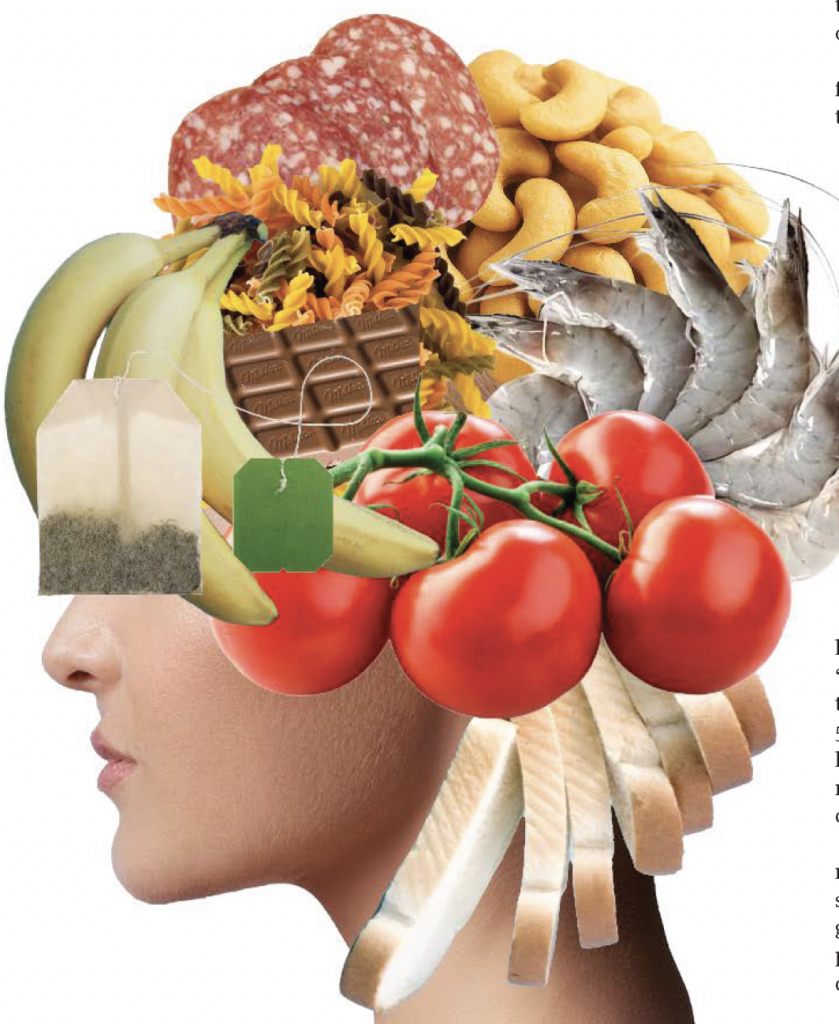
Take a close look at the labels on the items in your next shopping cart – flour and any baked good, pasta, rice, other grains, cereal, biscuits & crackers, nuts, cooking oils, spices, soy products, 70% of beans, frozen meals, coffee, tea, chocolate, sugar, ‘exotic’ fruits … even your canned tomato sauce from Watties, maybe even your pork, is imported directly or derived from imported ingredients.
Here’s your opportunity to mitigate the challenges to our Hawke’s Bay growers and farmers … buy local! Your dietary range will narrow dramatically, but every mouthful will be healthy for the region!

We do our best to support the wine industry – but our best is nowhere near enough to help the industry – drink more folks!