

[As published in May/June 2026 BayBuzz magazine.]
Operation Epic Fury, the joint US-Israeli military action against Iran is having widespread global effects, impacting industry and households here in Hawke’ Bay. None more so, than the skyrocketing price of fuel, and the disruption to global shipping in the Strait of Hormuz. BayBuzz explores how our major industries and diesel users are being affected.
But first, how are things playing out economically?
Rob Heyes, Principal Consultant at Infometrics says the economic impacts will be felt in Hawke’s Bay well into next year.
At the time of our interview (13 April), he commented “It’s hard to predict when the Middle East conflict will reach a conclusion, and harder still to determine when disruptions to oil supply and other commodities such as fertilizer will come to an end. However, even if the Strait were to fully open again today, the economic effects will be felt in Hawke’s Bay well into next year.”
Heyes says that the patchy economic recovery that began emerging late last year, has been scorched by soaring oil prices.
“Businesses and consumers are struggling with higher costs, which will limit spending growth. Infometrics expects there will be a reasonably long tail of elevated energy prices, reflecting the time it will take to repair the damage to oil and gas production facilities in the broader Middle East, and for shipping itineraries to be restored given that many ships are now out of place.”
Mainlining diesel
Diesel has emerged as the critical pressure point in New Zealand’s current fuel shock, posing a far greater risk to economic activity than petrol or aviation fuel due to its dominant role across transport, agriculture, and heavy industry.
Heyes says that prices for diesel have already blown out more than petrol, and with diesel underpinning the movement of goods and operation of key productive sectors, both rising prices and tightening supply are set to transmit quickly and broadly to higher prices throughout the economy.
Costs are largely going to be borne by households already under considerable financial pressure. For many, especially those in rural communities, petrol and diesel are not substitutable; there is no regular and reliable public transport, distances to town are too far, and roads are too dangerous to walk or cycle. With 91 octane up nearly 40% cent and diesel up more than 100%, consumers everywhere will have to make sacrifices in other areas to fuel their vehicles. With many Kiwis living from pay to pay, and also having very limited savings, this has to come at the cost of something else, be it food, heating, healthcare, or insurance.
Alternatively, people might end up going into debt for their fuel purchases. It will be interesting to see the growth in payment methods like Afterpay, the longer that the war and high fuel prices continues.
Between 1 April and 19 April, New Zealand’s diesel and petrol stocks as published by MBIE and including those in transit, reduced to 41.6 days and 51.2 days respectively. A decline of 19% for diesel and 17% for petrol. Our current daily consumption rates are 10.7 million litres of diesel, and 8.1 million litres of petrol.
Finance Minister Nicola Willis said New Zealand’s diesel supply remained secure, despite the fluctuations linked to the Middle East crisis. “We’ve been advised this is well within normal patterns, and we can expect some ups and downs over the coming weeks.”
Looking at the effects on specific industries, Infometrics estimates that transport is most exposed to higher fuel prices and risks to supply, calculating that 19-26% of non-wage operating costs across road, rail, sea, and air transport operations are oil-based fuel costs. The horticulture sector is less exposed, but is still facing cost increases with oil-based fuel costs making up 5.5% of non-wage operating costs. Furthermore, the primary sector is facing a potential double-hit, with fertiliser prices globally surging after the conflict began in the Middle East, given the region supplies various inputs into fertiliser production.
Heyes says that higher freight costs, alongside rising supplier prices, are pushing up the cost of producing the goods themselves and getting goods onto shelves or to port.
“We expect this cost pass-through to be most evident in forestry, wholesale, and retail trade. Higher plastics prices will see food packaging costs rise.
“Construction remains particularly vulnerable. The sector is already grappling with subdued demand for some sub-industries, and tight project economics for others, especially civil works.
“Higher fuel costs add another layer, lifting the price of transporting materials and contributing to increases in energy-intensive inputs such as cement and steel.”
Any fuel disruptions, Heyes says, no matter how temporary, could undermine momentum in civil construction activity, adding cost and time delays to already large, expensive, and long-term projects.
“Heading into next year, downstream industries will experience higher production or distribution costs, and inflation expectations will influence price and wage-setting behaviour across the whole economy, all of which could lead to a more durable inflationary impact. The Reserve Bank of New Zealand has opted to hold the official cash rate at 2.25%, but if inflationary pressures don’t dissipate quickly enough, an increase in interest rates might be needed which would further contribute to economic weakness,” Heyes concludes.
Dire straits
Fertiliser Co-operative Ravensdown is directly impacted by the war in Iran.
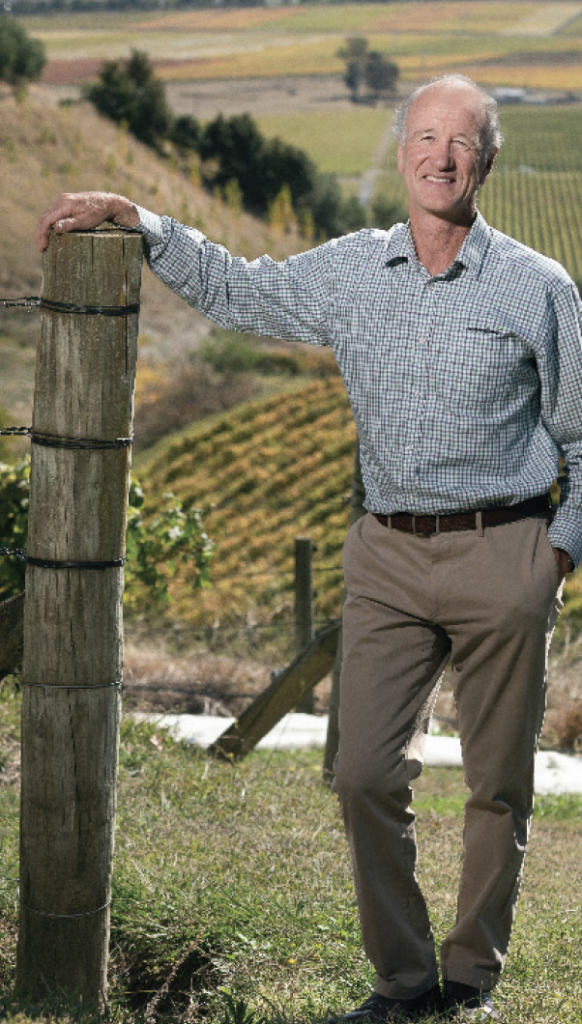
“For 27 years Ravensdown has brought its Urea to New Zealand via the Strait of Hormuz,” says Ravensdown Chair, Bruce Wills.
“But that’s no longer possible. We’ve been sourcing nutrients from across the globe for more than 50 years. We’re practised at it, and have deep relationships. We’re not concerned about supply … and have gone elsewhere; there are alternatives.”
Wills says that Ravensdown has ample supply for the spring, and to the end of 2026.
“Ravensdown was set up to have reliable, consistent supply of fertiliser to shareholders; that’s what we’re doing. New Zealand will get the fertiliser it needs.”
Ravensdown always buys forward, Wills says, normally three months in advance of it being needed on farm, by the farmers/shareholders in the Ravensdown co-op).
If the conflict becomes prolonged, Wills says the situation becomes more problematic. “We all worry about whether the conflict will broaden. We know for certain that if it is prolonged, there will be elevated prices.”
Wills says that Ravensdown has had very good returns this year, with strong sales. The co-op’s Awatoto plant is working 24/6, and is struggling to keep up with demand for superphosphate. In light of the war, and rising on-farm costs, Ravensdown’s budgets for 26/27 reflect a reduction in farmer demand.
“Ravensdown expects that higher on-farm costs will eat into farmers’ fertiliser spend if the conflict continues. The situation is far from ideal.”
“We live in hope that things settle down, and revert to normal,” says Wills.
Trucking along
With a fleet of 100 trucks, Emmerson Transport is Hawke’s Bay’s largest trucking business, transporting a wide range of primary produce north out of Hawke’s Bay and bringing back steel, building products, and fast moving consumer goods.
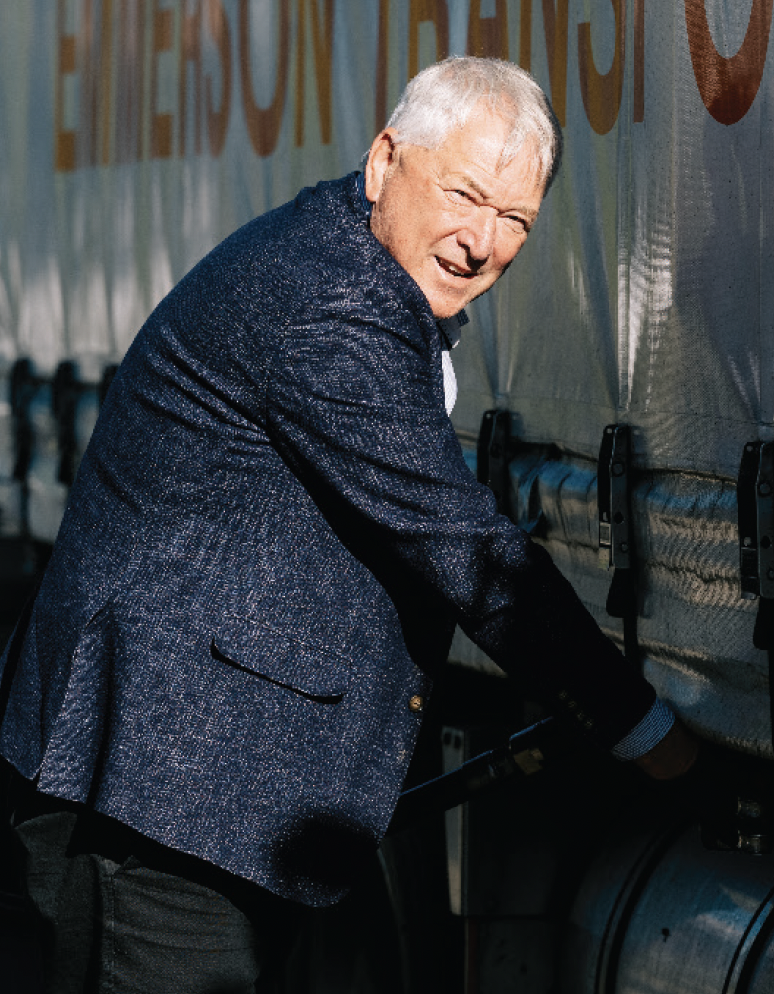
David Hill, General Manager of Emmerson Transport says that the current situation affecting fuel prices is unprecedented.
BayBuzz caught up with Hill in early April. At that stage, Hill said Emmerson Transport was facing a 150% increase in fuel costs, unlike anything the transport industry veteran had ever seen.
“With 100 trucks, this month’s fuel bill will be more than $1.6 million.”
Emmerson is able to pass on higher fuel costs to customers via a contract clause called the “fuel adjustment factor” or “faf”. Hill says that operators without faf clauses will struggle to absorb the price increases, and may go out of business. Bulk carriers often have quarterly price review contracts, which will see those carriers absorbing high prices until their next review.
Every product available in New Zealand has spent at least some time on a truck fuelled by diesel. New Zealand relies heavily on goods being trucked around the country. Forget about rail, and coastal shipping, they’re minnows as modes of transport when compared to trucking. Hill says that 92% of goods are moved by road, and with diesel approaching $4 per litre, the price of everything is going to go up.
Hill says the rising fuel costs will kill off lower value processing, and marginal activities, because they’ll no longer be economic.
“Especially lower value commodity products…that won’t happen.”
Even if peace talks succeeded, and the conflict ended quickly, Hill says the damage and disruption would be long lasting, because of the loss of the production and storage capacity in the Middle East.
“The oil companies tell us what they’re doing to source alternative product from other parts of the world.”
Down on the farm
Farmers rely heavily on diesel to run everything from tractors, to irrigators and pumps, as well as moving stock, and getting produce to markets.
Jim Galloway, Hawke’s Bay President of Federated Farmers says that higher diesel prices reduce farm profit margins, affecting farmers’ ability to invest in new equipment or fertiliser.
“Sheep and beef farming (at the moment), the profits are there. It’s just a cost we’ll have to absorb. We do have a little bit of head room at the moment to absorb that cost, so a bit of resilience, because we’ve got quite good prices for our product. Instead of having an exceptional year, it’s going to be a good year.”
Arable farming operations use greater quantities of diesel than sheep and beef operations, and face greater risk from fuel price shocks.
Speaking to BayBuzz on the eve of the local Primary Sector Awards, Galloway says that while diesel prices are a concern, availability is currently not a problem; but there had been instances of late delivery.
Survival of the fittest
Another sector that relies heavily on diesel, and bitumen (a petroleum based product) is civil construction. BayBuzz couldn’t get any on the record comment from local civil contractors, but understands that current fuel prices and potential fuel shortages will impact this industry group in the short and long term.
Following the Cyclone Gabrielle, there has been a huge amount of rebuilding of roads, and with that, opportunities for new entrants to the sector, alongside the long standing national businesses that are present in Hawke’s Bay.
Civil construction businesses work mostly for local and central government clients, on fixed contracts. Due to intense competition, local pricing has become a bit of a race to the bottom. Fuel adjustment factors do not exist in this sector, which means that the rising cost of diesel cannot be recovered, and will eat into the bottom line of contracts.
Fuel price increases are one thing, fuel availability is another. Downstream these effects could impact on the amount of roading projects that get completed, or the time it takes to get work done. If the Iran war is prolonged, it will definitely be a survival of the fittest situation, with smaller, younger businesses with weaker balance sheets and fewer reserves, being less resilient and potentially falling by the wayside.
Gateway to the world
Apart from increases in the price of diesel, Napier Port isn’t experiencing any noticeable impacts from the war in Iran.
Chief Operating Officer Adam Harvey explains: “The ability for Hawke’s Bay exporters to get their cargo to the world, remains.
“We’re not seeing any impact on shipping calls, or shipping volumes other than the out of the ordinary weather delays, “ says Harvey. “While there is no impact, we feel their (our customers’) pain around fuel prices and the economic uncertainty it creates.”
The port is a major diesel user, and Harvey says that a faf (fuel adjustment factor) clause in their contracts with shipping and cargo customers, means they can pass on increased diesel costs.
There has been concern in national rural media about a shortage of containers, both refrigerated and non-refrigerated, impacting the ability of producers to get their exports into a container and then onto a vessel. Harvey says that there are no issues at Napier Port, thanks to a concerted effort to bring in empties in the off season.
“We’ve got more empty boxes available than we’ve had in the last five years.”
Harvey says that vessels calling at Napier Port – apart from coastal shipping – sail to China and Korea (95 per cent of bulk cargo vessels), and Asia and Australia (containerised cargo). Globally, ships heading to European markets have avoided the Middle East for the past two years because of safety and security issues affecting the Suez Canal. The alternative route around Africa’s Cape of Good Hope adds 10-15 days to the journey.
Of interest to anyone driving a petrol or diesel vehicle, Harvey says that fuel vessel arrivals, bringing supply to Hawke’s Bay, are normal.
“We’re not seeing any impact on fuel vessel arrivals, we’re still seeing the normal number.”
Apples and the Middle East
New Zealand Apples and Pears Chief Executive Danielle Adsett, says that the Middle East received approximately 5% of New Zealand apple exports. So far in 2026, exports to the to that part of the world are down 80% on what they were at the same point last year.
She says that exporters are well-practised at navigating a dynamic, export-focused environment and have effectively redistributed fruit that might have previously been sent to the Middle East to other markets, primarily India and South East Asia.
“New Zealand apples are sought after across the globe and command a premium. What’s more, our fruit makes up just 5% of the global apple market, so exporters have been able to adapt and sell as required.
“The key challenge is the increased costs putting further pressure on already squeezed margins. New Zealand is the best place in the world to grow apples, but also the most expensive place to grow apples.
“Production costs have increased significantly since 2020, and while our industry consistently rises to a challenge, it must do so alongside a structurally higher cost base,” says Adsett.
For reference, Hawke’s Bay produces 63% of New Zealand’s apple and pear crop.
End in sight?
It’s hard to say. The posturing, missteps, threats and backtracking, not to mention the lack of strategy and international support for this war, all point to a longer duration rather than a shorter one. The longer things go on, the greater the impact on industry and households. Make no mistake; businesses and people will suffer.
Soul singer Edwin Starr was right. War is good for absolutely nothing, an enemy to all mankind.
Interviews for this article were completed in the first three weeks of April.

And for some reason there are people worldwide and especially in USA who support the orange man and his criminal cronies regardless of the stupidity and lies they all spout endlessly
Morning Brenda,
Great article on the impacts of the current conflict in Iran.
It’s when you sheet it home to sectors that impact all of us here in the Bay (and it will be a similar story all over the country) that the realities of this mess become real.
The tail of this is not going to be good no matter when it finishes and people are really battling all over the place.
Kiwis are pretty resilient but coming off the back of Covid and sitting at the bottom of the world where transport costs are crucial to our markets we are really exposed.
Looking forward to rolling updates!
What a mess ! But this must be a good time to subsidise on farm solar & promote solar panels on all new builds ? This would also be a health & environmental win as we forget diesel emissions have been proven to be carcinogenic as well as harmful to our environment. Let’s make this situation a positive for all .