

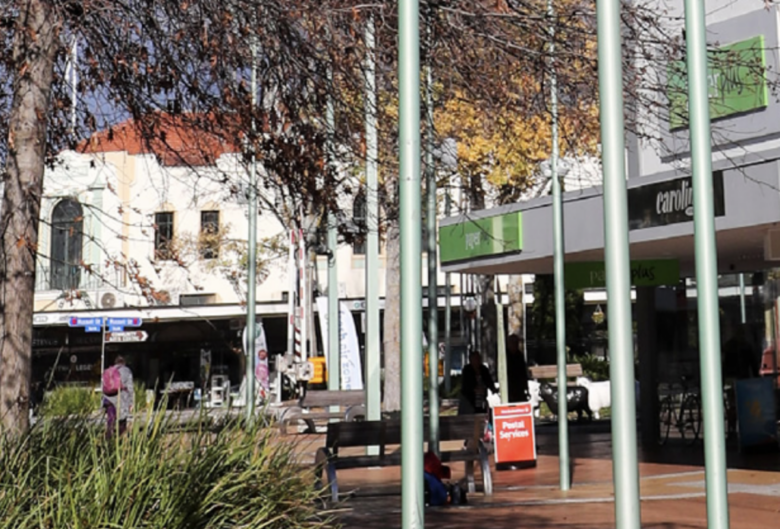
Hastings District Council resolved last week to retain the commercial:residential rating differential at a maximum of 3:1, the level it’s been at since at least 2012.
That’s probably the most boring sentence I’ve ever written. Please bear with me.
What that means is that for every dollar that a residential property pays in rates, a commercial property of the same value pays up to $3, depending on where it is (CBD, suburban, rural etc.). That part makes sense, and it’s actually quite fair: businesses use more water and sewage than homes (have you ever been to a bar or a restaurant and not used the bathroom to at least wash your hands?), and the surfaces of commercial roads like Heretaunga Street undeniably bear more traffic, require more maintenance and more frequent upgrades than the stretch of road outside your house.
That’s the second part of the equation. The first is Land Value (LV). LVs are constantly being reappraised by QV on behalf of the Valuer-General. They revalue each city/district every three years. This bit sort of makes sense to me, but not really. (In Te Matau a Māui Hawke’s Bay, they revalue Napier one year, Hastings the next, and Wairoa and CHB the third, or something like that. This makes comparisons difficult as it means that in any given year, one district has just been revalued but another is about to be). Three years is just enough time for the effects of a boom or a bust to be captured in fully-magnified Technicolor, and not long enough for those “creases to be ironed out” in the form of a “market correction”. Three years is also just enough time for QV to be kept steadily employed at the taxpayer’s expense, gazing into the navel of the economy and creating data that doesn’t seem to help anybody other than QV.
Rates need to be predictable for ratepayers from one year to the next, so why do we fix them to an increasingly volatile and unpredictable property market? Market volatility is great for investors, as it means they can “buy low and sell high” in a shorter cycle, but it doesn’t help regular people with real jobs or businesses to balance their books or plan for the future.
Before COVID, commercial and residential values generally moved up and down together – by different margins of course, but an increase in one usually meant an increase in the other. This meant that even with the 3:1 multiplier (differential) between commercial and residential values, rates increases were spread fairly across sectors because they were all moving in roughly the same direction.
Following COVID however, residential property values peaked, as every billionaire on the planet tried to buy a bolthole (or twenty) here in Aotearoa. Meanwhile, commercial values tanked. The result was that residential properties got slammed with double-digit rates increases but commercial properties were pretty much off the hook, increase-wise. Nobody begrudged them that – lockdowns, vaccine passes, and other restrictions had put businesses through the wringer, and homeowners had little to complain about when their homes were suddenly worth almost double what they had been worth a few years earlier.
Fast-forward 3 years and as one submitter last week put it, the metaphorical boot is firmly on the other foot. Unemployment is at an all-time high, construction is at an all-time low, residential values have tanked, but commercial property in Hastings and Havelock North is up 25%. Call it “market correction”, call it whatever you want, but objectively, what this means is it’s the commercial sector’s turn to pick up their share of the last few years of rates increases. It’s a shit system, and it needs to be changed, which is why Council also resolved to completely review how rates are spread across the district as part of our Long Term Plan.
It’s also why I had some questions for a couple of former district councillors who had done nothing about it when they had the power to, but were very keen to speak to their submissions and blame the new Council for what are demonstrably their own historic failures.
What has really hurt the business community in all of this is the combined effect of the increase in commercial property values, plus the decrease in residential values, multiplied by the 3:1 differential. It’s that third point that residential ratepayers did not have to stomach 3 years ago, and it’s that third point that we re-opened consultation on. The feedback from the business community was that the impact of reducing the maximum differential from 3:1 to 2.75:1 was negligible, bordering on meaningless or even insulting.
My concern was that the impact would be worse than insulting on residential households, and I hoped that retaining the 3:1 would be meaningful to families and pensioners already struggling to put food on the table. It’s one thing to find the extra cash to pay for your own (or your landlord’s) rates bill, but it’s quite another to be asked for an extra 10% to bail out town centre businesses, even (or especially) if they are your employer.
At the end of the day, the question before Councillors was effectively “Can Flaxmere ratepayers bear a rise of $20-40 (on top of the $200 already consulted on) to save a city centre business $700? Can Hastings ratepayers bear an extra $50-70?” and for me and 9 others, the answer was “No”.
I didn’t vote to retain the 3:1 differential because it was a good idea, I voted to retain it because it was the less awful of two awful options. And that, as I’m coming to appreciate, is often the reality of local governance. We did resolve to drop the Hastings CBD targeted rate, in response to submissions from the Hastings Business Association. That should provide relief to those businesses roughly equivalent to the lower differential, without anyone else having to pick up the tab.
The last point I want to make is this, and I made it in the Chamber during debate because it was part of what made the decision so hard for several of us: while residential landlords absorb residential rates on behalf of their tenants, commercial landlords generally and increasingly lease their properties “net of rates” i.e. the tenants pay the rates. That means that commercial landlords (mostly the wealthiest individuals in NZ, their companies, their families, and their trusts) pay no tax on their property, pay no tax on their capital gains, and about half as much tax on their income as the rest of us. Now they have rigged the system so that they not only enjoy 25% increases in their land value, but also leave their tenants to pay the corresponding 25% increase in rates.
Who do they think pays for society’s infrastructure? It seems to me that they shirk all the risk and then they blame Council for daring to jeopardise their profit margins. That’s what this is all about, and we see it over and over again, especially in Aotearoa: privatised profits and socialised costs. And we wonder why shit doesn’t work.
The rating system is broken and unfit for purpose.
And yet, nobody has ever changed it.
We will.
Nick Ratcliffe is a Hastings District Councillor for the Hastings-Havelock North Ward, first elected in 2025.

Disclaimer: The opinions expressed in this article are my own and do not represent HDC’s official position.