

[As published in July/August 2026 BayBuzz magazine]
In June at Fieldays, where we have maintained a sales site for more than a decade, the issue surfaced repeatedly in conversations with visitors from across New Zealand. Many expressed concern about the loss of a major food-processing operation in a region long regarded as one of the country’s food-producing heartlands.
For older Hawke’s Bay residents, the announcement evokes memories of previous industrial closures that reshaped the regional economy. The sudden demise of the Whakatu freezing works left around 1,500 people without jobs. Others recalled the closure of Wyona canneries and the impact on growers, while more recently Te Mata Mushrooms disappeared from the local landscape.
Similar stories have unfolded elsewhere: the closure of the Cadbury factory in Dunedin and reductions in seafood processing in Nelson are reminders that food manufacturing in New Zealand has been under pressure for many years.
Behind every closure lies a human story. Employees lose livelihoods, growers lose markets, suppliers lose customers, and regional communities absorb the economic and social consequences. The effects can be significant and, for many families, personally devastating.
The decisions by Heinz Wattie’s and McCain Foods are particularly telling. Together, these global food giants generate annual revenues equivalent to a substantial proportion of New Zealand’s GDP. If companies of that scale struggle to make frozen vegetable processing profitable in New Zealand, it raises uncomfortable questions about the economics of manufacturing in this country.
It is certainly not a case of insufficient investment. McCain has invested heavily in its Hastings operation since acquiring the plant in 1996. Yet despite those efforts, the company recently concluded it could not identify a sustainable future for the operation under its current model.
Pressures building
The pressures have been building for decades. Since New Zealand opened its economy in the late 1980s, local manufacturers have faced growing competition from imports. New Zealand is a relatively small market spread across a long, narrow country with significant transport costs. At the same time, Australian producers and increasingly suppliers from Asia have easy access to our market.
The structure of the grocery sector adds another challenge. With only two dominant supermarket chains, suppliers face intense bargaining pressure. Retailers naturally seek the lowest possible cost of supply, often promoting private-label products sourced offshore to support competitive pricing strategies. Local manufacturers must contend not only with rising labour, energy and transport costs, but also with relentless downward pressure on margins.
Meanwhile, multinational food companies have invested billions in highly automated mega-factories in Australia and elsewhere. These facilities operate at scales impossible to replicate in New Zealand, producing greater volumes, running for longer periods and spreading costs across multiple product lines. The economics are difficult to ignore. If spare capacity exists in larger overseas plants, supplying New Zealand from those facilities often becomes the rational business decision.
A quick walk through the frozen food aisle illustrates the trend. Many branded frozen vegetable products sold in New Zealand are already sourced from Australia, Europe or Asia. Private-label products are frequently imported as well. In some cases, it is cheaper to ship a container from Melbourne to a New Zealand port than it is to move the same container between the North and South Islands. Retailers increasingly benchmark products against the lowest reliable landed cost available globally.
Trade liberalisation has also played a role. The international trade agreements New Zealand has pursued have delivered benefits to exporters, but they have simultaneously exposed domestic manufacturers to global competition.
Consumer behaviour is changing too. Frozen vegetables remain convenient, but they compete with an expanding range of meal solutions. More consumers purchase prepared meals, takeaway food or delivered meals. Food is increasingly consumed in different formats and through different channels than it was a generation ago.
Question now is what comes next
A government-funded report may identify future opportunities, but simply replacing one frozen vegetable processor with another would seem unlikely to succeed unless the underlying economics change. Without significant protectionist measures – which would come with their own costs and distortions – it is difficult to see how a new operator could compete directly against large Australian processors on commodity products.
Some have raised concerns about food security. While understandable, the argument should be kept in perspective. New Zealand produces enough food to feed many times its own population, and frozen vegetables represent only a small component of that production. The more important issue is how Hawke’s Bay can continue to leverage its land, climate, infrastructure and skilled workforce in ways that create sustainable value.
There may be opportunity in the assets left behind. Rather than attempting to recreate a large-scale commodity processor, the region could explore smaller, more agile businesses focused on premium and specialty products. Competing head-to-head with Australian mega-factories would be difficult. Creating differentiated products with higher margins may offer a more realistic path forward.
Our own experience at Te Mata Figs points in that direction. As a relatively small grower, processor and retailer, we have deliberately built a vertically integrated business model. We do not simply grow figs and minimally process, accepting commodity pricing. Instead, we consciously innovate to position ourselves as a premium Hawke’s Bay producer with a distinctive story and a differentiated and continuously evolving product range.
We add value wherever possible, sell directly to consumers as well as wholesaling, and use digital channels to build customer relationships. Our products are marketed online in New Zealand and overseas, supported by agritourism experiences that reinforce our brand and point of difference. By reducing reliance on intermediaries, we retain more of the value created by our products.
This approach will not suit every crop or every business. However, it demonstrates that alternative models are possible. Hawke’s Bay has the climate, entrepreneurial talent and food-production expertise to support a more diverse range of niche and premium food businesses.
The closure of major processing facilities is undoubtedly a crisis for many affected families and businesses. But it may also be an opportunity to rethink how we create value from our region’s natural advantages. Greater diversity, more innovation and higher-value production per hectare may ultimately prove to be a stronger foundation for the future.
It can be done. In Hawke’s Bay, examples already exist.
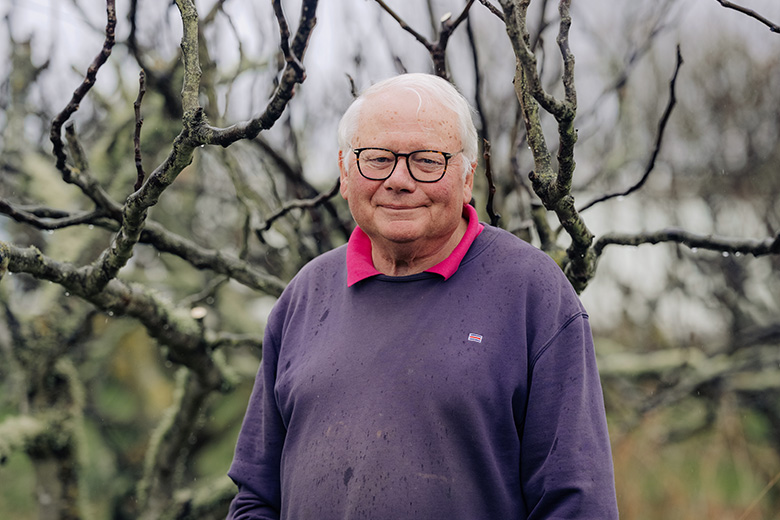
Murray Douglas is proprietor of The Figgery in Havelock North.
Photo: Florence Charvin
