

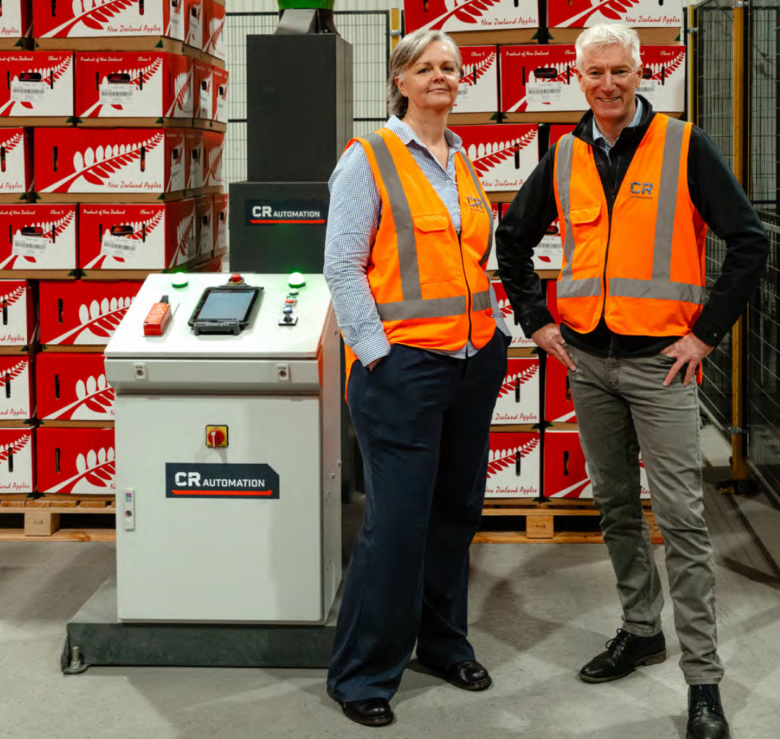
[As published in July/August 2026 BayBuzz magazine.]
CR Automation is an automation engineering business based in Hastings. When director Peter Richards started the business in 2002, industrial automation in Hawke’s Bay was largely treated as an add-on to electrical contracting. A few firms had “a couple of programmers or automation engineers” behind a workforce made up of traditional sparkies, he says.
Richards saw both a gap and an opportunity.
“I wanted to differentiate automation from the electrical field and elevate the profession.”
CR Automation was set up to signal that difference.
“As opposed to establishing myself in a workshop environment, I worked out of the third floor of a multi-storey building… there was no workshop attached to us, it was a professional environment, and that was a key differentiator.”
Although it took time for charge out rates to catch up with the value of specialist automation, the response was swift.
“Very quickly we secured a market share across a good percentage of the main industry, and it was a really great period of time.”
Nearly 25 years later, the business has evolved into a multidiscipline industrial automation business spanning postharvest operations, municipal water, machine safety, automation, and service.
A leaner operation post-cyclone
Bay Buzz last featured CR Automation in early 2024, the year after the cyclone. Unsurprisingly, for a business that relies heavily on work connected to the pipfruit sector, CR Automation looks a little different these days, reducing its workforce from 30, two years ago, to 20, today.
“We have downsized, (in response to the market) as have lots of others,” says CR Automation General Manager Trudy Sharpe.
“We’ve managed to keep our core expert staff, which is key to our delivery… our core expertise is still in house.”
In the aftermath of the cyclone, pack houses pulled back on their capex programmes for a couple of years, Richards says.
“That industry sort of fell flat … but it’s definitely recovering.”
In response, CR Automation is working on rebalancing its revenue streams and becoming more efficient.
Today the business has five main areas: Postharvest turnkey systems (the largest single stream), Water (automation and control for municipal councils), Machine safety, Automation / industrial software development, and Service.
“Post-harvest will always be our largest source of revenue, because it’s a turnkey offering,” Richards says.
“We’re supplying mechanical parts and design, using the whole suite of our engineering services, whereas water uses our automation engineering skills and a little bit of the electrical design.”
But he is clear that the company’s risk profile must shift, reducing exposure to the post-harvest sector, by growing other parts of the business.
Machine safety – more than just compliance
One of CR Automation’s strongest areas of growth is in machine safety, driven by tighter legislation and greater director level accountability.
“With the change in government legislation and the prosecutions that are coming in, and the associated liability … people that have had a firewall in the past are now very much in the crosshairs of WorkSafe,” Richards says.
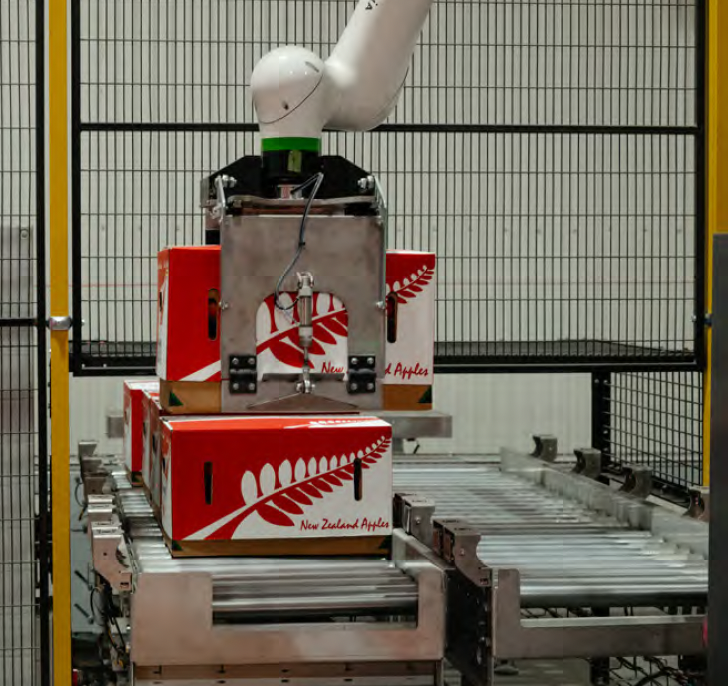
The company’s work in this area is largely in retrofitting existing plant, which has been purchased from overseas, or upgrading aging machinery and control systems.
“They’re particularly messy because you’ve got an existing footprint that was never necessarily designed with overarching safety, and the electrical control systems are potentially very complex.”
CR Automation combines certified machine risk assessment with inhouse mechanical, electrical, and software capability to deliver solutions that work on the factory floor, not just in the report.
Safety and control system upgrades can deliver significant productivity improvements, says Sharpe.
“A lot of companies see machine safety as just a cost … but we’ve been able to achieve efficiency improvements when we’ve done machine safety.
“One of our clients – after machine safety, and control system upgrades – achieved a 25% increase in throughput.”
Water, service and hidden risk
Alongside safety, the water and service streams underpin CR Automation’s revenue resilience.
In water, the firm operates under service level agreements with councils from Gisborne through to Whanganui, successfully competing against much larger national providers.
“We tendered on a very large project for Tauranga District Council and won that,” Richards says.
“I think we’re very highly regarded in the water space.”
Across water and industry more widely, aging control systems are a growing vulnerability.
“There’s a lot of aging control systems out there, and a lot of industries don’t know the risk that they’re exposed to,” Richards says.
“If one of those electronic components was to fail and the parts weren’t readily available, then you’re talking about some potentially significant downtime.
“We’ve been quite active with our clients in profiling this risk, but it’s a particularly hard sell because there’s no return on investment,” he says.
That is where service comes in: troubleshooting and unplanned work, often on third-party equipment.
“Someone might call us if they’ve got a tricky issue with a piece of automated equipment,” Sharpe says.
“If they can’t get hold of the original equipment manufacturer, or whoever actually supplied it originally: we can generally come in and help them.”
New leadership
After two years of covering both CEO and head of sales roles, Richards has chosen to focus fully on the market.
“At the end of the day, it wasn’t sustainable to do both.”
That opened the way for the appointment of Trudy Sharpe as General Manager.
Sharpe began her career as the first woman in New Zealand to graduate with a mechatronics degree from a New Zealand university.
“If you look at everything that CR Automation does, it encompasses mechatronics – that mechanical, electrical, software combination – and that’s the degree I did,” she says.
“It’s really nice to have a company that does it all.”
Her attraction to CR Automation was as much about culture as engineering.
“Being a nice small company, that family company feel, is attractive to me. I’ve worked in large corporates before. It’s hard to get things done, it’s hard to initiate change and improvement … my enjoyment is helping others do their jobs better.”
Green shoots and margin over volume
Despite the challenges of recent years, both Richards and Sharpe see momentum returning.
“There’s definitely more green shoots now than has been apparent for 12 to 18 months,” Richards says.
“We’re seeing more investment opportunities coming out of post-harvest”
New apple plantings, including in Canterbury, foreshadow future packing house demand. At the same time, early in the current financial year, CR Automation has secured “some good sales”, including projects into Australia, while water, machine safety and service revenue lines continue to grow.
Strategically, the focus is on margin and resilience, not just revenue.
“If you’re more efficient at what you do, you don’t necessarily need that revenue,” Peter says.
“What you need to do is improve your margins … we’re using AI, we’re using systems and processes, and if that gives you an extra 5% of efficiency in a project, that’s going to hit you better in your financials.”
Both Richards and Sharpe are cautiously upbeat about the years ahead. As Sharpe puts it, they’re “optimistic about the market improving in all of our sectors” and hope in time to “start to grow again.” Richards says the focus is to “invest in our other business streams” to build greater resilience.
Nearly 25 years on, CR Automation is increasingly diversified across sectors and geographies, but still driven by the same motivation, to elevate automation as a profession, and to help industry do, as Sharpe puts it, “Cool, awesome things”.
