

[As published in March/April BayBuzz magazine.]
Two schemes are germinating at the Hawke’s Bay Regional Council that aim to have major impact on the region’s primary sector.
The first involves water storage to supplement year-round water supplies for water users – households, growers and industry – on the Heretaunga Plains. This is not to be confused with efforts to revive the Ruataniwha Dam in Central Hawke’s Bay, which I’ll also discuss.
The second is called ‘Land for Life’, which aims to develop a blueprint for environmentally and financially sustainable pastoral farming in the region.
Advocates of both projects regard them as essential for securing a vibrant regional agriculture-based economy into the future.
Water storage
Work to determine the need and ways to provide greater water supply for the Heretaunga Plains was initiated during the infamous TANK process, which began in 2012 lingers today in the Environment Court appeals process. TANK sought to set the groundrules for water management and stewardship in the Tūtaekurī, Ahuriri, Ngaruroro and Karamū catchments.
Although appeals are pending on portions of the TANK plan, some elements are being implemented. Most notorious of these is a cap on all water abstraction at 90 million cubic metres annually, and a process for reducing current allocation on a ‘fair and reasonable use’ basis. Some, chiefly Māori, say the cap should be lower still, with consequently less water available for economic uses (i.e., irrigation) after human health (drinking water) and ecological requirements are met. Others, chiefly growers, dispute the science driving the cap and HBRC’s efforts to implement allocation reductions property-by-property.
That sets the stage for debate over the need for water storage to provide for water supply security across the Plains and how that might be provided.
So, in the same timeframe HBRC both began investigations into water storage and augmentation options and prepared the HB Regional Water Assessment (RWA), which was publicly released in 2023.
Since its release, a so-called ‘medium scenario’ in the RWA regarding future water demand has driven public discussion over potential water supply gaps and scale of water storage possibly required. That scenario projects that the region could experience a shortfall between demand and supply of freshwater of about 25 million cubes by 2040, increasing to 33 million cubes by 2060.
Note that this ‘shortfall’ covers all of Hawke’s Bay. The RWA itself did not address where the need for water storage might be greatest and/or most consequential in terms of supporting current or future economic activity. It did estimate that the Hastings District, consuming 106 million cubes/year generated $43.4 million in GDP for each 1 million cubes used, whereas CHB, consuming 41.3 million cubes/year, generated $14.3 million in GDP for each million cubes used.
The RWA also served up a scenario – assuming most stringent water conservation – that indicated HB could attain a water surplus of 3.1 million cubes by 2040, reaching a 21 million cube surplus by 2060. The RWA itself was dismissive of this scenario, without any rigorous exploration of how it could be attained, and HBRC and water storage advocates have swept it under the rug ever since.
After the RWA’s public release, in a July 2023 email to BayBuzz, HBRC consultants wrote: “Scoping reports identifying potential options to reduce demand from across our key water users were sought under the RWA. Recommendations informed by these assessments are to be provided to Council in the next couple of months for consideration. The 2020/21 Long Term Plan has $1M for progressing potential initiatives should they be prioritized.” We’ve seen no sign of such investigations.
So, to date, all water storage advocates have relied upon the RWA projections – which simply applied a growth factor to current activities and practices – to support their claims that water storage is essential. Future demand predictions have not been based upon more rigorous and practical ‘bottom up’ evaluation of future land use options as seen by current practitioners. And no serious investigation of demand reduction opportunities has occurred.
But perhaps that is about to change.
The RWA insists rhetorically that any schemes for water storage or augmentation must be conjoined with serious water conservation and demand reduction programmes.
However, until now the economic interests driving the ensuing public debate have focused entirely on supply, not surprisingly.
So now fast forward to proposals actually on the table.
Proponents of Ruataniwha Dam 2 still insist there’s a need for 100 million cubes of storage in CHB (compared to 33 million for the entire region by 2060), where about half of current water allocation is awarded to a small handful of dairy farming operations.
Dam 2 proponents also insist that more water for dairying is not what they envision, but they have yet to surface any concrete plan for how that much water would be used, other than generalities about more horticulture and cropping. It’s still a ‘build it and they will come’ proposition. Supplemented by another vague plan to pipe water (augmented by the dam) from the Tukituki River, after it passes the Red Bridge, to Whakatū, where it could be used by yet-to-be-identified ‘wet industry’ users. In other words, increase the potential user base outside CHB … and hopefully the political support base as well.
Despite their fast track status, Dam 2 proponents acknowledge they will need the rest of 2025 (and $6 million) to fill in the details of their business case, and assure BayBuzz that a well-grounded plan will indicate who the CHB users of 100 million cubes would be and how they would use the water … a precursor to any worthwhile analysis of economic benefit and environmental harm.
Until such a plan emerges, Dam 2 advocates are simply selling the vapour trail of Dam 1.
Heretaunga water storage
Meantime, HBRC staff and consultants, supported by growers and municipal users, are hatching their own strategy for water storage servicing the Heretaunga Plains.
Original planning associated with the TANK process, with the then-concurrence of Māori and environmentalists, had greenlighted investigations into potential dams off the mainstem of the Ngaruroro. This in the context of other assurances re capping allocations, a special Māori allocation of freshwater, and implementation of conservation, demand reduction and environmental protection measures.
As noted above, with funding from MBIE and supported by the RWA ‘gap’ scenario, considerable pre-feasibility analysis looking into storage options has proceeded.
This work has now yielded a specific water storage proposal – a 27 million cubic metre dam located on a Ngaruroro tributory. A background paper for HBRC’s January workshop on the matter describes the project:
“A storage reservoir would be built, and filled over the winter months, with stored water released back into the Ngaruroro River and lowland streams (which are affected by groundwater takes during periods of low flows) as an augmentation solution that aims to supplement aquifer recharge, support baseflows of key waterbodies at periods of low flow and offset the impacts of groundwater abstraction. The release would also facilitate additional water take resource consents being issued for additional high value horticultural and industrial activity.”
Pre-feasibility work has identified the site as technically, environmentally and commercially feasible. The dam would cost $225 million to build, with $6 million in annual operating costs (excluding any debt servicing).
The January HBRC workshop made a ‘non-decision’ to proceed (now officially confirmed by Council) with developing the full feasibility case for the project, at a cost of $3.22 million (provided in existing LTP) to be completed in June 2026. As described by the workshop backgrounder:
“Whilst the pre-feasibility phase was focussed on selecting a preferred option and assessing fatal flaws, the focus for the full feasibility is quite different – it is to prove the feasibility of the preferred option. This involves a series of targeted technical, environmental, and economic investigations. Still, more substantively, it involves developing the model and concept for the project commercially, technically, and environmentally into a coherent operating model. By the end of the feasibility phase, the project should be ready for the next phase, including obtaining resource consents, and early-stage procurement of a contractor. It also involves ‘going public’ with the project and raising sufficient capital for the next phase.”
The project’s proponents insist the dam would be just one part of a multi-pronged water solution for the Heretaunga Plains, the additional components to include: water conservation measures, augmented aquifer re-charge from the Ngaruroro, municipal demand reduction measures, and an innovative shared water use plan designed to optimise efficient irrigation use.
This last piece, developed by growers and modeled on the successful group consent currently in place for Twyford irrigators, is especially critical. Work has been funded by Heretaunga growers to craft an irrigator scheme for the entire Plains catchment that would enable allocated water to be distributed amongst scheme participants as individual needs arose, with participants admitted to the scheme based on their commitment to optimal water efficiency practices. The goal appears to be both conserving allocated water and establishing an accountability framework to confirm irrigators’ prudent use of this public resource.
If this plan, scheduled to be floated publicly in March, achieves grower buy-in, that will provide a basis for further grower buy-in when it comes to funding the storage dam.
So, as with Ruataniwha Dam 2, still a lot of ground and detail to cover. But the Heretaunga approach seems to hold together conceptually.
What is clearly signaled by the emergence of the Heretaunga water storage scheme is a looming ‘battle of the dams’ – 100 million cubes for CHB versus 27 million for Heretaunga Plains, with HBRC touting a 33 million cubes need for the entire region. A CHB dam likely to require in the neighbourhood of $1 billion, projecting from 10-year-old costings, versus a Heretaunga dam projected at $225 million.
Should be an interesting year ahead as dam proponents serve up their respective cases.
Land for Life
The dam projects, if implemented as proponents promise, would service mainly horticulture, viticulture and cropping. Not raising animals.
What about the other leg on HB’s agribusiness stool – the region’s 2,600 or so sheep and beef farmers?
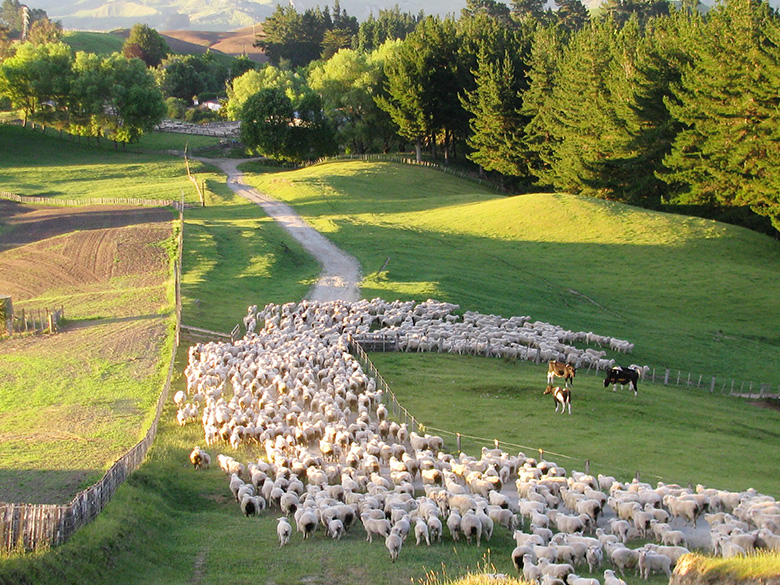
This is the focus of HBRC’s gestating ‘Land for Life’ programme. Its stated purpose is to develop, demonstrate and then help pastoral farmers implement a holistic farming approach that is both environmentally and financially sustainable for the long term.
The approach relies primarily on introducing prudent forestry planting (including native plantings) into sheep and beef farming systems.
Secondarily, the programme would encourage regenerative farming practices to help improve soil health and productivity and lessen synthetic inputs and costs.
Benefits from this include mitigation of soil erosion (probably HBRC’s highest environmental objective for the region), reduced farm emissions, and fewer animals on less productive land (yielding better profit potential for farmers). And as government policies evolve, potential carbon and even biodiversity credit income.
Taken together, this amounts to ‘enterprise planning’ customised to each farm’s individual circumstances … much more demanding than a basic farm budget or environmental plan.
HBRC’s rationale for developing the programme is based on the environmental benefits (enhanced soil, nutrient and water retention, emissions reduction, biodiversity gains), while facing up to the reality that practice changes need to be affordable and profitable for farmers to implement.
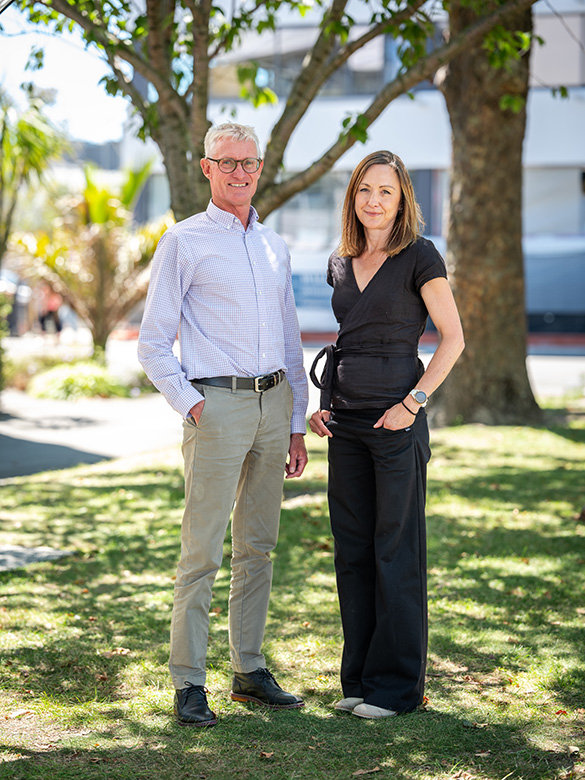
Land for Life has been trialled to various levels with a dozen properties. Project leader Michael Bassett-Foss told BayBuzz: “We have done more than enough to have the confidence that the model works, and where the hurdles are, and therefore the next stage is to validate it can be scaled. That step involves bringing 100 farmers/properties in the region into the programme, ideally by the end of 2025. Rachel Agnew has joined HBRC as Senior Rural Advisor to lead the charge on this.”
Bassett-Foss concedes that’s an ambitious goal. On the one hand, interest is high, given that strained pastoral farmers increasingly appreciate that practice changes are needed. But at the same time, in this region many of those farmers are still coping, both in focus, energy and money, with Cyclone Gabrielle’s damage to their properties.
Going forward, the Government has recently awarded $995,000 to the project, with the Nature Conservancy committing another $400,000 (aiming to secure another $400k from their corporate and philanthropic donors), against a project cost of $3.38 million for this next stage.
The agroforestry and land management practices that could yield better farm performance on all fronts are reasonably well-identified.
But how to get farmers over the financial hump of introducing and implementing change is another matter, and that’s the ‘secret sauce’ Land for Life seeks to provide. HBRC is not in the business of funding financial subsidies to commercial farming operations … certainly not beyond a ‘proof of concept’ stage.
But having demonstrated in its trial projects that financial viability can be achieved, the door now opens to other long-term funding partners who are invested in pastoral farming success. That makes banks, heavily exposed in terms of farm lending, interested partners in helping to finance changes that will better ensure profitable (and climate change friendly) farming operations. Deep-pocketed conservation organisations like The Nature Conservancy also fundraise such investments in other countries to both secure the environmental benefits and earn a financial return … do good and do well.
At least that’s the theory. Land for Life believes it has demonstrated a better mousetrap for the region’s pastoral farmers. Now the programme needs to expand its cadre of advocates.
Evan and Linda Potter, farming 720 hectares in Elsthorpe, with about 200 hectares of that in trees (few pines) are perhaps Land for Life’s exemplar participants, working with the programme from its earliest incarnations.
Evan says pastoral farmers (and their traditional consultants) first need to recognise that it’s not all about production (or “protein farming”) as he puts it. Environmental benefits, including biodiversity, and community values (e.g. fending off wholesale conversion to plantation pine) need to be advanced as well … with production financially sustainable for the long haul.
He poses the threshold question: “How do you convince farmers to take land out of protein farming?”
As the Potters’ system demonstrates, farmers can capture near-term financial benefit from focusing their “protein farming” money and labour only on their most suitable land (which might also involve lower stock numbers), while adding ‘right tree, right place’ planting to their farming systems, expecting harvest income and possibly carbon credit income down the road. “No one should farm for ‘right now’,” says Evan.
Evan views Land for Life in the first instance as providing a more sophisticated advisory service regarding integrated planning and practice change, demonstrating the multiple benefits on the ground to “learn by seeing” farmers, and then delivering some model of financial support to make change possible … “Few farmers can bankroll this kind of change themselves” he notes.
Land for Life believes private investors and lenders see the full suite of benefits. So now the challenge is scaling up and getting to the point where Land for Life has a highly motivated cadre of farmer-champions and can leave the HBRC womb as a freestanding commercial vehicle.
The ultimate benefits to be achieved (at 20% of farms participating):
• reducing sediment erosion by >25%
• 21,000 km of rivers with improved management
• an estimated 15 million tCo2e sequestered over thirty years
• additional 101,300 tCo2e reduced from livestock emissions over thirty years
• 16,385 ha of remnant native vegetation under improved management
• 71,759 ha of land with improved management through afforestation or agroforestry
• 4,500 ha of wetlands and lakes under improved management or protection
• 292,267 ha of land under best management practice and regenerative interventions.
Sound audacious? Stay tuned.

You want to build a dam on earthquake prone country
You are not bright enough. You want to build up river and when it floods every body out they will claim ignorance.
We can not trust any of them especially not the Govt. they are big noters wanting to make a name for themselves and they are not bright enough.