

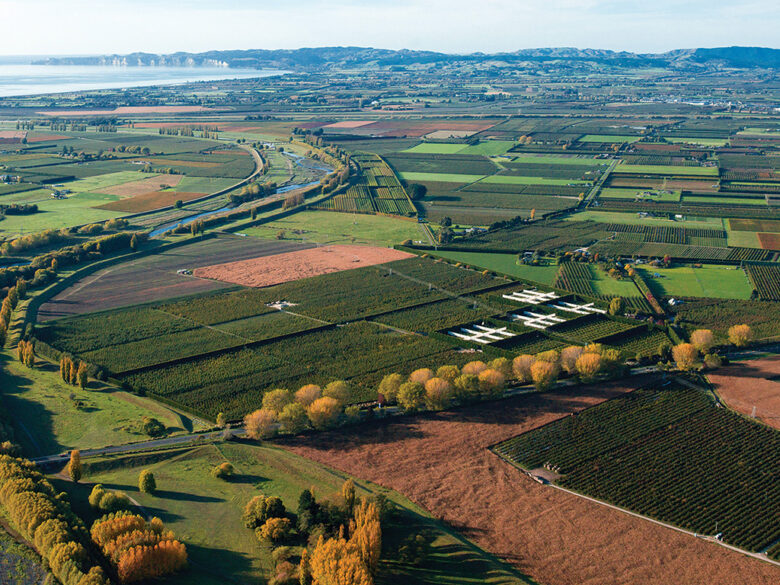
Two important voices last week addressed reorg options for Hawke’s Bay.
Ngāti Kahungunu Iwi Inc (NKII)
NKII Chair Bayden Barber has announced NKII’s support for a Hawke’s Bay Unitary Council, commenting: “…we wish to reinforce the importance of maintaining our ahi kā across our full rohe; therefore, a single unitary authority meets this requirement best for Te Matau a Māui, Hawke’s Bay”.

As benefits, Bayden cites cost savings, improving consistency in service levels, and ensuring that policies and procedures such as rating and consenting reflect best value for money.
Our mayors in their reorg process have been silent as to how they see Māori representation being incorporated. Each of the councils (including the Regional Council) has multiple relationships with Māori either embedded in advisory processes, stipulated in Treaty Settlements, and even legislated (e.g., the HBRC’s Regional Planning Committee). Meantime, the Government has made clear it will pass legislation restricting any voting positions on councils to publicly elected members.
For their part, Māori leaders are engaging directly with the Crown to resolve the representation issue on a nation-wide basis, to be applied across all councils. The wording of Barber’s statement underscores that Māori do not consider their community as simply another ‘interest group’ at the table: “…we see ourselves in a mana to mana, rangatira to rangatira relationship and would expect this reflected in any unitary council governance structure going forward”.
Locally, the council reorg process has triggered a parallel exploration within the Māori community as to how their multiple voices, each with its own source of authority, might also be organised in some more effective way to engage in local government policymaking. What’s good for the goose is good for the gander.
NKII’s full statement is here.
Heretaunga Sustainable Water (HSW)
HSW represents ‘water users’ across the Heretaunga Plains.
In an ‘Open Letter to Hawke’s Bay’s Mayors’, HSW zeroed in on how reorganisation (coupled with pending changes in resource management legislation) would affect critical functions like environmental regulation and flood protection.
Taking aim at the ‘North/South’ option, the group endorsed a unitary approach in deed if not word.
HSW strongly opposes the North/South option splitting the region into two authorities, calling the option “franky frightening” and commenting:
“…we have grave concerns about one option currently being consulted on, namely the proposition that Hawke’s Bay could somehow sensibly or safely be divided in two administratively, bisecting the Heretaunga Plains, at or about the Tūtaekurī River (or elsewhere, for that matter).
“Such a proposal flies in the face of the reality that many agribusiness and commercial enterprises operate at multiple locations across the Heretaunga Plains and need a consistent regulatory regime throughout, particularly when it comes to environmental compliance. And that the integrity of Heretaunga Plains flood protection relies on a single coordinated planning regime.
“The idea that we could somehow safely, efficiently and effectively operate in future under local government structures that artificially divide the Heretaunga Plains is an anathema. It fails to recognise that we all live and work in the same local environment and need to create and effectively operate under a single coherent, safe set of operating rules and administrative systems in order to thrive.
“Pursuing ideas about artificially dividing the Heretaunga Plains in this context, is neither sensible nor safe.”
The full HSW statement is here.
