

[As published in March/April 2026 BayBuzz magazine.]
Leading a local or regional council is a lot like being a juggler – the one in the centre of the ring, keeping a dozen balls in the air. Ratepayers may think you’re the ringmaster of a circus, but the issues being juggled, and their rating impact, are far from entertaining.
Cyclone damaged roads and bridges. New buildings and civic facilities. Investment companies. Basics like flood protection, pipe renewals, wastewater treatment, landfills, recycling, potholes, gravel roads, building consents.
Then add the competing demands for libraries, arts, culture, sport, business, industry and housing.
Being an elected leader in a system juggling all of this is big. And when there isn’t enough money to go around, the juggling gets faster. The balls move from hand to hand – and sometimes beyond. If we move them quickly enough, will anyone notice they’re not getting the time or attention they need?
But there are not just balls being juggled.
Now throw in some swords – the kind that can take off the arm of an uncoordinated juggler or an unlucky bystander. These represent the big regional projects: creating a new water services entity, transforming civil defence and emergency management, climate resilience and adaptation, and promoting brand ‘Hawke’s Bay’ to attract visitors. None of these is easy. None are popular.
And none can be done alone.
All of these initiatives deserve debate in 2026 – they’re part of how we build a strong, resilient region.
But into this environment, central government has also launched a tsunami of reform:
• Rates capping – a BandAid that doesn’t address the real drivers of cost;
• Removal of Regional Council governors – shifting work, not removing it;
• A demand that mayors collectively design a regional ‘reorganisation’; and,
• RMA reform that risks sidelining localism and kaitiakitanga in favour of nationalised standards and broadbrush spatial planning that will inevitably favour larger centres.
You could say government has lobbed a burning torch into the juggle. And it’s the structural reform that could make or break the whole act.
So how do we expect our council leaders to navigate this? And what do we need our structures to achieve if we want strong communities and a strong region?
It will be easy for attention to go to the precious balls of local issues – perhaps even glass ones that will shatter if dropped – and to the regional issues already in the mix. All will require rationalising and public debate in 2026.
But in my view, the focus needs to be on the burning torch that has been thrown in. It has the power to burn down the localism we know – with plans, representation, leadership and accountability disappearing – or to light a completely new way forward.
With a central election in November, and the National-led government’s enthusiasm for ‘fixing’ local councils, we can expect strong policy on local government change. And voters will buy into the soundbites: cap rates, cut bureaucracy, make councils the enemy.
Regional restructuring
So if there is any regional issue to watch in Hawke’s Bay, it is how our councils line up their positioning and process for creating a regional restructure proposal to submit to the Minister of Local Government.
Do we believe in localism? And if we do, what are we willing to give up to keep it? Which balls are we willing to drop?
Local government – and the provincial structures before it – has been around for more than 150 years. It was built on the idea that communities should look after their own affairs rather than be controlled from the capital. Over time, we’ve done some of that well and some not so well. Building new infrastructure was easy; renewing it has been harder. Funding systems based on property taxes made sense once, but now they often fall hardest on the wrong households and industries. And the alienation of mana whenua from their land still echoes through our systems today.
But 2026 forces us to confront harder truths: we cannot afford the localism we aspire to unless the structures around it are strong enough to carry what individual councils cannot.
We know the infrastructure needs of our widely dispersed population cannot be carried by each community alone. This has been the central truth of water reform for years and was a core driver for the Hawke’s Bay Model. We know our smaller communities of CHB and Wairoa have long (and suspicious) memories of centralising reforms that promised efficiency but ignored local knowledge. And even Napier continues to feel the effect of hospital services consolidated in Hastings.
These experiences reinforce the expectations of autonomy, leadership and accountability that sit at the heart of localism.
We also know that multiple flooding events and reviews have criticised the regionalised model of civil defence for losing local responsiveness. Yet regionalism also made us a powerful advocate in Wellington after Cyclone Gabrielle – united, consistent and persistent about what support we needed.
And while the twin cities of Hastings and Napier naturally compete for business and visitors, we also know duplication can be minimised – museums, landfill, waste minimisation, HPUDS and the new Urban Development Strategy all prove that.
As we head into 2026, the pressure for stronger, more accountable structures is intensifying. Communities want clarity. Government wants efficiency. And the region needs a model that goes deeper than surface-level cooperation.
Right now, our councils are keeping an impossible number of balls in the air – some soft, some sharp, and some on fire. The answer isn’t to demand they juggle faster, or to throw in yet another torch. The answer is to decide, as a region, which balls we hold together, which ones genuinely belong close to home, and which ones need a stronger pair of hands.
If localism is to survive, it cannot rest on sentiment alone.
The principle we should hold to is this: decisions that shape daily community life belong close to home, but the systems that carry infrastructure, resilience and long-term investment must be strong enough to serve the whole region.
Our task in 2026 is not to defend every existing structure, but to build ones capable of carrying what communities cannot carry alone.
We need a new approach that stops the whole act from collapsing under its own weight – and use government reform as the catalyst for that shift, not the catastrophe that ends it.
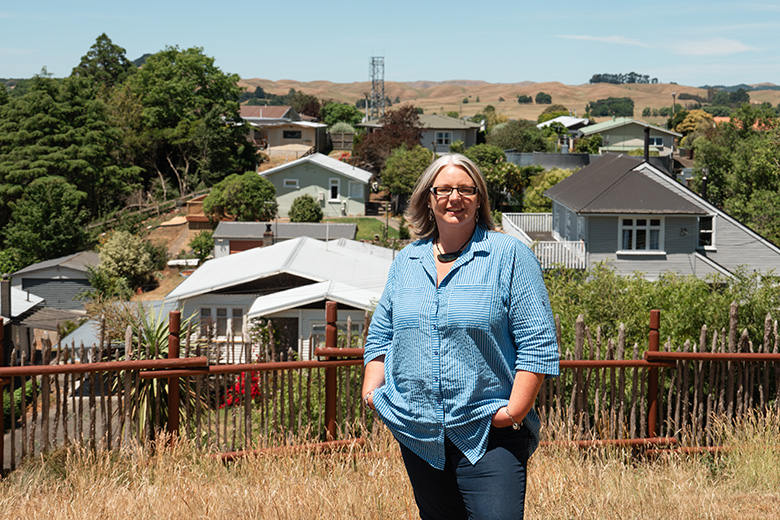
Alex Walker is former mayor of Central Hawke’s Bay.
