

It’s back! A costly environmental mistake we can’t afford.
The CHB District Council recently voted to endorse a deed for the ‘Hawkes Bay Community Water Trust’. If environment group Wise Water Use HB hadn’t chanced upon this item embedded deep in a Council agenda paper it’s doubtful many would have been any the wiser. Certainly none of the other four local councils were consulted, let alone the people of Hawke’s Bay in whose collective name the trust was established.
The announced purpose of the Trust was to address local water security; however, the Trust Deed, drafted by Council lawyers under instruction to prioritise establishing a legal structure for the transfer of the consents and IP for the Ruataniwha dam, only makes token reference to unspecified ‘water security initiatives’.
Wise Water Use immediately labelled the trust a Trojan Horse to receive public money for the dam by providing the veneer of community buy-in. Word on the ground was that the dam promoters had been instructed to place the IP and consents into a community trust in order to receive funding from the Regional Investment Fund to revamp the project’s business case. Sign-up for Ruataniwha dam v.1 only reached 43 Mm3 water sold to 196 farms (from a pool of 450) despite an intensive 2-year marketing campaign.
Just 5 weeks after the hasty formation of the Community Trust (from which the community were excluded, and remain so, in not having any say in trustee appointments), Minister Shane Jones announced $3 million of taxpayers’ money for … revamping the business case for the Ruatanihwa dam v.2!
The total taxpayer and ratepayer expenditure on the dam now exceeds $30 million, without a sod of earth being turned. The project’s appetite for public money is insatiable, and this latest round of taxpayer largesse from a government preaching fiscal constraint adds insult to injury for Aotearoa/New Zealanders suffering a cost of living crisis.
Jones, the Minister for Regional Development, has framed the dam as a solution to water scarcity issues plaguing Hawke’s Bay, but his announcement seems more about political appeasement. This coalition government sings ‘free market’ from the rooftops, then cheers loudly when projects favoured by their backers receive public money.
Selective citation of figures from a 2023 Regional Council Report which suggest a potential water shortage ring hollow when the same report also posits a potential water surplus with wise water use.
Let’s be clear: the problem in Central Hawke’s Bay isn’t a shortage of water. It’s a chronic over-allocation of water to intensive farming practices, the very same type of agriculture that the dam is intended to support. Locally, just 6 intensive dairy farms hold consents for 42% of allocated water, with a single operation holding consented volume greater than the entire municipality of Waipukurau!
This is the uncomfortable truth that politicians are avoiding. Rather than addressing the root cause – unsustainable farming practices requiring land use change – this government is opting to throw more money at a 100 Mm3 dam that will, if built, only exacerbate the issues it purports to solve.
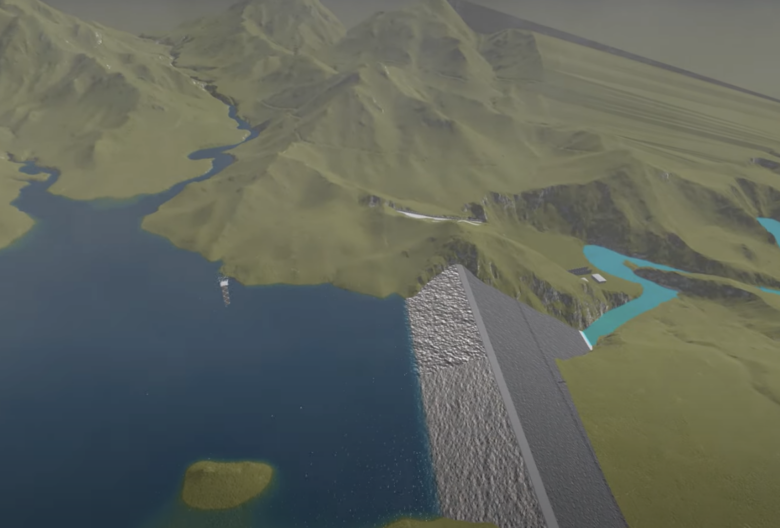
The environmental impact of this project cannot be ignored. The dam would increase pressure on already-stressed ecosystems due to the increase in intensive farming required to justify the cost of the water, which will be exorbitant in order to generate a return on investment for a project estimated to cost $1.4 billion (dam and distribution network). Bear in mind, no-one owns this water until a private company gets government assent under Fast Track to build an 83 meter-high concrete wall and then profit from every drop of water that leaves that wall.
Contaminants of primary concern are nitrogen and phosphorus, byproducts of synthetic fertilizers and livestock excrement. Already in CHB the infamous Well 16501 in Burnside Road, Ongaonga, is running a 5 year median of 20mg/L nitrate nitrogen. International studies show levels of less than 1.0 mg/L in drinking water are linked to high rates of bowel cancer.
The new agribusinesses the dam would enable would disburse contaminants along the entire 100 km length of the Tukituki catchment, from the Ruahine Range to Haumoana, and then beyond into our coastal waters. As often quipped by freshwater ecologist, Mike Joy, if nitrates were red the rivers would run red and there would be an outcry because then people would see it.
Those not troubled by the long-term environmental impacts Ruataniwha v.2 would unleash should at least be concerned about the ever-growing amount of ratepayer and taxpayer money being thrown at this project.
Wise Water Use calculate that should the cost of environmental flows, touted as being a panacea for the health of the river (of questionable effectiveness, but not required if we weren’t over-extracting in the first place), were to fall to Regional Council ratepayers this would entail a 30%+ rate increase. CHB Mayor Alex Walker recently admitted that she couldn’t guarantee that local ratepayers wouldn’t be on the hook for some costs should Ruataniwha dam v.2 proceed.
Taxpayers and ratepayers should fasten their seatbelts because this zombie project is going to cost them big-time, both financially and environmentally.
Dr Trevor Le Lievre
Spokesperson, Wise Water Use Hawkes Bay

A very good breakdown of an invidious position CHB is in
This project in whatever form it is suggested is a total disaster for the ratepayers of the region. Any costs will be borne by the ratepayers and any profits will be accepted by the main users of the water – the dairy industry owners. CHB is and always will be a dry land farming area – dairy is obviously not a dry land operation and it has to drag a huge amount of water just to exist at the expense of other industry. I’m not sure of the facts but I know that it needs many gallons of water to produce one gallon of milk – an equation that shows that dairying in dry land areas is stupid and short sighted. The only way it can operate is at the expense of all other users who then complain because there’s a shortage of water and restrictions must apply. A completely shortsighted and ridiculous plan being mooted by shortsighted and ridiculous users.
We need dam’s, Hawke Bay’s economic future depends on it and only for existing water use. So where would be a better place (anywhere I know) ….the Ngaruroro ?
Why not buy out the water wasting (dairy) farmers? Would cost a lot less than building a dam and give CHB lots more water and lots less pollution…..just a thought
Well penned Trevor, This government seems intent on governing solely for it’s mates and not the wider population. This Dam isn’t needed, and yes will simply cause environmental and economic difficulties for everyone. So Shane Jones spending $3m on an investigation into the feasibility, think he needs cheaper lawyers, economists and accountants, what a waste of money.
This is an example of how the owners of private capital keep taking more and more from the public purse for their own benefit, and then structure their business so as to minimise their tax exposure. This will simply further contaminant water out flows, cause ecological issues, and cost ordinary people big time. This can’t be allowed to proceed.
Dam.
Some points from a previous submission still apply:
How can the area able to be irrigated from a dam supplied from a disputable rainfall catchment increase from an original 17,000ha estimate to 25-30,000 ha?
David Painter provided in depth questions as the “Peer Reviewer” for the original proposal. They should be re-visited as it seems that somehow that same river will now irrigate a larger land area and require expensive pipeline reticulation.
An example of likely cost of reticulation would be the “cheap” Opuha Dam (which “went dry” this summer) to supply water for their Kakahu area. A pipeline option presently on the table has indicative costs of $5,000/ha capital spend for the 3,200ha affected.”
NOTE: that is just for the pipelines.
Where are the remodelled figures for uptake of the additional water, where it will come from (a larger dam cannot just “attract” more water,) what number of hectares could now be reliably supplied and at what cost?
Also what is the hugely increased level of risk to “downstream” infrastructure? (a concern expressed in peer reviews – as was the ”upstream environment” for a rare Native Species).
If all the water is allocated to farming, what about the chances of new, innovative and employment rich industries (such as Sir Paul Callaghan aspired for) that require water to ensure their much superior productivity? Why should a small% of farmers use irrigation to “improve production” when others can show larger improvements to “environmentally sustainable” profits from employing new, far more resource efficient systems?
Instead this Council has myopically concentrated on using a finite and dwindling resource in the most inefficient way possible: to irrigate pastures on porous soils in an environment not conducive to such intensification – and inevitably paid for with ratepayer money.
B.J.Ridler.
To the average joe like myself it seems it is time to change those sitting around the council for people who are not subject to pressure from a wealthy minority who seek to wreak further damage on the CHB environment and dump massive costs on the ratepayers of Hawkes Bay (given that the shill setup trust involved has been named after the Hawkes Bay community) to bank roll a self interested groups desire to continue this charade of an actual feasible water storage project.
They were very quick to “invest” in the consents from HBRC at a token amount then once the ongoing costs for those consents fell due resorted to childish antics at a council meeting before getting a pass for the year yet have managed to get naive Government representatives to give them hope of finally getting something out of this debacle.
The good people of CHB need to think about this when the next local body elections come up and get some folk with common sense elected and bin this vanity project of a few wealthy land owners who ignore the facts of what the environment can sustain in the way of agriculture in the area.
Much again like squandering 3+ million dollars of Tax Payers hard earnt dosh, to find a new way of cooking carrots!